
Representational approach
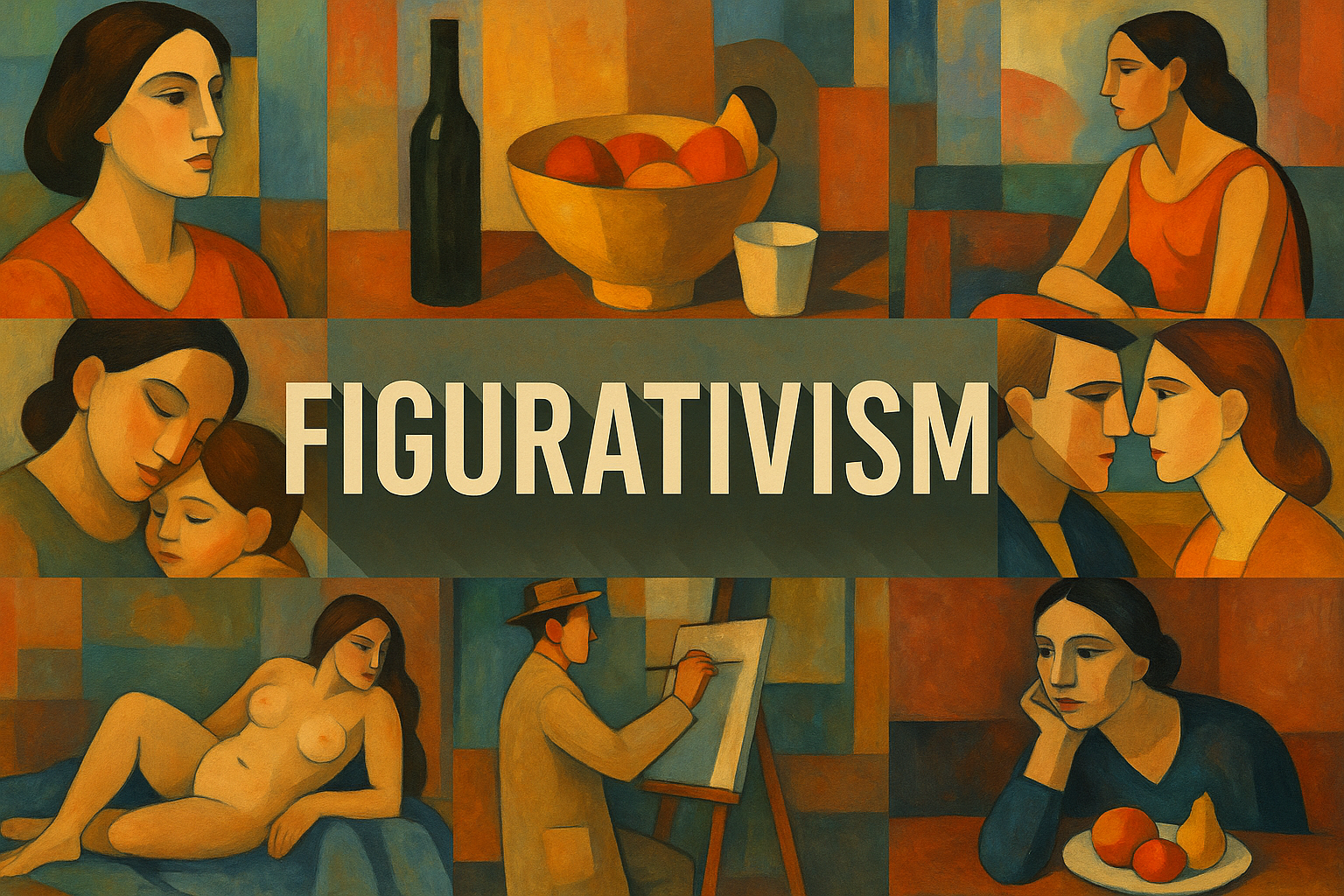
Figurative art retains recognizable references to the visible world, often including the human figure. This page uses that broad term for the entry previously called Figurativism; it does not define a single historical movement or require photographic realism.
A visual introduction
Select an image for a closer look. Use the thumbnails, arrow keys or a swipe to compare examples. Zoom in to inspect details, or share the image that inspires you.
Creative toolbox · take this style further
Choose an input and a destination. Search sends your words to the chosen site; Copy & open puts them on your clipboard to paste there.
Create with AI
Turn your chosen input into an image prompt or a new creative direction.
ChatGPT
Copy your input and paste it into a ChatGPT conversation or image request.
Copy & open ChatGPT (new tab)Claude · Anthropic
Develop an image prompt or explore the style in a new Claude conversation.
Copy & open Claude · Anthropic (new tab)Midjourney
Paste your input into the Imagine bar on the Create page.
Copy & open Midjourney (new tab)Adobe Firefly
Copy your input, open Firefly, and paste it into the prompt field.
Copy & open Adobe Firefly (new tab)Leonardo.Ai
Copy your input, open Leonardo, and paste it into the generation field.
Copy & open Leonardo.Ai (new tab)Image search
Find visual references. Short, concrete keywords usually work best.
Lexica
Search AI images and prompts using your selected input.
Search with this input Lexica (new tab)Pexels
Search the photo and video library. Short keywords often work best.
Search with this input Pexels (new tab)Pixabay
Search photos, illustrations and other images.
Search with this input Pixabay (new tab)Unsplash
Search photographs using the style name or your own keywords.
Search with this input Unsplash (new tab)Wikimedia Commons
Search photographs, artworks and historical images. Check each file for its source and reuse terms.
Search with this input Wikimedia Commons (new tab)Art & research
Explore artists, collections and the ideas behind a style.
Wikipedia
Search for background reading. A style may not have its own article.
Search with this input Wikipedia (new tab)WikiArt
Copy your input into WikiArt’s search to explore artists and artworks.
Copy & open WikiArt (new tab)Europeana
Paste your keywords into the search to explore European museum, library and archive collections.
Copy & open Europeana (new tab)Inspiration
Discover portfolios and visual ideas from creative communities.
Instagram hashtags
Search a hashtag made from your input: spaces and punctuation are removed. Instagram may require sign-in.
Search with this input Instagram hashtags (new tab)ArtStation
Paste your input into artwork search for concept art, environments, characters and visual development.
Copy & open ArtStation (new tab)Behance
Paste your input into project search for illustration, design and visual storytelling.
Copy & open Behance (new tab)A closer look
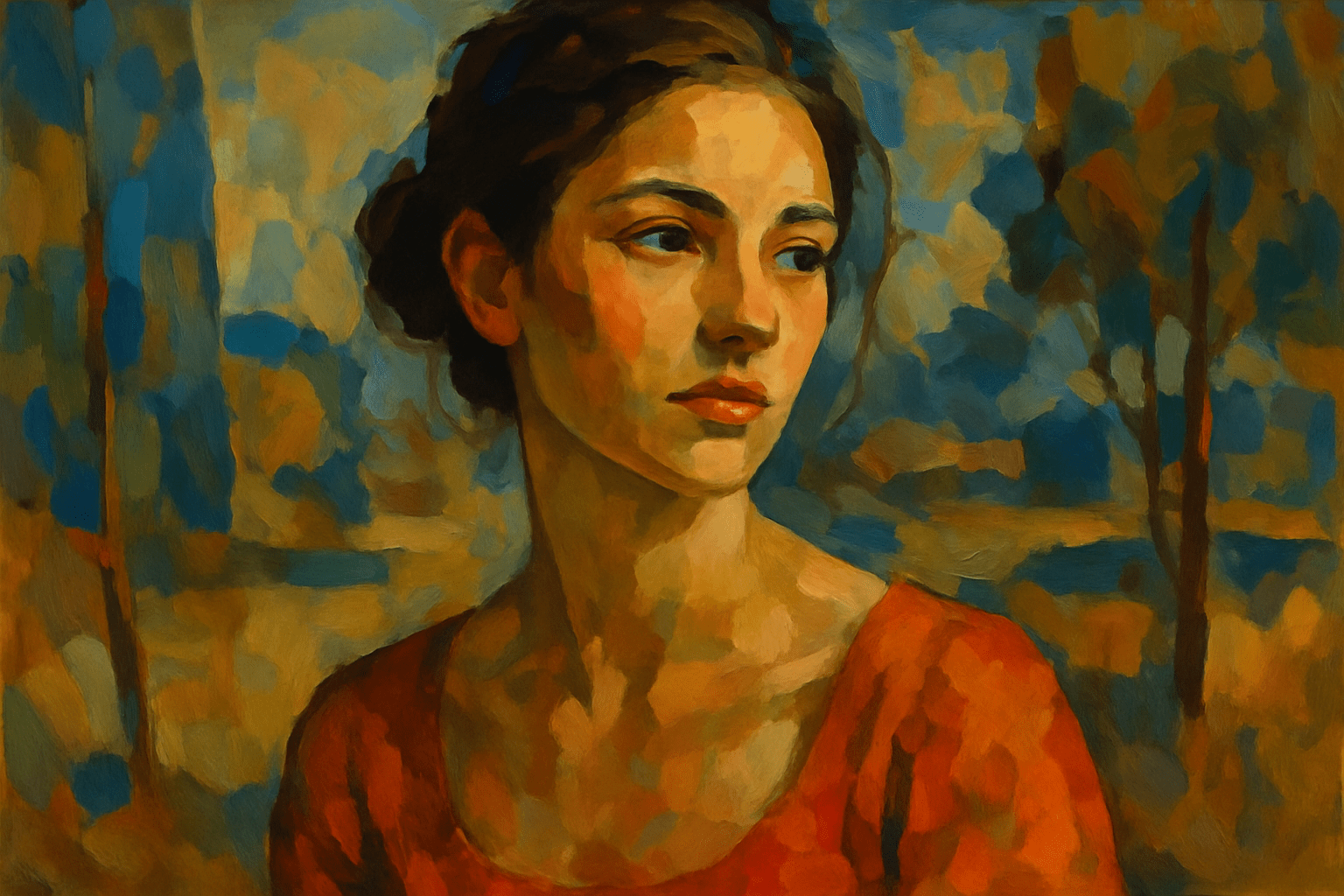
A recognizable body, object or setting can remain legible through altered proportions, simplified color or expressive marks; recognition and abstraction can coexist.
Recognition does not require literal imitation
MoMA's selection under “Figurative” includes markedly different works and media. The term is useful because it describes a relationship to recognizable subjects, not a common brushstroke, palette or level of finish. A distorted figure can still be figurative.
Begin by deciding what must remain recognizable. A posture, silhouette or relationship between objects may carry the subject even when smaller details disappear. This makes figurative work a field of choices rather than a test of how closely an image resembles a photograph.
Gesture provides an organizing line
In a figure study, establish the direction of the torso, the distribution of weight and the support beneath the body. A convincing pose depends on these relationships before it depends on facial detail. Hands and feet should participate in the action rather than appear as unrelated additions.
Try a quick version using only a few connected shapes. Then add information selectively. If the original gesture becomes weaker as detail accumulates, return to the larger structure and reconsider what the additions are doing.
Distortion can be purposeful
Lengthening a form, flattening space or exaggerating a color can emphasize a particular experience. Make the alteration consistent with the image's purpose. An accidental joint problem and a deliberate transformation are not the same simply because both depart from ordinary anatomy.
Compare a naturalistic study with one that changes only proportions and another that changes only color. This isolates the expressive effect of each decision. Avoid using the word “expressive” to excuse every unresolved relationship.
Subject and viewpoint matter
A figure is more than a vehicle for demonstrating technique. Pose, setting, crop and the viewer's position affect how the person is represented. Consider whether the image allows individuality or reduces someone to a convenient type.
For an original generated study, specify the action and spatial relationships before adding aesthetic adjectives. Evaluate the resulting silhouette, weight and interaction. Figurative work can be quiet, humorous, critical or unsettling; bright color and dramatic shadow are possibilities rather than defining requirements.
The prompt workshop
Original creative exercises. These prompts create new illustrations, not documentary evidence.
Weight and gesture
Original figurative study of an adult lifting a lightweight empty crate, clear weight distribution and readable limbs, broad shapes before fine detail.
Recognition through simplification
Original painting of two people waiting at a bus stop, simplified color planes and recognizable gestures, coherent spacing and individual postures.
Controlled transformation
Original expressive figure study with deliberately elongated proportions and a stable supporting pose, limited palette and consistent spatial logic.