
Television animation · visual reference
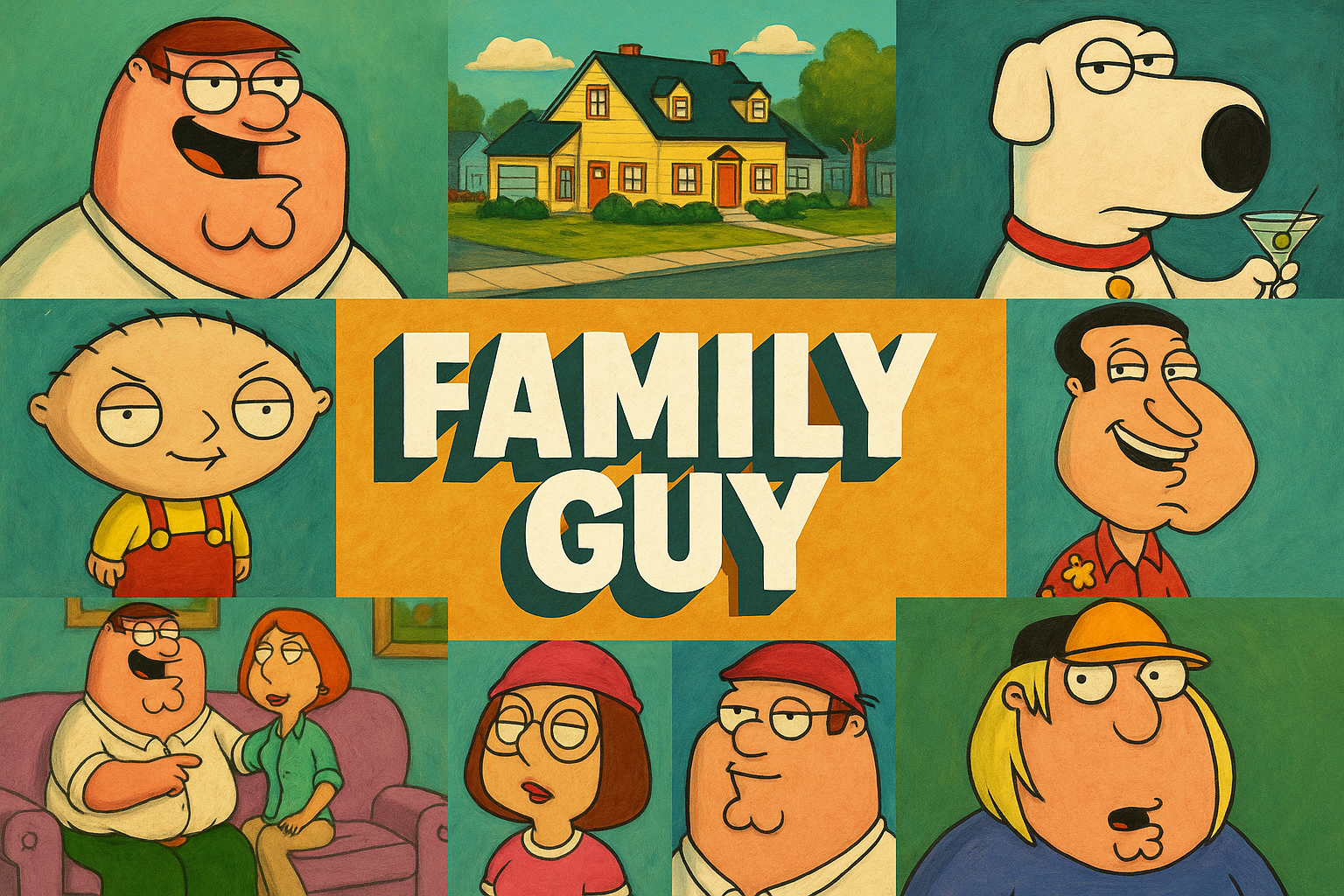
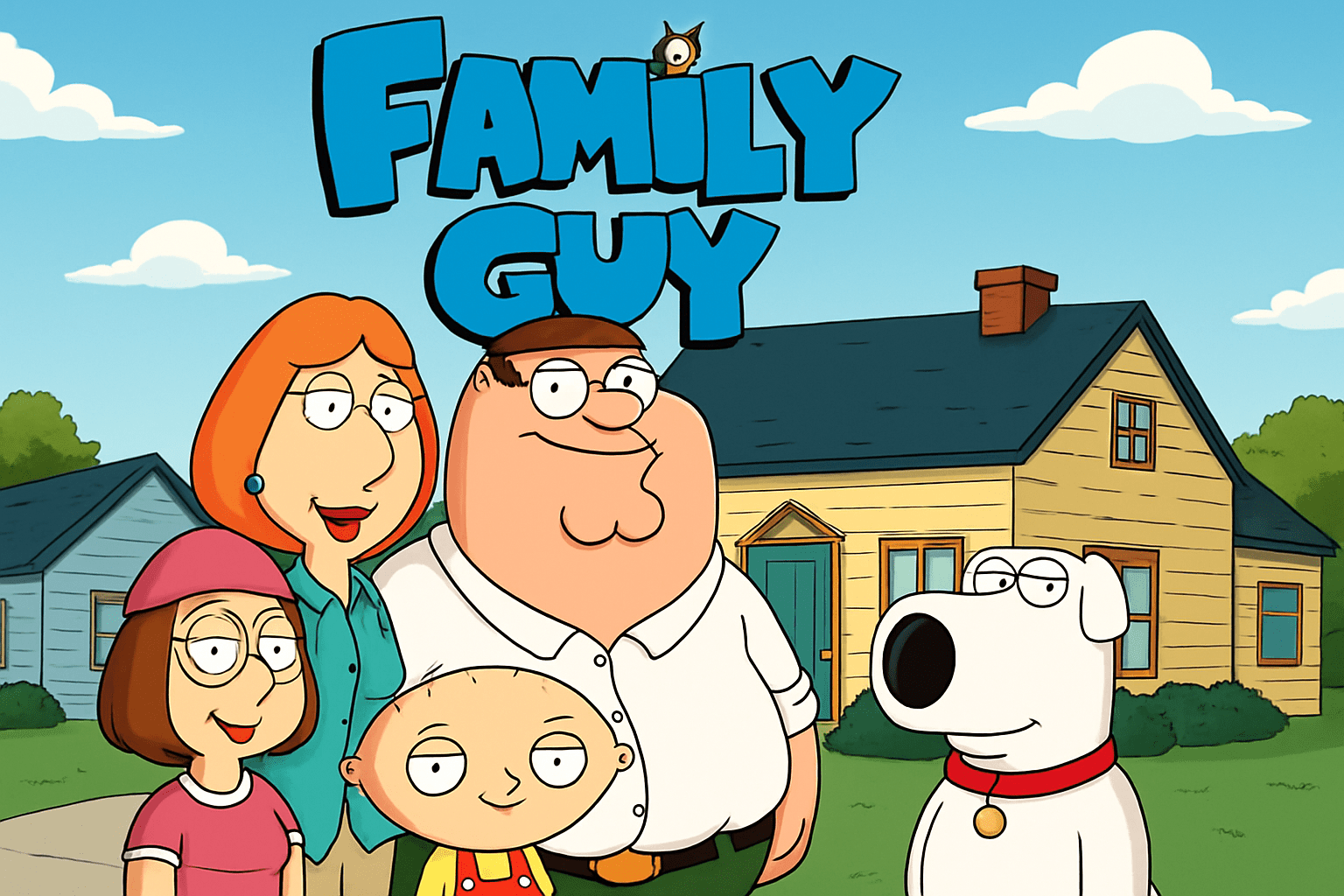
Family Guy is an animated television comedy created by Seth MacFarlane, first broadcast in 1999. Its visual language supports recognisable characters, dialogue staging and abrupt comic changes of situation. It is a specific collaborative production, not an art movement or a universal template for adult animation.
A visual introduction
Select an image for a closer look. Use the thumbnails, arrow keys or a swipe to compare examples. Zoom in to inspect details, or share the image that inspires you.
Creative toolbox · take this style further
Choose an input and a destination. Search sends your words to the chosen site; Copy & open puts them on your clipboard to paste there.
Create with AI
Turn your chosen input into an image prompt or a new creative direction.
ChatGPT
Copy your input and paste it into a ChatGPT conversation or image request.
Copy & open ChatGPT (new tab)Claude · Anthropic
Develop an image prompt or explore the style in a new Claude conversation.
Copy & open Claude · Anthropic (new tab)Midjourney
Paste your input into the Imagine bar on the Create page.
Copy & open Midjourney (new tab)Adobe Firefly
Copy your input, open Firefly, and paste it into the prompt field.
Copy & open Adobe Firefly (new tab)Leonardo.Ai
Copy your input, open Leonardo, and paste it into the generation field.
Copy & open Leonardo.Ai (new tab)Image search
Find visual references. Short, concrete keywords usually work best.
Lexica
Search AI images and prompts using your selected input.
Search with this input Lexica (new tab)Pexels
Search the photo and video library. Short keywords often work best.
Search with this input Pexels (new tab)Pixabay
Search photos, illustrations and other images.
Search with this input Pixabay (new tab)Unsplash
Search photographs using the style name or your own keywords.
Search with this input Unsplash (new tab)Wikimedia Commons
Search photographs, artworks and historical images. Check each file for its source and reuse terms.
Search with this input Wikimedia Commons (new tab)Art & research
Explore artists, collections and the ideas behind a style.
Wikipedia
Search for background reading. A style may not have its own article.
Search with this input Wikipedia (new tab)WikiArt
Copy your input into WikiArt’s search to explore artists and artworks.
Copy & open WikiArt (new tab)Europeana
Paste your keywords into the search to explore European museum, library and archive collections.
Copy & open Europeana (new tab)Inspiration
Discover portfolios and visual ideas from creative communities.
Instagram hashtags
Search a hashtag made from your input: spaces and punctuation are removed. Instagram may require sign-in.
Search with this input Instagram hashtags (new tab)ArtStation
Paste your input into artwork search for concept art, environments, characters and visual development.
Copy & open ArtStation (new tab)Behance
Paste your input into project search for illustration, design and visual storytelling.
Copy & open Behance (new tab)A closer look
Look for clearly bounded silhouettes, largely flat colour areas, economical facial construction and staging that keeps interactions easy to follow. The timing of a reaction or cutaway belongs to the moving sequence and cannot be captured by surface appearance alone.
Separate the series from a general cartoon look
FOX's official programme information identifies MacFarlane as creator and describes the series' production and voice cast. Use that source for basic attribution. A visual analysis should then examine particular scenes rather than treat every round-headed, outlined character as part of the same design system. [1]
The most useful distinction is between design and performance. A character model supplies recurring proportions and features. Acting, voice, posing, editing and timing determine what that model does in a scene. Copying a facial shape reproduces only a small part of the result.
Readability before detail
Strong outer contours help figures remain distinct against an interior. Flat colour areas reduce surface noise, allowing a turn of the head or a change of mouth shape to register quickly. Backgrounds can establish a recognisable place without demanding the same attention as the speaking character.
For an original cast, test silhouettes in solid black. Distinguish height, torso shape and posture before adding costume details. Keep the construction rules consistent enough that the figures seem to belong in the same production, while allowing each to be recognised without a label.
Staging carries the conversation
A dialogue scene needs clear relationships between speakers: who faces whom, who reacts and what a held pose allows the audience to notice. Place the figures so important gestures do not merge with furniture or another body. The space between them can be as informative as their expressions.
A static image can suggest a comic situation, but a cutaway or delayed reaction depends on duration and sequence. When studying the series, note the setup, the interruption and the return. Do not mistake an isolated frame for a complete account of how the joke works.
Keep the background useful
Use a few environmental details to establish the location and the action's practical limits. A door, a sofa or a counter can provide a meaningful obstacle or point of reference. Excessive texture competes with the figure's small expressive changes and may undermine the graphic economy.
Colour can separate roles without turning every object into an accent. Choose a quieter setting and reserve stronger contrasts for the characters or the object central to the action. This is a transferable design decision, not a rule that every episode must follow identically.
An original animation exercise
Invent three unrelated adult characters trying to assemble an awkward piece of furniture. Draw a setup pose, a failed action and a reaction. Keep proportions, room layout and props consistent across the panels, and let the final pose reveal the consequence.
Use new character designs and your own situation. The exercise learns from economical television-animation staging without presenting an imitation frame as an official production image. Generated illustrations on this page remain AOI interpretations, not stills supplied by the programme's creators.
The prompt workshop
Original creative exercises. These prompts create new illustrations, not documentary evidence.
An original comic cast
Design three original adult animated-comedy characters with distinct silhouettes, clean dark outlines, flat colour areas and economical facial features. Show them in a simple living room attempting to assemble a shelf. No existing television characters or logos.
Setup, action, reaction
Create an original three-panel animation storyboard: two neighbours carry an oversized sofa, discover it will not fit through a doorway, and silently reconsider. Consistent character proportions and room layout, clear poses and restrained background detail.
Silhouette test
Design an original lineup of four adult cartoon characters using contrasting body shapes and postures. Present readable flat silhouettes with a limited palette and consistent contour treatment; avoid borrowed character features.
Sources and further exploration
FOX — official Family Guy programme and production information