
Film and audiovisual reference
David Lynch’s Eraserhead uses black-and-white photography, physical environments, performance and sound to create sustained unease. A still-image study can investigate part of that language while recognizing what sound and duration add.
A visual introduction
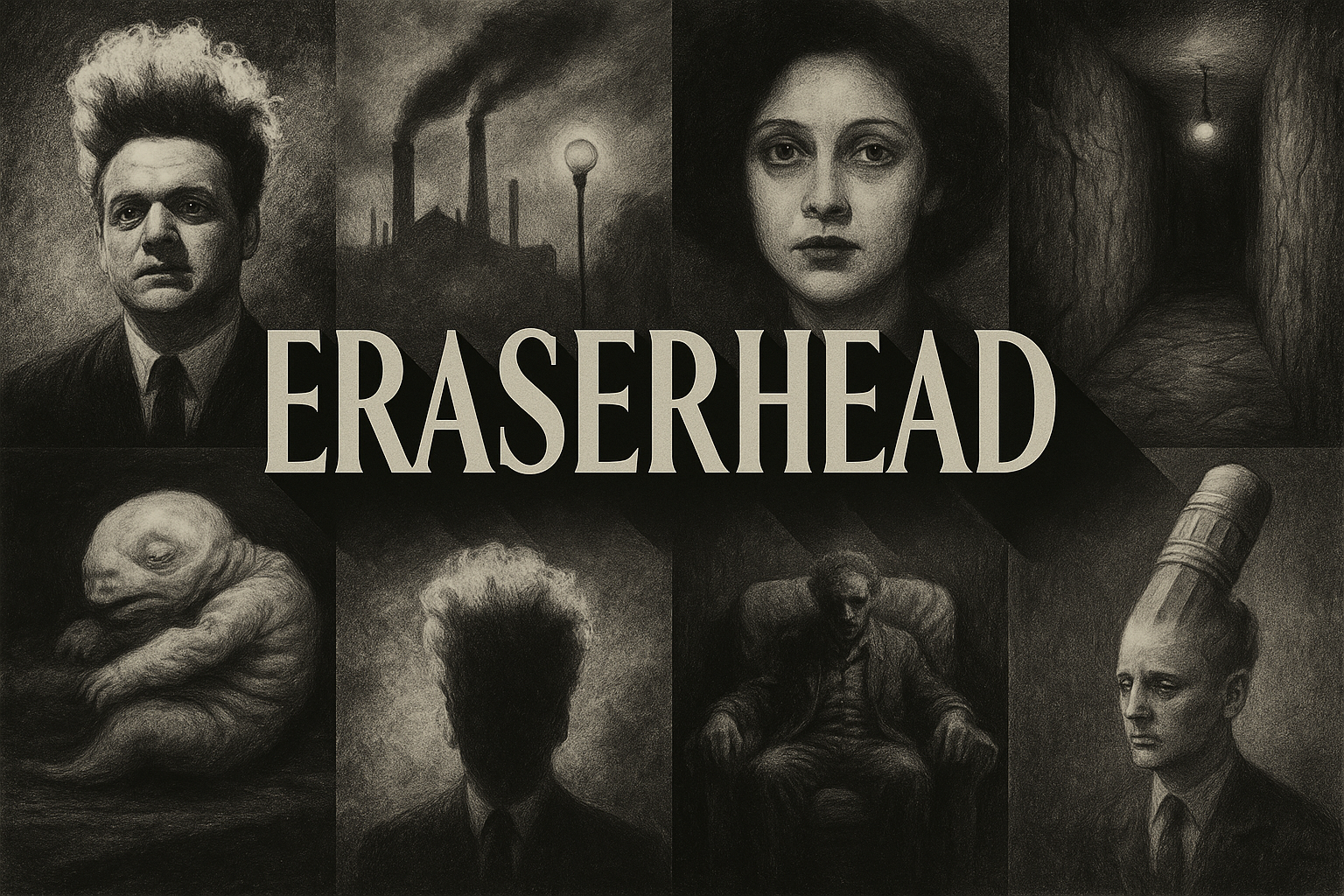
Select an image for a closer look. Use the thumbnails, arrow keys or a swipe to compare examples. Zoom in to inspect details, or share the image that inspires you.
Creative toolbox · take this style further
Choose an input and a destination. Search sends your words to the chosen site; Copy & open puts them on your clipboard to paste there.
Create with AI
Turn your chosen input into an image prompt or a new creative direction.
ChatGPT
Copy your input and paste it into a ChatGPT conversation or image request.
Copy & open ChatGPT (new tab)Claude · Anthropic
Develop an image prompt or explore the style in a new Claude conversation.
Copy & open Claude · Anthropic (new tab)Midjourney
Paste your input into the Imagine bar on the Create page.
Copy & open Midjourney (new tab)Adobe Firefly
Copy your input, open Firefly, and paste it into the prompt field.
Copy & open Adobe Firefly (new tab)Leonardo.Ai
Copy your input, open Leonardo, and paste it into the generation field.
Copy & open Leonardo.Ai (new tab)Image search
Find visual references. Short, concrete keywords usually work best.
Lexica
Search AI images and prompts using your selected input.
Search with this input Lexica (new tab)Pexels
Search the photo and video library. Short keywords often work best.
Search with this input Pexels (new tab)Pixabay
Search photos, illustrations and other images.
Search with this input Pixabay (new tab)Unsplash
Search photographs using the style name or your own keywords.
Search with this input Unsplash (new tab)Wikimedia Commons
Search photographs, artworks and historical images. Check each file for its source and reuse terms.
Search with this input Wikimedia Commons (new tab)Art & research
Explore artists, collections and the ideas behind a style.
Wikipedia
Search for background reading. A style may not have its own article.
Search with this input Wikipedia (new tab)WikiArt
Copy your input into WikiArt’s search to explore artists and artworks.
Copy & open WikiArt (new tab)Europeana
Paste your keywords into the search to explore European museum, library and archive collections.
Copy & open Europeana (new tab)Inspiration
Discover portfolios and visual ideas from creative communities.
Instagram hashtags
Search a hashtag made from your input: spaces and punctuation are removed. Instagram may require sign-in.
Search with this input Instagram hashtags (new tab)ArtStation
Paste your input into artwork search for concept art, environments, characters and visual development.
Copy & open ArtStation (new tab)Behance
Paste your input into project search for illustration, design and visual storytelling.
Copy & open Behance (new tab)A closer look
Compressed rooms, dark intervals, tactile surfaces and isolated bright forms can make ordinary space feel uncertain without relying on constant visual spectacle.
A film is more than its most famous image
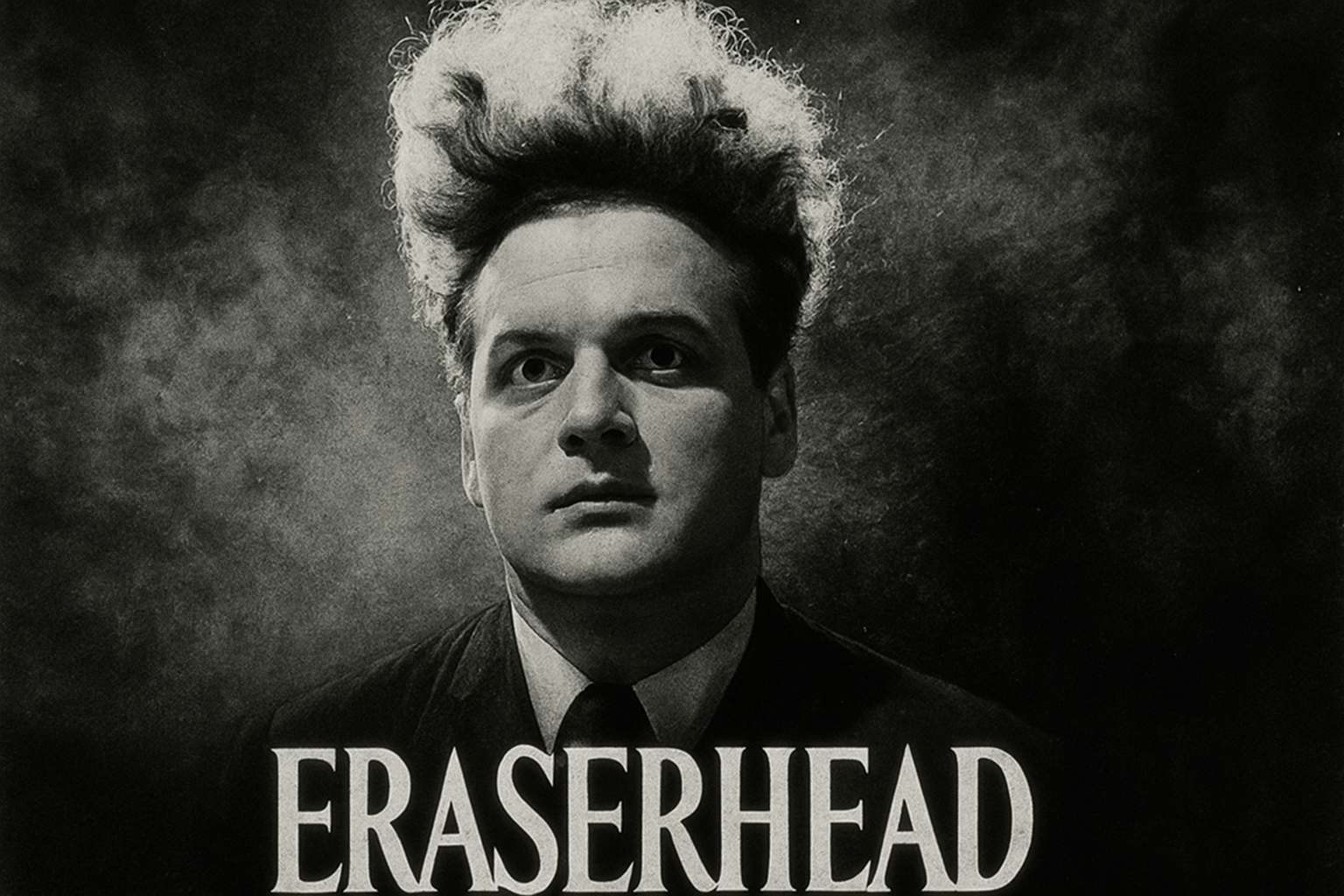
Criterion identifies Eraserhead as Lynch's 1977 debut feature and credits its photography to Frederick Elmes and Herbert Cardwell. Its production information also records the sound work of Alan Splet and Lynch. These collaborators matter because the film's effect comes from an audiovisual construction, not only from a distinctive hairstyle or a collection of grotesque motifs.
The BFI emphasizes the relationship between industrial surroundings and unsettling sound. In a still image, those temporal and sonic elements cannot be reproduced directly. Acknowledge that limit and decide which spatial or tonal relationship the image can meaningfully explore.
Organize the darkness
Deep black areas can conceal information, but they need a structure. A narrow bright doorway, a face emerging from shadow or a pale object against a dark wall gives the viewer a point of orientation. If everything is equally murky, uncertainty becomes simple unreadability.
For an original composition, make a small value sketch before adding texture. Choose the largest dark mass, the strongest light and the path between them. Let less important edges disappear selectively. A precise transition between visible and withheld information can be more effective than many unrelated distortions.
Make the room physically convincing
An ordinary room becomes unsettling when its proportions, openings or arrangement create pressure. Keep enough coherent geometry for the viewer to believe the space before introducing an anomaly. A window that offers an unhelpful view or a doorway placed too close to a figure can alter the emotional reading without requiring an impossible building.
Use surface detail to distinguish materials and suggest use. Random scratches, fog and grain are not a substitute for a specific environment. Decide what the figure can touch, where the light originates and what remains outside the frame.
Leave interpretation open without making it arbitrary
An original image can withhold an explanation while maintaining a clear situation. A person waiting beside an inexplicable apparatus gives the viewer a relationship to consider. Adding several disconnected mysteries may weaken that attention.
Describe such work as a contemporary cinematic study. AOI's illustrations are not frames from Eraserhead, and a visual analysis should not claim to settle the film's meaning. The prompts investigate monochrome space and unease with independent subjects.
The prompt workshop
Original creative exercises. These prompts create new illustrations, not documentary evidence.
A precise dark interval
Original black-and-white cinematic still of an adult waiting in a narrow rented room, one pale doorway and a large organized shadow, tactile wall surface, coherent geometry, quiet unease, no copied film character.
The unexplained apparatus
Original monochrome surreal scene of a solitary caretaker beside an unfamiliar silent machine, clear physical connections and restrained industrial texture, isolated highlight, no gore or recognizable film prop.
Outside the frame
Original cinematic image of an empty table near a window facing a close blank wall, carefully controlled grayscale, a chair slightly displaced, believable small room and withheld narrative, no generic grunge overlay.