
Painting medium and process
Explore encaustic painting through wax, translucency, layered marks and surface light, with historical context and practical ways to read its visual effects.
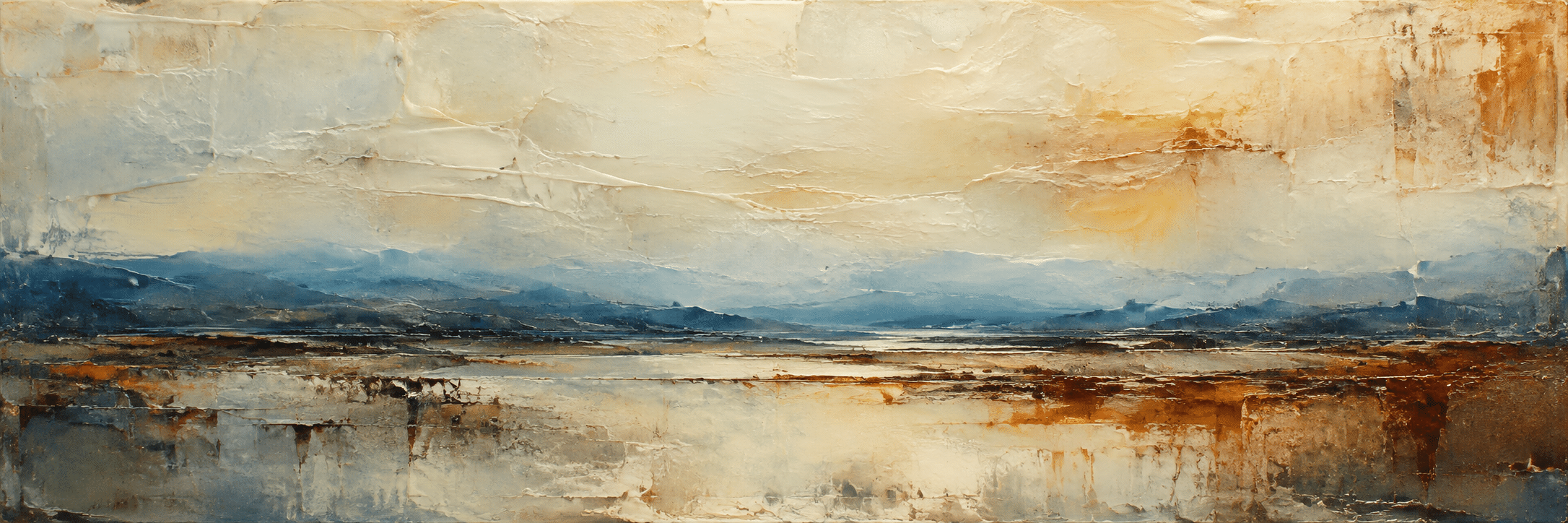
A visual introduction
Select an image for a closer look. Use the thumbnails, arrow keys or a swipe to compare examples. Zoom in to inspect details, or share the image that inspires you.
Creative toolbox · take this style further
Choose an input and a destination. Search sends your words to the chosen site; Copy & open puts them on your clipboard to paste there.
Create with AI
Turn your chosen input into an image prompt or a new creative direction.
ChatGPT
Copy your input and paste it into a ChatGPT conversation or image request.
Copy & open ChatGPT (new tab)Claude · Anthropic
Develop an image prompt or explore the style in a new Claude conversation.
Copy & open Claude · Anthropic (new tab)Midjourney
Paste your input into the Imagine bar on the Create page.
Copy & open Midjourney (new tab)Adobe Firefly
Copy your input, open Firefly, and paste it into the prompt field.
Copy & open Adobe Firefly (new tab)Leonardo.Ai
Copy your input, open Leonardo, and paste it into the generation field.
Copy & open Leonardo.Ai (new tab)Image search
Find visual references. Short, concrete keywords usually work best.
Lexica
Search AI images and prompts using your selected input.
Search with this input Lexica (new tab)Pexels
Search the photo and video library. Short keywords often work best.
Search with this input Pexels (new tab)Pixabay
Search photos, illustrations and other images.
Search with this input Pixabay (new tab)Unsplash
Search photographs using the style name or your own keywords.
Search with this input Unsplash (new tab)Wikimedia Commons
Search photographs, artworks and historical images. Check each file for its source and reuse terms.
Search with this input Wikimedia Commons (new tab)Art & research
Explore artists, collections and the ideas behind a style.
Wikipedia
Search for background reading. A style may not have its own article.
Search with this input Wikipedia (new tab)WikiArt
Copy your input into WikiArt’s search to explore artists and artworks.
Copy & open WikiArt (new tab)Europeana
Paste your keywords into the search to explore European museum, library and archive collections.
Copy & open Europeana (new tab)Inspiration
Discover portfolios and visual ideas from creative communities.
Instagram hashtags
Search a hashtag made from your input: spaces and punctuation are removed. Instagram may require sign-in.
Search with this input Instagram hashtags (new tab)ArtStation
Paste your input into artwork search for concept art, environments, characters and visual development.
Copy & open ArtStation (new tab)Behance
Paste your input into project search for illustration, design and visual storytelling.
Copy & open Behance (new tab)A closer look
Light can seem to sit within successive wax layers, while edges, embedded traces and scraped passages reveal the surface as a material structure.
A medium with a long and varied history
R&F describes contemporary encaustic paint as a mixture of beeswax, damar resin and pigment, applied molten and reheated to fuse. This makes heat part of the painting process itself. The term should not be used for every waxy-looking image or for cold-wax oil painting simply because both involve wax.
The Metropolitan Museum’s Portrait of the Boy Eutyches, dated 100–150 CE, is recorded as encaustic on wood. Its account places such portraits within the multicultural society of Roman Egypt. This gives the medium a concrete historical reference without reducing that complex culture to a generic antique aesthetic.
Let transparency and opacity interact
A translucent passage can partly reveal an earlier mark, while an opaque area interrupts that depth. Plan which layers should remain perceptible and which should conceal. If every area is equally cloudy, the surface may feel indistinct rather than richly layered.
In a landscape, a pale veil might suggest atmosphere over a darker band. In abstraction, an interrupted line can imply something partly buried. The strongest effect comes from a specific relationship between what is visible, obscured and re-exposed, rather than from applying a general glossy finish.
Treat the surface as part of the composition
Incised lines, scraped edges and built-up passages can direct attention as strongly as colour. Concentrate them where they support the image. A completely busy surface may make it difficult to distinguish the focal area from incidental texture. Quiet zones allow small material changes to become legible.
Consider the work under different lighting. A raised edge may catch light while a flat translucent passage reveals depth more gently. A photograph or screen image can emphasize one effect and suppress another. Material description should acknowledge this difference instead of promising that every reproduction captures the physical experience.
Connect process to an intention
Choose a limited visual question before adding material: a half-erased contour, a luminous horizon or a grid that appears beneath a veil. The process becomes more coherent when each intervention changes that question. More layers are not automatically a better painting.
Physical encaustic requires appropriate supports, controlled heating and suitable ventilation; use a maker’s technical guidance and practical instruction for studio work. The prompts here describe visual intentions, not a heating recipe. A generated picture cannot verify the adhesion, stability or conservation needs of a real wax surface.
Three ways to read the new gallery
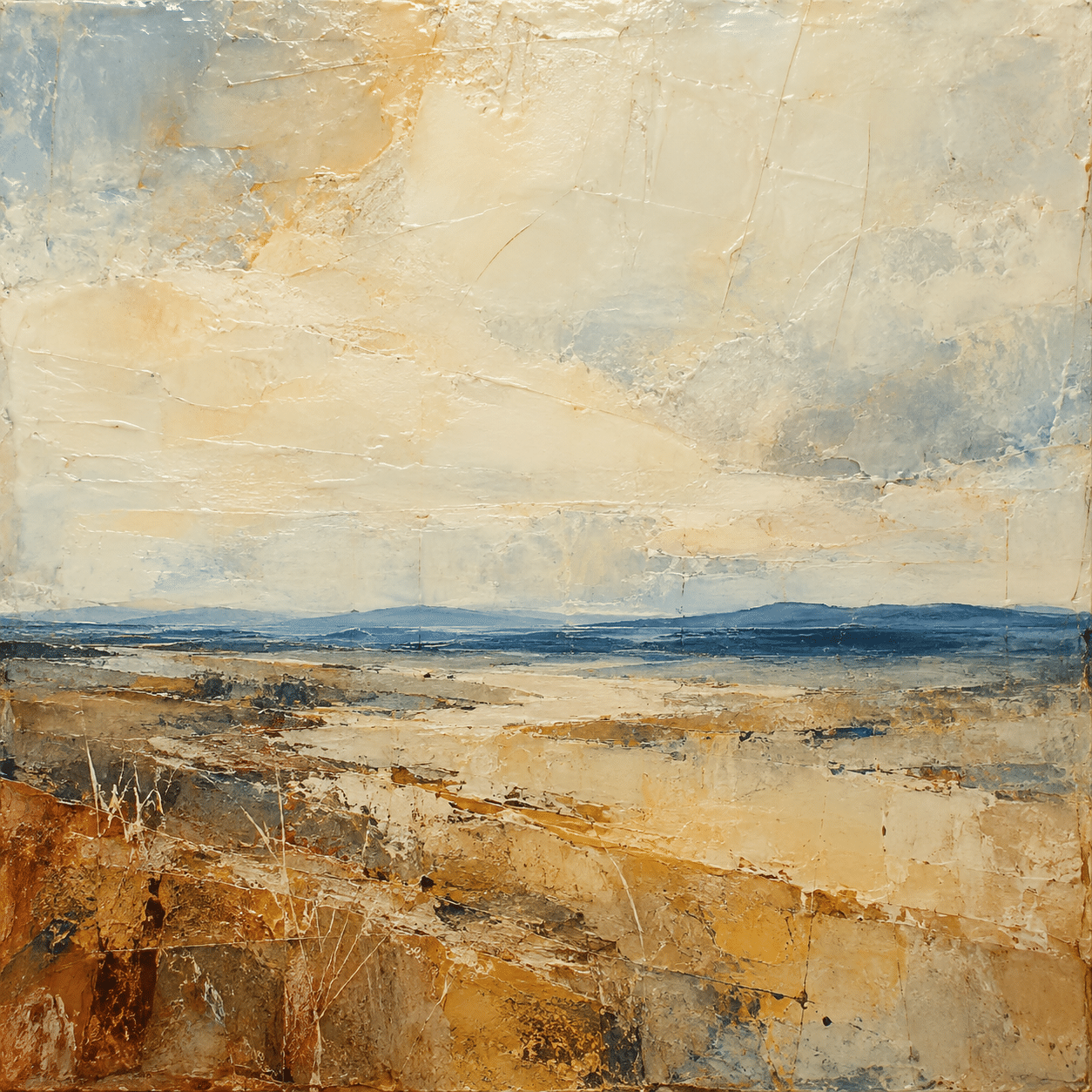
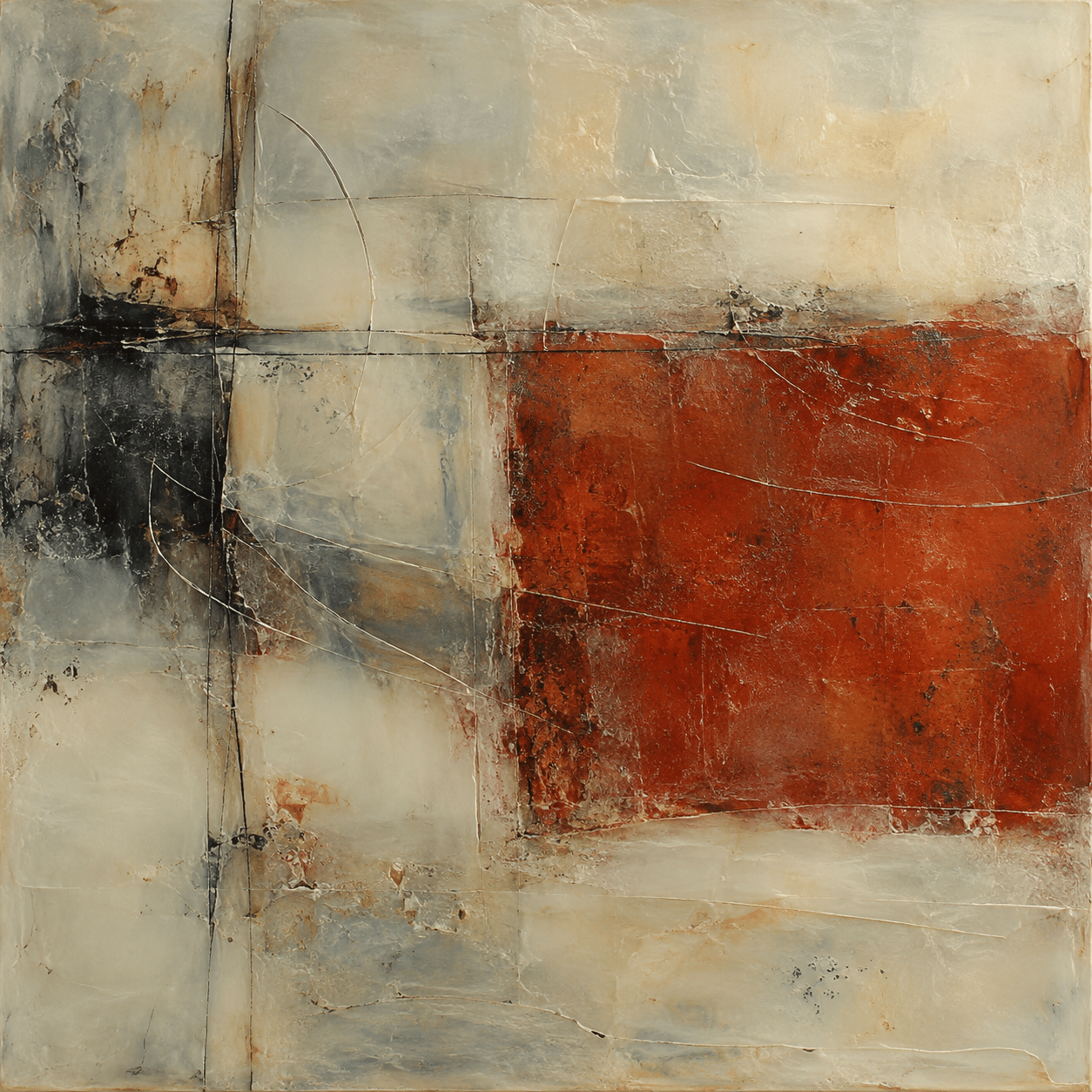
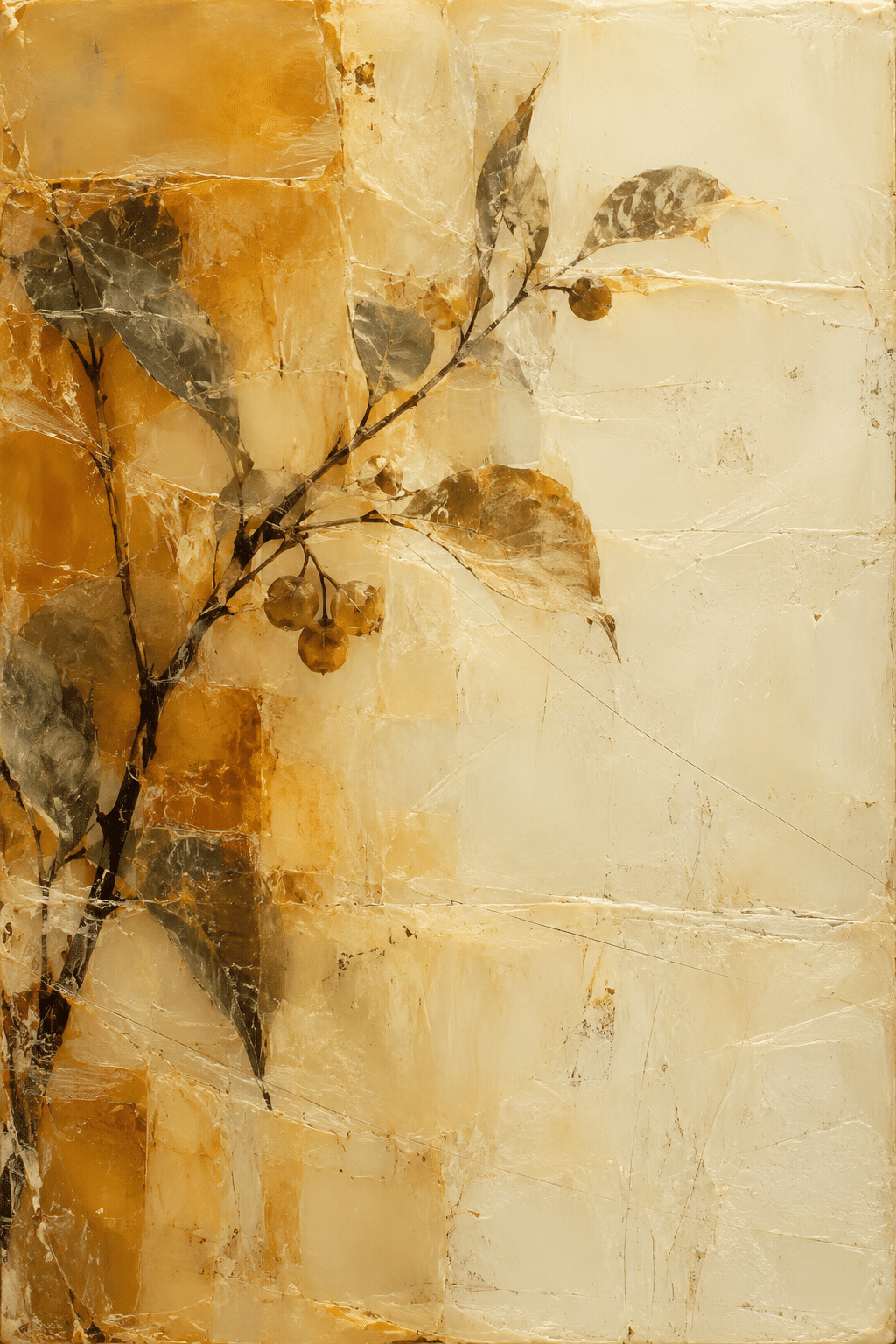
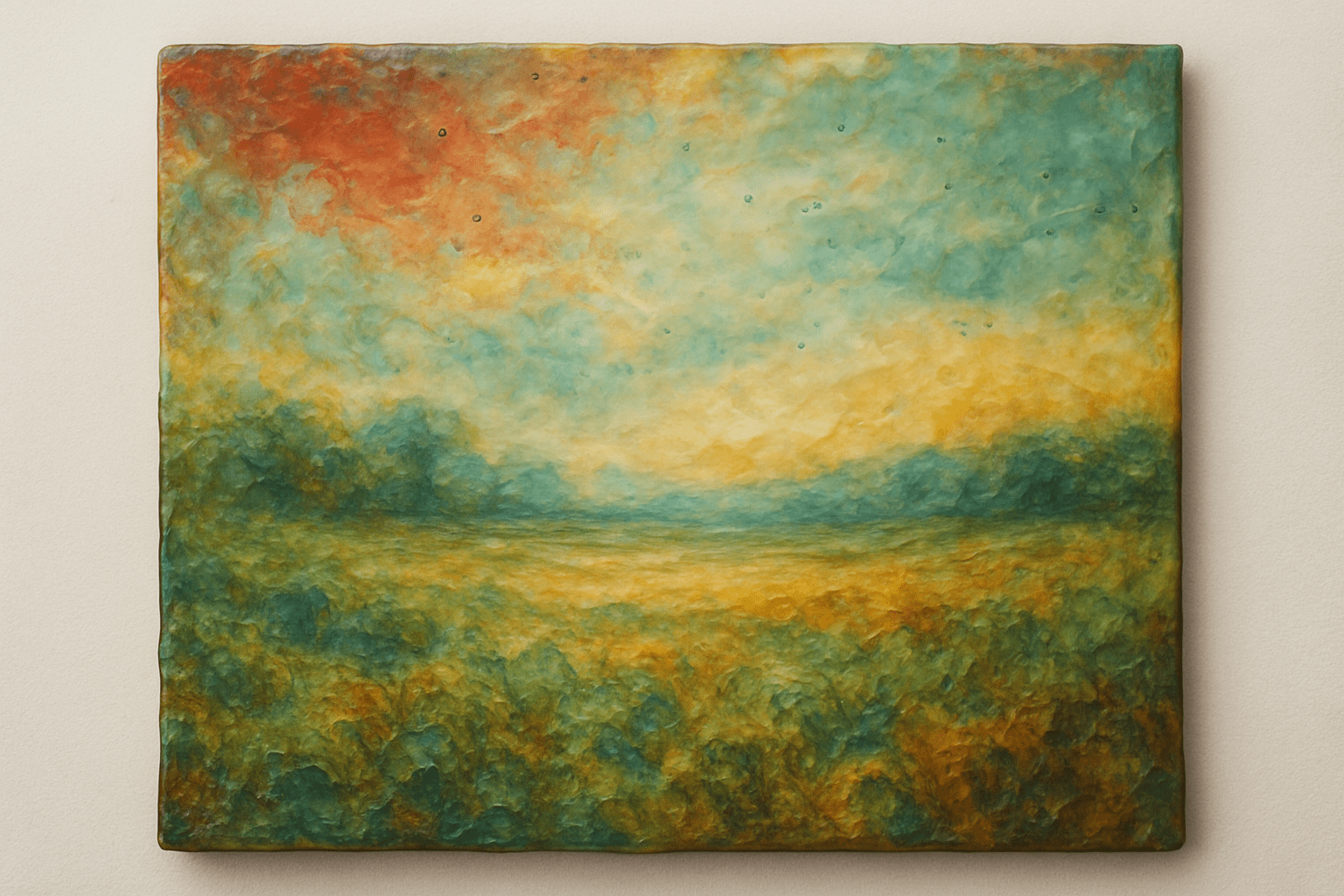
The landscape study explores layered atmosphere, the abstract panel contrasts buried lines with opaque colour, and the botanical study uses the suggestion of a partly obscured trace. All are AI-generated visual interpretations. They are not photographs of actual encaustic objects and do not reproduce an ancient portrait.
As an image-making exercise, sketch the same composition in three versions: one mostly opaque, one mostly translucent and one with a deliberate interruption between the two. Compare where the eye pauses. This can clarify an intention before material experimentation and helps distinguish meaningful depth from a decorative wax-like texture.
Plan what remains visible
Draw a simple composition with three kinds of area: a clear underlying mark, a partly obscured mark and a quiet opaque passage. Decide where the viewer should first notice the buried structure. If every layer demands equal attention, the image may feel busy rather than deep. One interrupted line can establish a sense of time more clearly than dozens of unrelated scratches.
Repeat the design with the opaque area moved to another position. The point is to compare concealment as a compositional decision before treating it as a surface effect. These drawn or digital studies do not prescribe a physical sequence of heating and application; practical material work needs its own tested process.
Document the object and its reproduction separately
For a physical painting, make a straightforward overall record and a closer view of a relevant surface passage. Explain whether the close view uses angled light to show relief. A reflection that dominates one photograph may disappear in another; neither should be mistaken for a complete account of the work’s material depth.
For an AI-generated encaustic interpretation, describe wax-like opacity, layered colour or incised-looking marks as visible effects. Do not add a fictitious support, pigment recipe or studio history. The distinction lets viewers enjoy the image while understanding why its attractive surface cannot establish the construction or condition of a real encaustic painting.
A small poetic detour
Original words from the AOI studio.
Poetry
Under the Surface
A line goes quiet under white;
its faint return is still a line.
The amber keeps a little dusk,
the blue lets buried weather shine.
What disappears is not all gone—
the surface carries something on.
The prompt workshop
Original creative exercises. These prompts create new illustrations, not documentary evidence.
A layered horizon
Create an original encaustic-inspired landscape with a low blue horizon, translucent ivory layers, scraped ochre passages and restrained surface relief. Label the result as a generated interpretation.
Buried lines
Create an abstract encaustic-inspired panel with charcoal-like lines partly obscured beneath milky wax-like layers, one opaque rust-red area and quiet margins.
A botanical trace
Create an encaustic-inspired botanical image with a delicate branch partly revealed through translucent amber and ivory layers, incised-looking marks and deliberate empty space.
A smile from the studio
Jokes
The painting described its earlier version as a deeply held belief.