
Ecologically engaged artistic practice
Eco Art is commonly used as a short form of ecological art. This practical companion focuses on developing and evaluating a project; the Ecological Art overview addresses the wider field. A green palette or natural material alone does not establish ecological value.
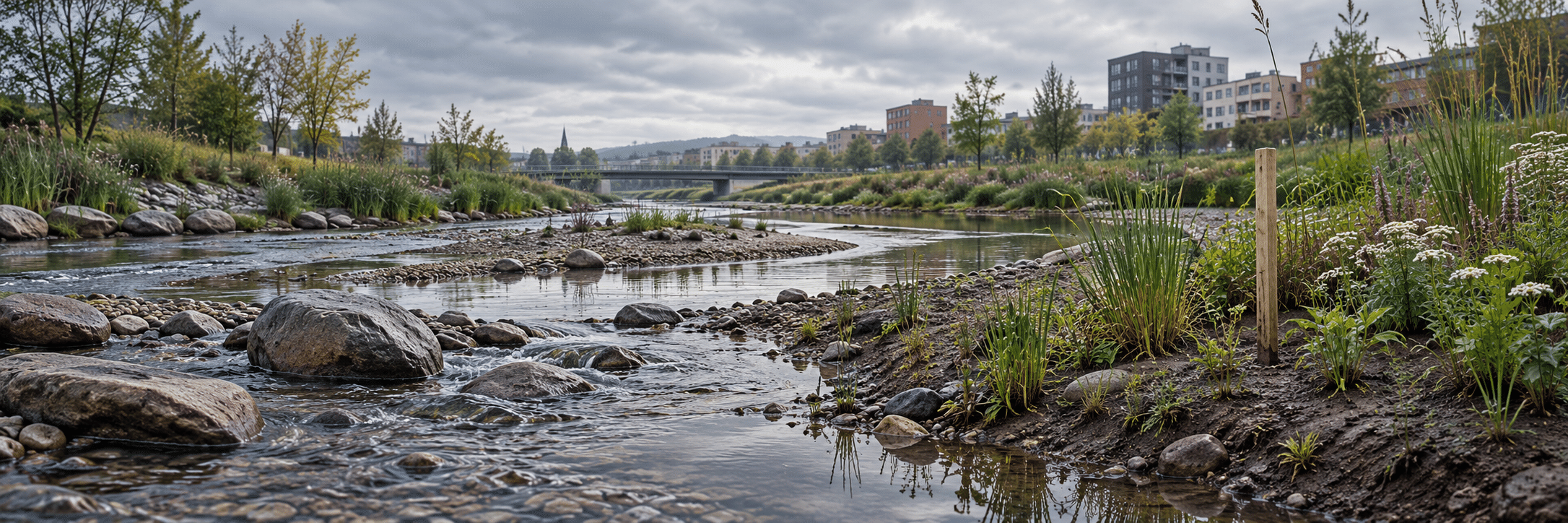
A visual introduction
Seven new AI-generated visual proposals explore water, decomposition, repair, shared observation and material reuse. They do not document completed interventions or prove ecological benefits. The earlier image remains for comparison.
Select an image for a closer look. Use the thumbnails, arrow keys or a swipe to compare examples. Zoom in to inspect details, or share the image that inspires you.



Creative toolbox · take this style further
Choose an input and a destination. Search sends your words to the chosen site; Copy & open puts them on your clipboard to paste there.
Create with AI
Turn your chosen input into an image prompt or a new creative direction.
ChatGPT
Copy your input and paste it into a ChatGPT conversation or image request.
Copy & open ChatGPT (new tab)Claude · Anthropic
Develop an image prompt or explore the style in a new Claude conversation.
Copy & open Claude · Anthropic (new tab)Midjourney
Paste your input into the Imagine bar on the Create page.
Copy & open Midjourney (new tab)Adobe Firefly
Copy your input, open Firefly, and paste it into the prompt field.
Copy & open Adobe Firefly (new tab)Leonardo.Ai
Copy your input, open Leonardo, and paste it into the generation field.
Copy & open Leonardo.Ai (new tab)Image search
Find visual references. Short, concrete keywords usually work best.
Lexica
Search AI images and prompts using your selected input.
Search with this input Lexica (new tab)Pexels
Search the photo and video library. Short keywords often work best.
Search with this input Pexels (new tab)Pixabay
Search photos, illustrations and other images.
Search with this input Pixabay (new tab)Unsplash
Search photographs using the style name or your own keywords.
Search with this input Unsplash (new tab)Wikimedia Commons
Search photographs, artworks and historical images. Check each file for its source and reuse terms.
Search with this input Wikimedia Commons (new tab)Art & research
Explore artists, collections and the ideas behind a style.
Wikipedia
Search for background reading. A style may not have its own article.
Search with this input Wikipedia (new tab)WikiArt
Copy your input into WikiArt’s search to explore artists and artworks.
Copy & open WikiArt (new tab)Europeana
Paste your keywords into the search to explore European museum, library and archive collections.
Copy & open Europeana (new tab)Inspiration
Discover portfolios and visual ideas from creative communities.
Instagram hashtags
Search a hashtag made from your input: spaces and punctuation are removed. Instagram may require sign-in.
Search with this input Instagram hashtags (new tab)ArtStation
Paste your input into artwork search for concept art, environments, characters and visual development.
Copy & open ArtStation (new tab)Behance
Paste your input into project search for illustration, design and visual storytelling.
Copy & open Behance (new tab)A closer look
The visual form may involve maps, installations, performances, living systems or documentation; it should make a particular environmental relationship understandable.
Ecological attention becomes an artistic method
Eco Art is an abbreviated name for ecological art, not a separate movement with its own invented founding date. Getty’s Art & Architecture Thesaurus includes natural forces, organisms, performance and other media within the field. What connects them is attention to ecological systems and environmental problems, rather than a shared palette or material. This article is the practical companion to AOI’s broader Ecological Art overview.
Agnes Denes’s Wheatfield—A Confrontation was planted and harvested on a Manhattan landfill in 1982. Her account connects the field’s location with questions of food, land and economic value. The work matters here as an example of a precise relationship between form, site and argument, rather than a template to reproduce wherever an empty plot appears.
Begin with a question that can be investigated
Agnes Denes's account of Wheatfield—A Confrontation describes a planted field in lower Manhattan whose setting made land use and value central to the work. The project is useful to study because its form and location sharpened a specific question.
For a new proposal, identify the system involved: water movement, maintenance, waste, habitat or access to land. Replace an abstract instruction to “celebrate nature” with a question about what happens, who participates and what the audience should notice.
Choose a form that reveals the relationship
A map can show a flow, a performance can make labor visible, and an installation can bring a process into an encounter with viewers. The form should fit the question rather than default to decorative leaves and recycled-looking textures.
The Queens Museum's account of Mierle Laderman Ukeles connects maintenance work with the structures that sustain everyday life. It offers a useful example of environmental attention extending beyond attractive landscapes to labor and systems.
Distinguish intention, activity and outcome
An artwork can raise a question without proving that it repaired an ecosystem. Record what was actually done and what evidence supports any claimed result. A proposed planting, a completed planting and a demonstrated ecological benefit are different stages.
For a collaborative project, make contributors' roles visible and agree how their knowledge and work will be represented. A compelling image should not erase the people who maintain a site after an exhibition or event ends.
Plan for the life of the project
Consider materials, transport, maintenance and what happens when the work is removed. Reuse is one decision among several, not a universal guarantee of sustainability. Explain tradeoffs in concrete terms appropriate to the actual project.
The prompts below are visual concepts, not environmental assessments or records of completed interventions. Use them to test how a relationship could become visible. For the broader context, continue with AOI's Ecological Art article; the two labels refer to overlapping practice, not rival movements with invented separate origins.
Visual grammar: make a process legible
A useful composition identifies an input, a change and a consequence. In a water-based proposal, the viewer might follow runoff from a hard surface into a planted depression. In a repair project, an old break and a new join can remain visible together. In a performance, repeated actions can reveal the labor that a finished landscape normally conceals. Give the eye a route through those relationships.
Use scale deliberately. A close view can disclose soil, seams or weathering; a wider view can reveal the surrounding infrastructure. Neither replaces the other. A beautiful isolated object may hide where its material came from, while an expansive landscape can make responsibility disappear into scenery. Pair a compelling focal image with enough context to explain the proposed system.
Five studies: water, time, repair, observation and material
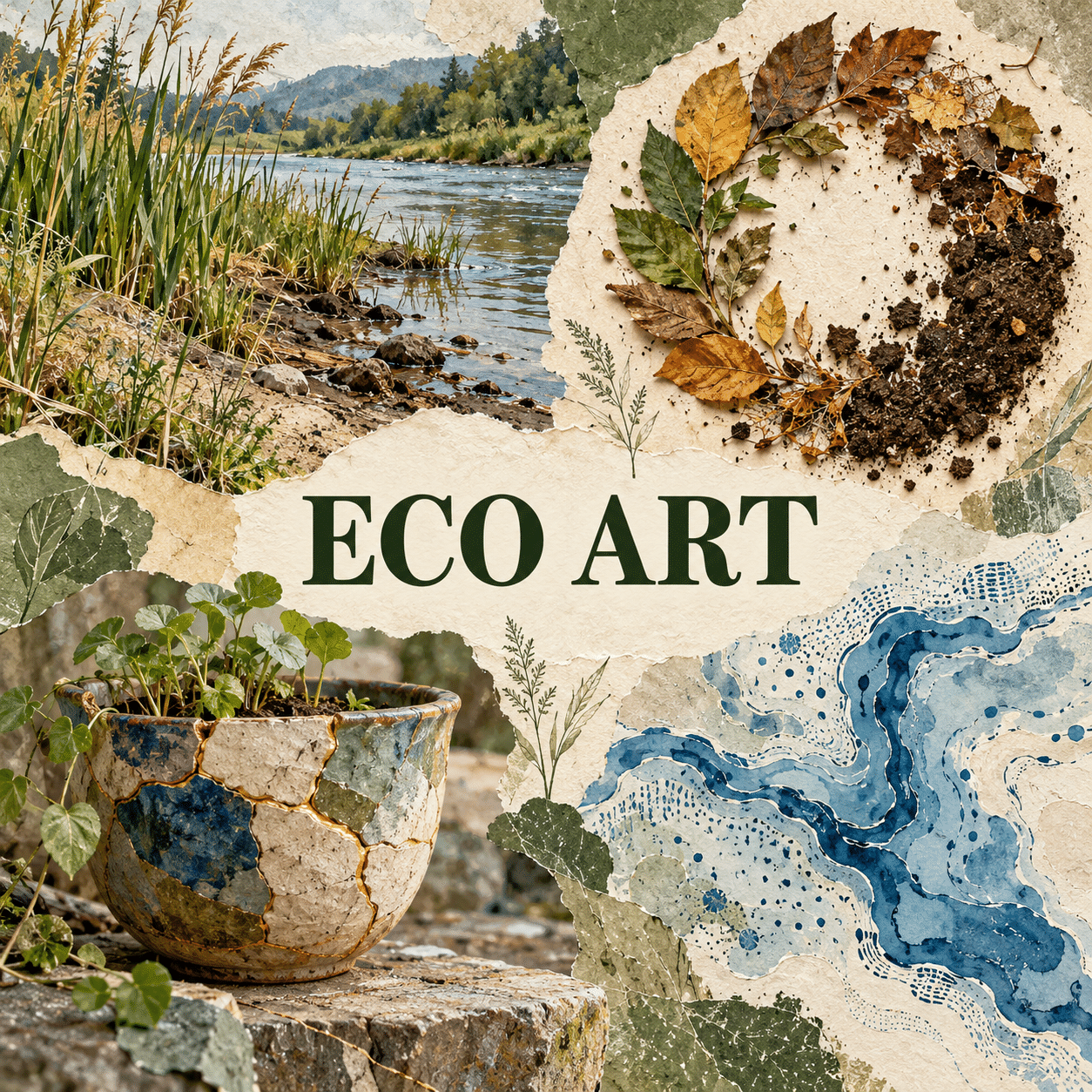
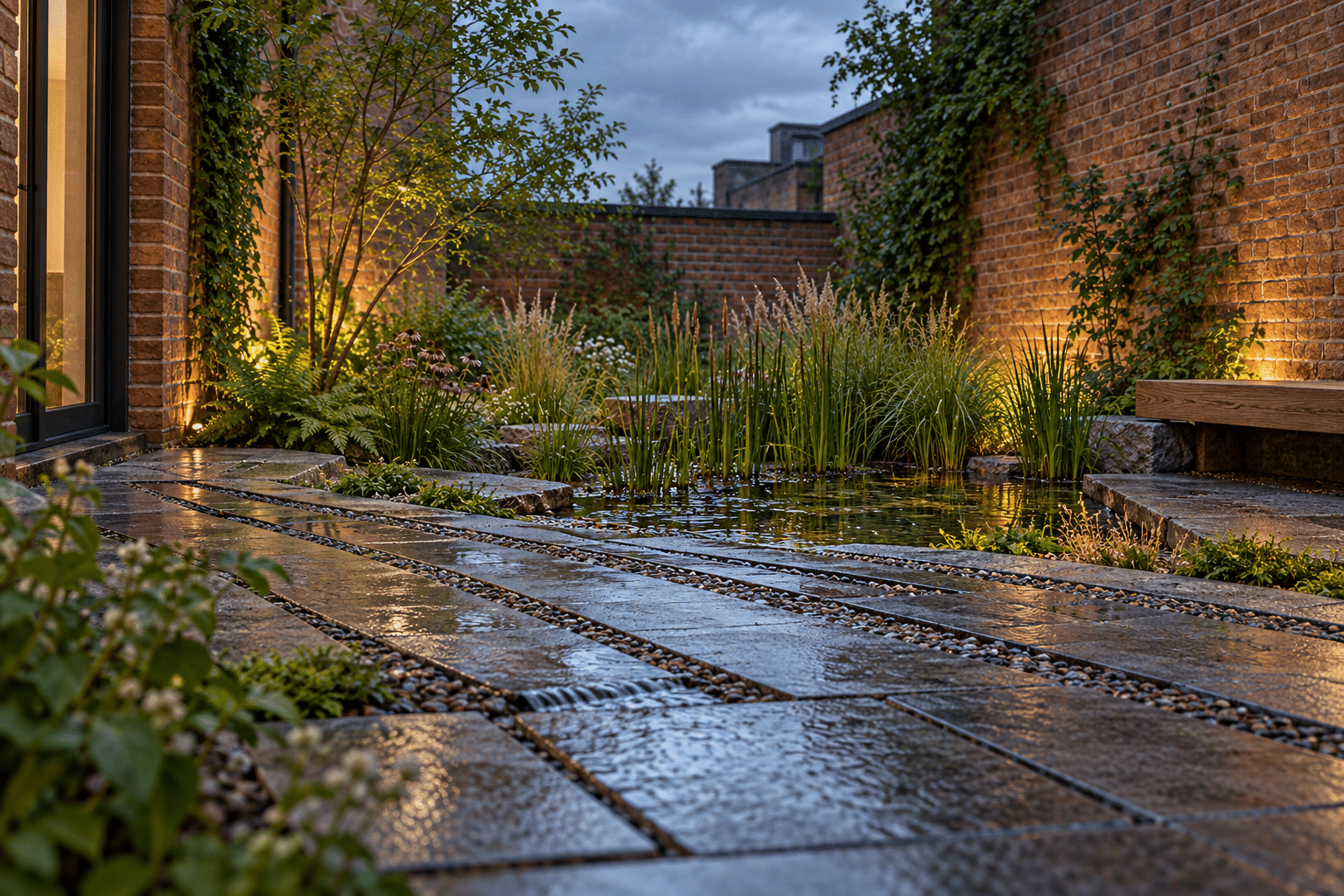
The courtyard study imagines rainwater moving through permeable bands toward a planted basin. Its lighting and planting are visual decisions, not engineering specifications. The leaf spiral contrasts intact leaves with fragments and soil, making a temporal process available as a single composition. It evokes decomposition without pretending to document a controlled experiment.
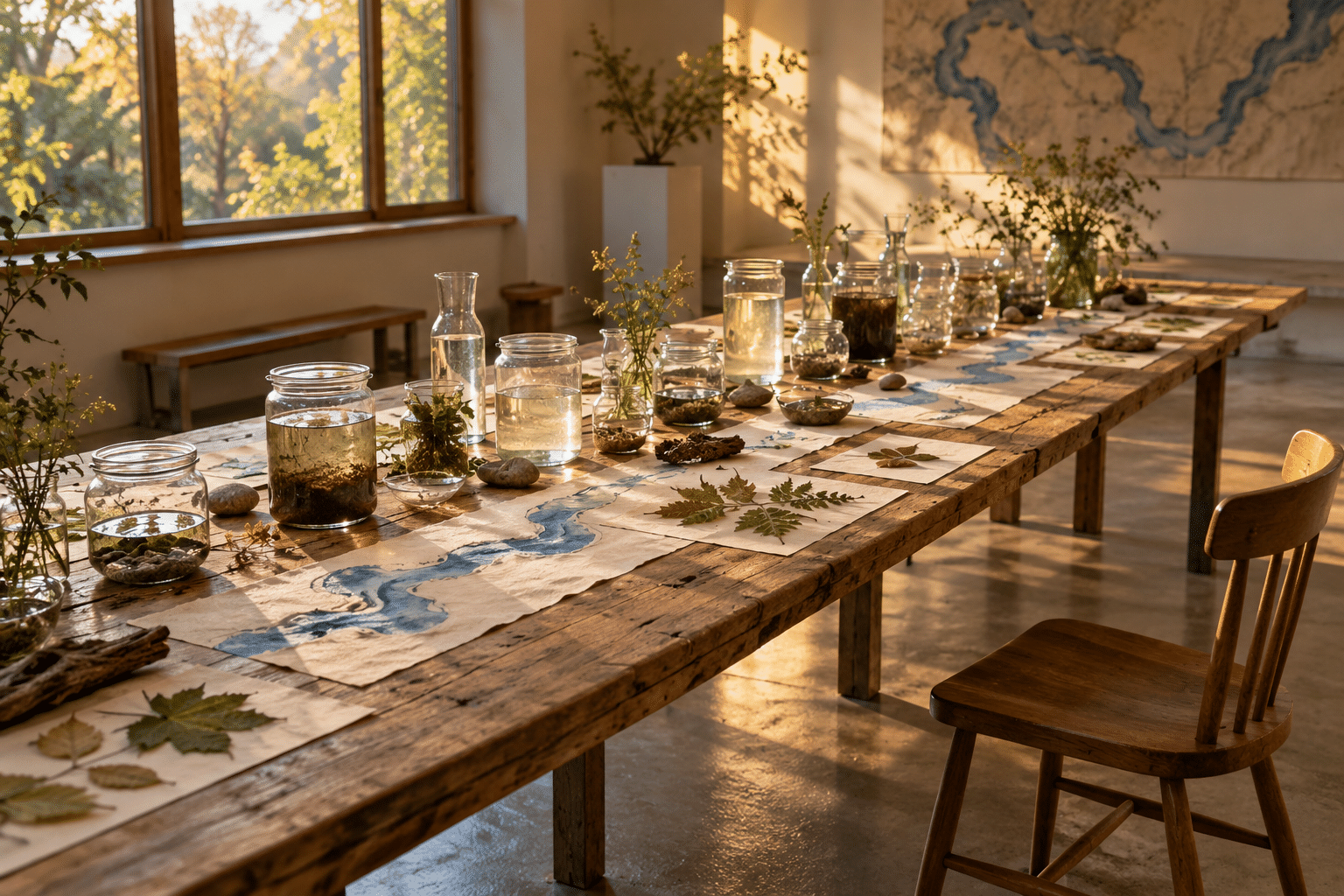
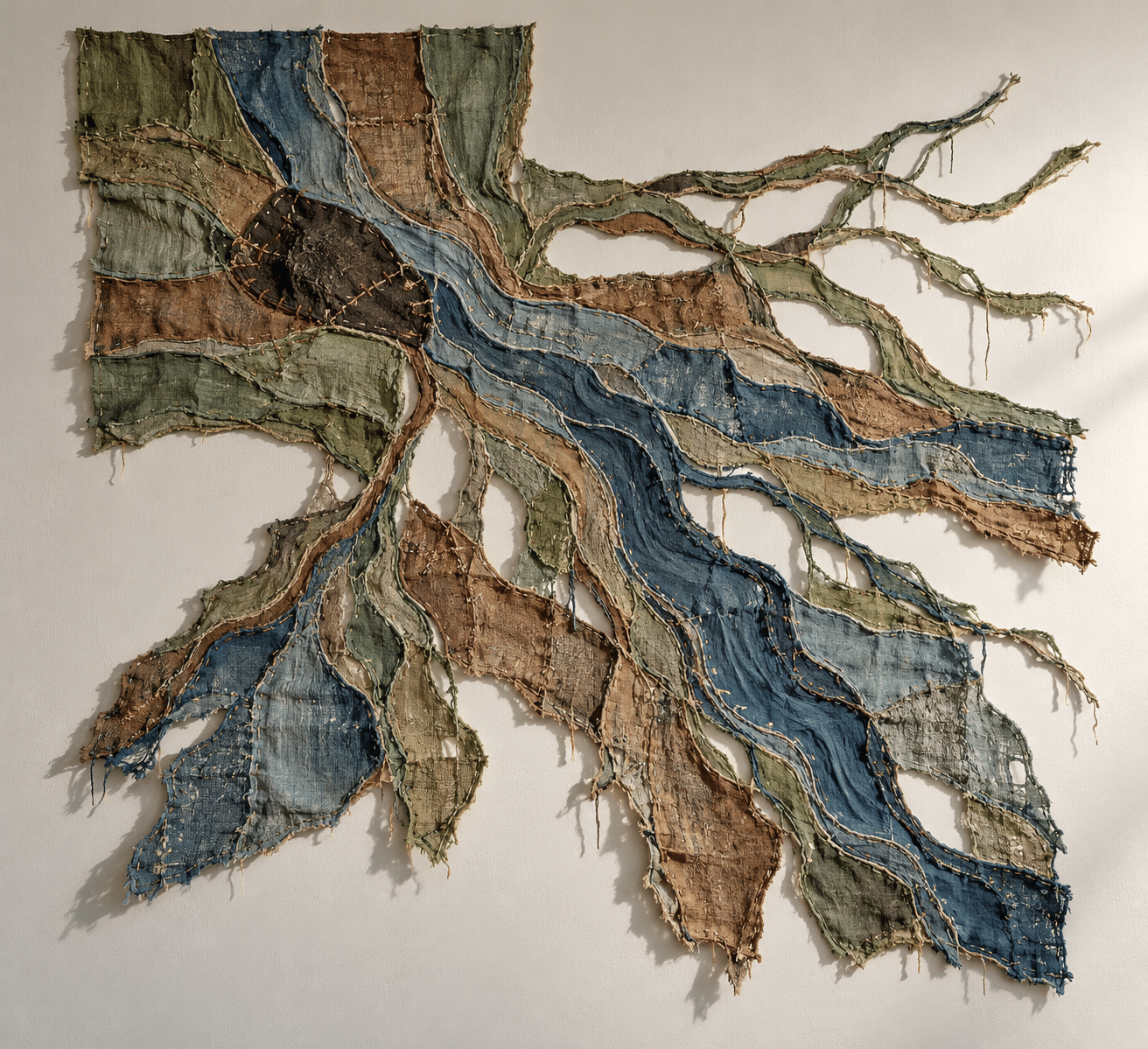
The repaired clay vessel gives continued use a visible form. Its joins matter as much as its seedlings. The long table brings jars, river drawings and natural materials into a shared setting, suggesting a place for observation and conversation. The textile study translates branching water relationships into seams and cloth strips. The darker patch interrupts the flow without assigning a fabricated measurement or pollution reading.
The banner and titled collage connect these scales. Every new image is AI-generated; no planted site, repaired object or reclaimed textile was physically produced by making the image. The gallery is therefore a workshop in visual proposals, and its environmental claims stop at what those proposals show.
Palette and material should follow the question
Earth tones and greens may fit a planting study, but they are not proof of ecological engagement. Blue can describe water or simply decorate a surface. A black-and-white maintenance record may communicate more than a lush green rendering. Choose color to separate flows, stages or responsibilities, and explain any legend when it carries information.
For physical work, consider sourcing, attachment, durability and removal together. A material that can be reused may still require transport or coatings; an ephemeral arrangement can still disturb a site. These are project-specific questions. In an image prompt, describe the visible repair, seam, water route or accumulation rather than asking for a vague sustainable aesthetic.
From an attractive proposal to an accountable project
Write down what the artwork is intended to make perceptible, who would participate and what would need to be maintained. Separate an artistic observation from a claim about measurable environmental performance. If a project claims cleaner water or increased habitat value, it needs appropriate evidence and collaborators; a persuasive rendering cannot provide that evidence.
Useful applications include exhibition proposals, community discussion, educational interpretation and documentation of an actual practice. Show uncertainty and unfinished processes where they matter. Do not use before-and-after imagery that implies an intervention occurred when it did not. A modest proposal with a clear question can be more useful than a spectacular image of effortless ecological repair.
Positive editorial assessment — AI-authored
Eco Art can connect visual experience with systems that are normally overlooked. The new studies are strongest where their structure makes a relationship concrete: the courtyard has a route for water, the repaired vessel retains its break, and the textile makes connections visible through seams. This gives environmental attention a form beyond a general celebration of greenery.
Critical editorial assessment — AI-authored
The central risk is substituting attractive environmental imagery for accountable action. The courtyard could be mistaken for successful restoration, and the jars could imply scientific authority they do not possess. Their captions and article must keep proposal, observation and demonstrated result separate. A real project would also need to account for labor, access and maintenance after its most photogenic moment.
Neutral editorial assessment — AI-authored
Eco Art encompasses varied practices concerned with ecological relationships. The images here are useful for discussing composition, scale and project intentions; they are not environmental assessments. Compare them with documented artist projects, then select methods and collaborators appropriate to an actual site. Eco Art and ecological art remain overlapping names for the field.
A small poetic detour
Original words from the AOI studio.
Poetry
What Keeps the Garden
The photograph keeps afternoon,
the bed requires tomorrow.
A hand returns to mend the edge,
a channel learns the hollow.
The leaf does not remain a leaf;
the seam remembers strain.
A table leaves an empty chair
for someone to explain.
Let beauty show the work it needs,
the time it cannot own;
the small and ordinary care
that lets a place be known.
The prompt workshop
Original creative exercises. These prompts create new illustrations, not documentary evidence.
Make a flow visible
Original eco-art concept diagram showing a neighborhood’s rainwater journey through recognizable places, clear visual hierarchy and no invented measured data.
Maintenance as subject
Original installation proposal making the tools and repeated tasks of caring for a shared garden visible, contributors represented respectfully and no false documentary claim.
A project lifecycle
Original visual concept comparing the assembly, use and disassembly of a reusable exhibition structure, concrete material relationships rather than generic green symbolism.
A smile from the studio
Jokes
The garden proposal promised to be low-maintenance. The watering can requested that this claim be reviewed.