
Descriptive artistic approach
Eccentric Art is a broad descriptive label for work that departs from ordinary expectations through unusual proportions, materials, functions or combinations. Its strongest examples make an unexpected decision feel deliberate rather than merely random.
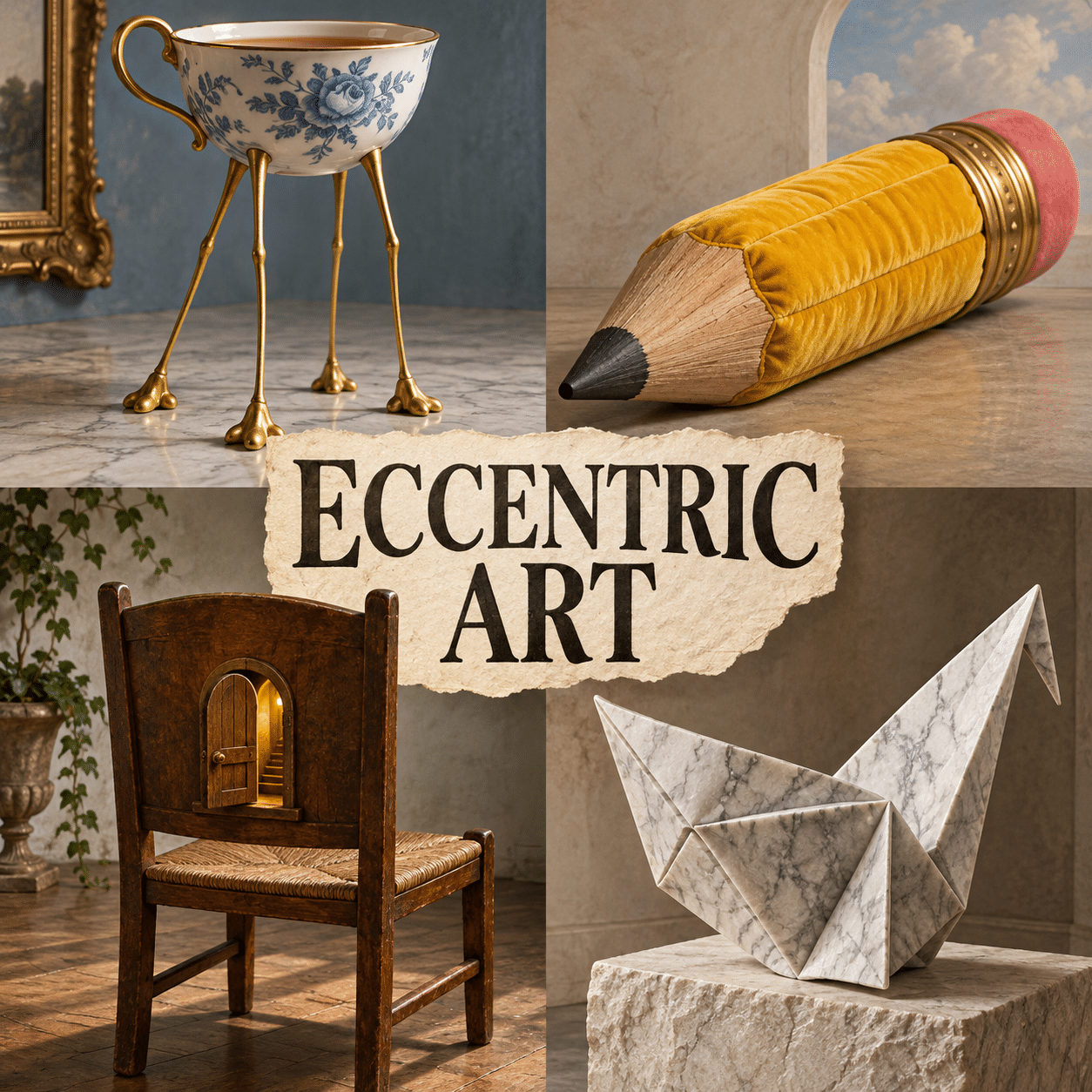
A visual introduction
Select an image for a closer look. Use the thumbnails, arrow keys or a swipe to compare examples. Zoom in to inspect details, or share the image that inspires you.
Creative toolbox · take this style further
Choose an input and a destination. Search sends your words to the chosen site; Copy & open puts them on your clipboard to paste there.
Create with AI
Turn your chosen input into an image prompt or a new creative direction.
ChatGPT
Copy your input and paste it into a ChatGPT conversation or image request.
Copy & open ChatGPT (new tab)Claude · Anthropic
Develop an image prompt or explore the style in a new Claude conversation.
Copy & open Claude · Anthropic (new tab)Midjourney
Paste your input into the Imagine bar on the Create page.
Copy & open Midjourney (new tab)Adobe Firefly
Copy your input, open Firefly, and paste it into the prompt field.
Copy & open Adobe Firefly (new tab)Leonardo.Ai
Copy your input, open Leonardo, and paste it into the generation field.
Copy & open Leonardo.Ai (new tab)Image search
Find visual references. Short, concrete keywords usually work best.
Lexica
Search AI images and prompts using your selected input.
Search with this input Lexica (new tab)Pexels
Search the photo and video library. Short keywords often work best.
Search with this input Pexels (new tab)Pixabay
Search photos, illustrations and other images.
Search with this input Pixabay (new tab)Unsplash
Search photographs using the style name or your own keywords.
Search with this input Unsplash (new tab)Wikimedia Commons
Search photographs, artworks and historical images. Check each file for its source and reuse terms.
Search with this input Wikimedia Commons (new tab)Art & research
Explore artists, collections and the ideas behind a style.
Wikipedia
Search for background reading. A style may not have its own article.
Search with this input Wikipedia (new tab)WikiArt
Copy your input into WikiArt’s search to explore artists and artworks.
Copy & open WikiArt (new tab)Europeana
Paste your keywords into the search to explore European museum, library and archive collections.
Copy & open Europeana (new tab)Inspiration
Discover portfolios and visual ideas from creative communities.
Instagram hashtags
Search a hashtag made from your input: spaces and punctuation are removed. Instagram may require sign-in.
Search with this input Instagram hashtags (new tab)ArtStation
Paste your input into artwork search for concept art, environments, characters and visual development.
Copy & open ArtStation (new tab)Behance
Paste your input into project search for illustration, design and visual storytelling.
Copy & open Behance (new tab)A closer look
A familiar object obeys one surprising rule: its material changes, its proportions become improbable or its function is quietly contradicted.
A description rather than one movement
Eccentric can describe an artistic effect, but it does not identify a single historical movement, school or shared manifesto. The term depends on what a viewer expects. An ordinary object in an unusual material may seem eccentric in one context and perfectly conventional in another.
This page uses the label as a practical way to discuss deliberate departures from expectation. It does not equate eccentricity with mental illness, lack of training or an artist’s private personality. Those assumptions explain neither the object nor the decisions that make it interesting.
A specific example of material surprise
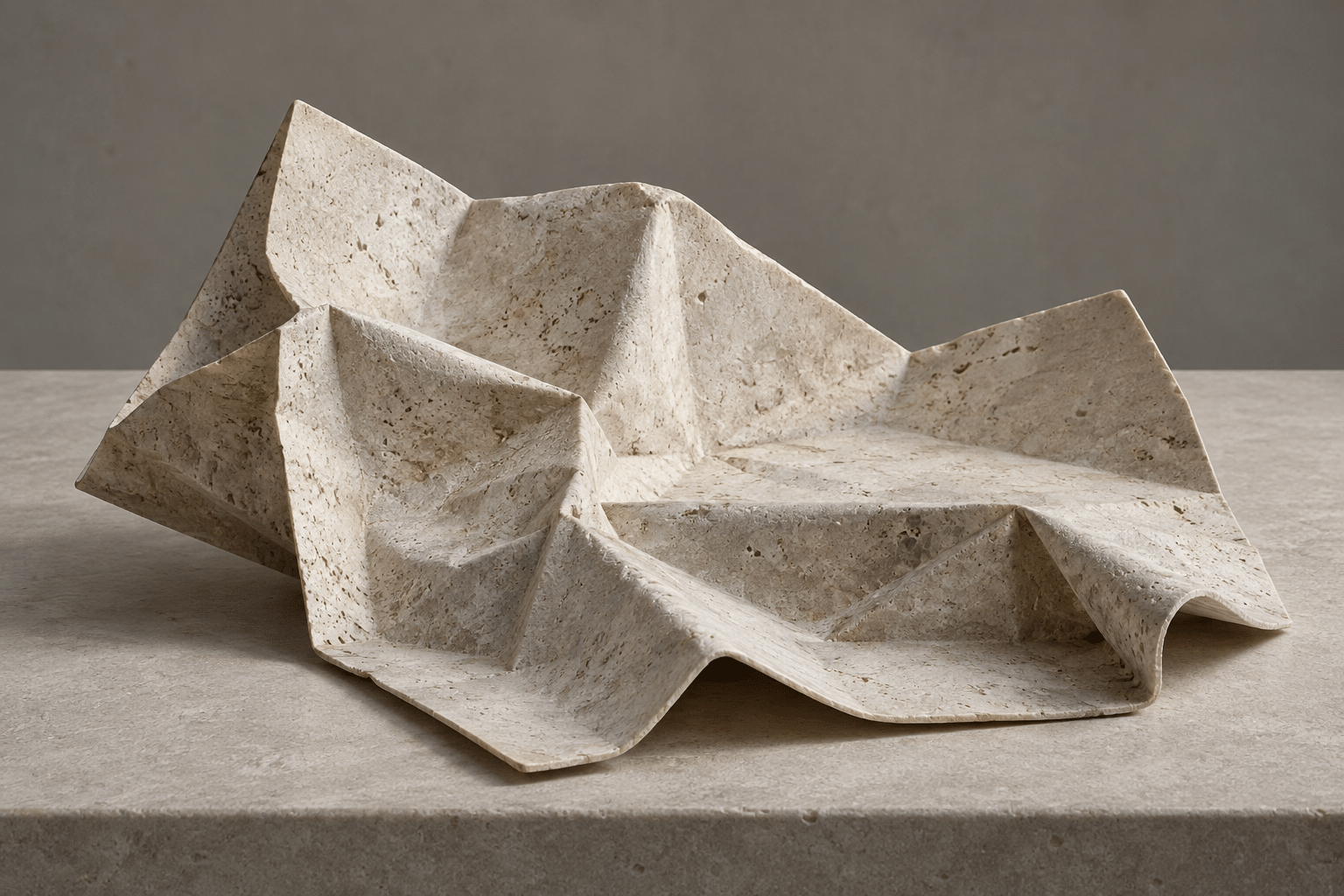
The National Galleries of Scotland describes David Shrigley’s Sculpture of a Piece of Paper, 1997, as a cast made after a sheet had been folded, crumpled and smoothed. Its fibreglass and resin-pigment construction gives an apparently disposable object a different material status. The museum discusses understated surprise and humor in the work.
That example is useful because the departure is precise. The subject remains recognizable, while its fabrication and gallery presentation complicate the first impression. It is not cited as proof that Shrigley founded Eccentric Art or that all unusual objects share one artistic intention.
Choose one rule to break
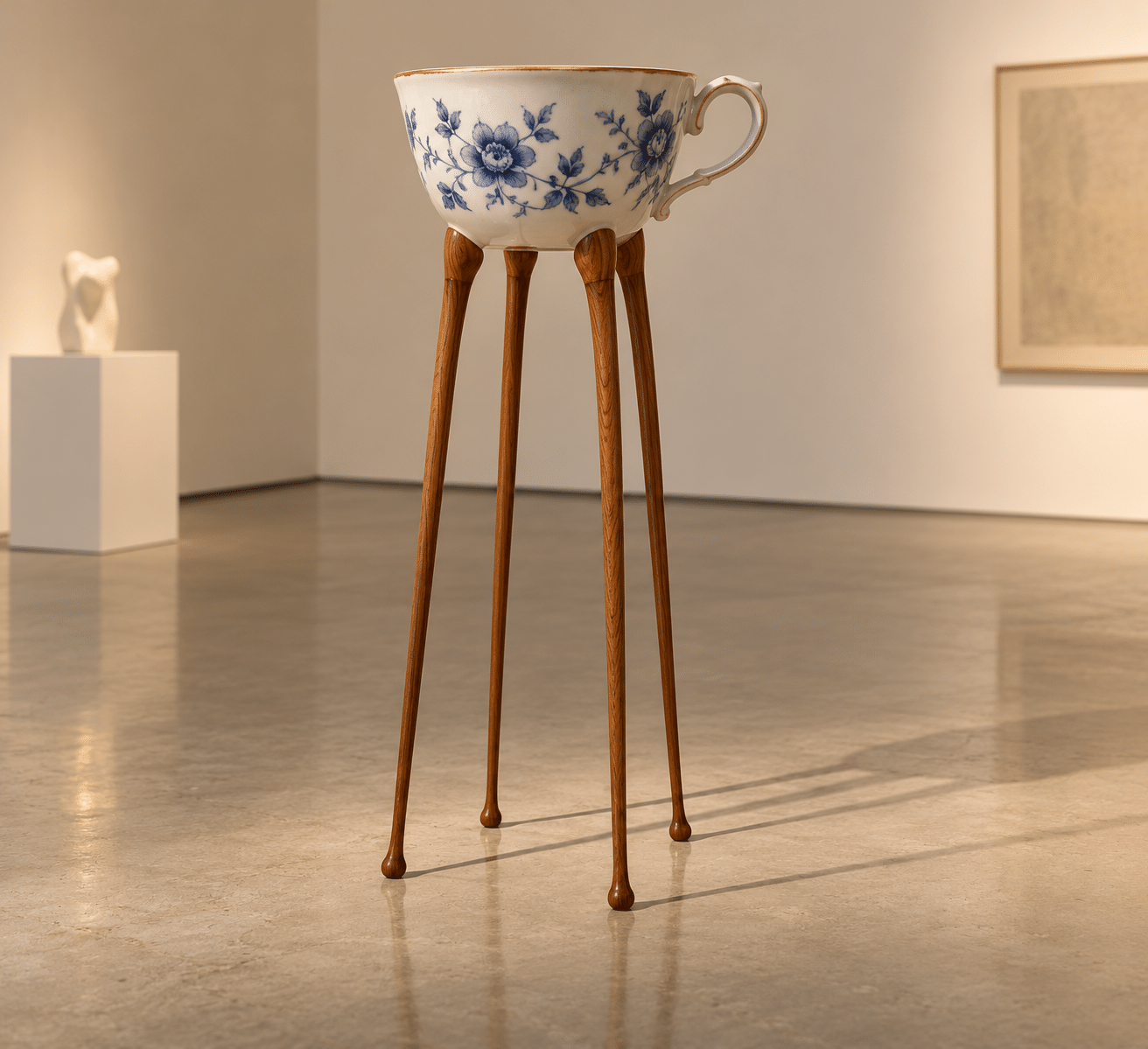
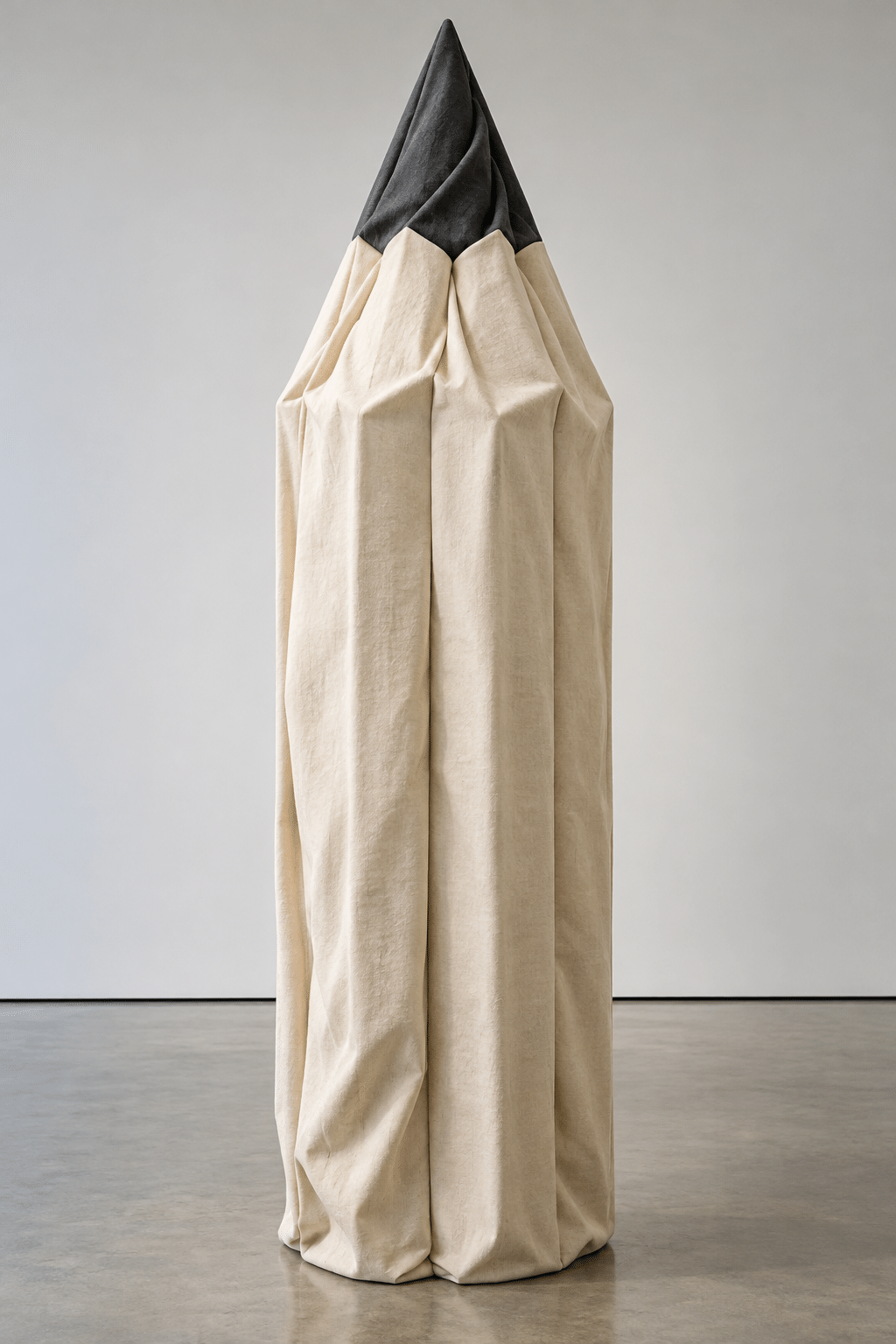
Start with an object whose normal form is easy to recognize. Change its scale, material, support or apparent purpose. A teacup on very long legs changes proportion and support; a fabric-like pencil contradicts the expected stiffness of a drawing tool. Keep the remaining features clear enough to establish the comparison.
Adding several unrelated surprises can make the central idea disappear. If the cup also flies, melts, grows wings and projects a landscape, the viewer may no longer know which relationship matters. Restraint gives the unusual decision room to be seen.
Precision makes strangeness stronger
Coherent light, credible texture and a carefully chosen viewpoint can make an impossible or impractical object feel present. The more convincingly the familiar parts are rendered, the more clearly the altered rule becomes visible. A neutral setting often helps by removing competing explanations.
This does not require photorealism. A simple drawing can establish its own consistent rules through line weight, shape and spacing. What matters is internal coherence: the work should look as though its oddity has been chosen, not as though every part was handled without attention.
Humor, unease and ambiguity
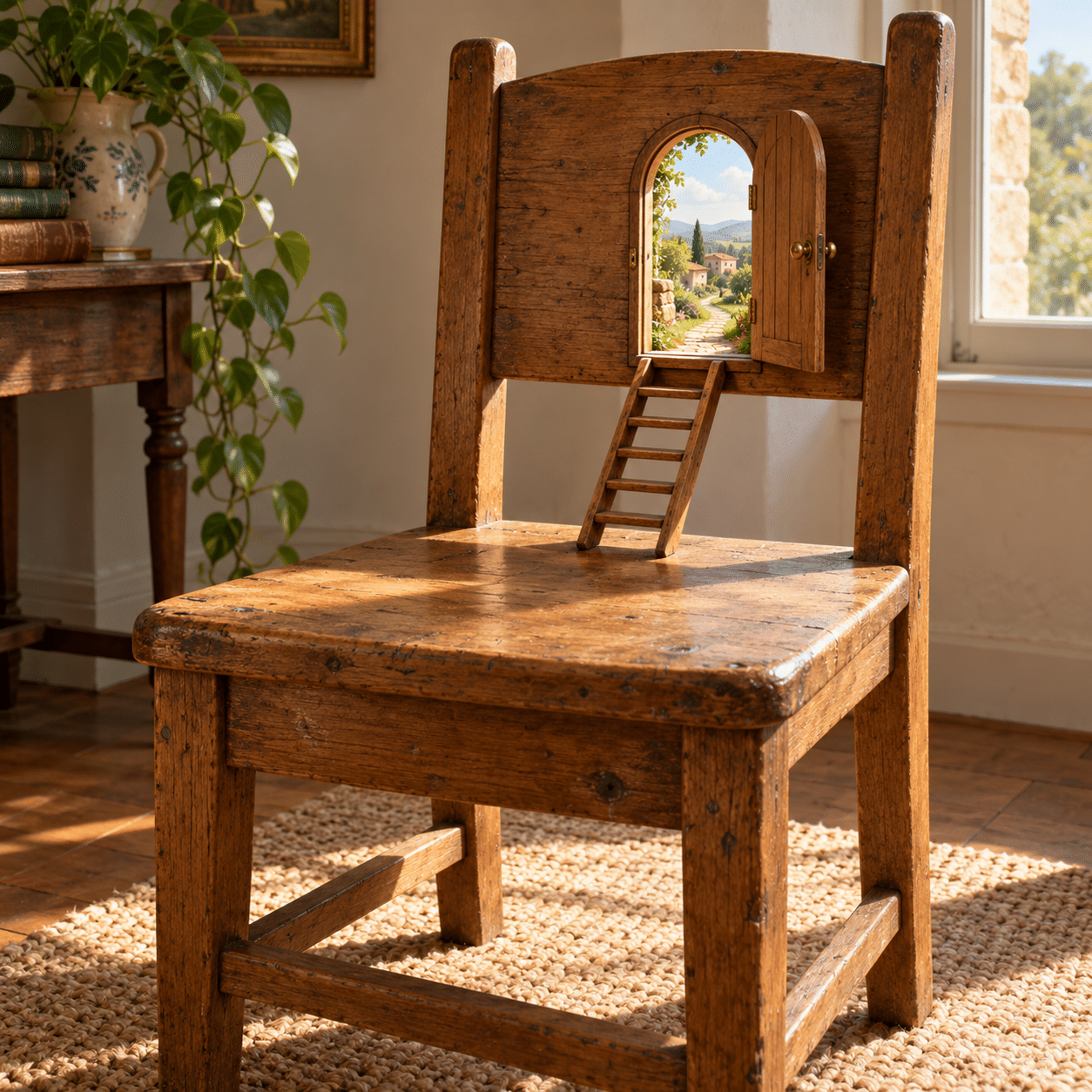
An eccentric image may be funny, tender, unsettling or all three. A tiny doorway in a chair back suggests an unexpected scale relationship, but the work need not explain who uses it. Leaving one question open can be more engaging than supplying a complete fictional biography.
Avoid forcing a universal interpretation. A soft pencil might suggest uselessness, comfort, hesitation or a playful material experiment. The artist can state an intention while allowing the viewer to notice other relationships. The object should carry enough visual interest to survive beyond its first joke.
Neighboring categories are not synonyms
Surrealism has specific historical contexts and can involve dreams, desire and unexpected conjunctions. Outsider Art concerns particular relationships to training and cultural institutions and should not be assigned simply because a work looks odd.
For this general directory entry, describe what changes in the image before applying a larger category. Material substitution, disproportion, functional contradiction and unexpected placement are useful concrete terms. They make the work easier to discuss without inventing a movement around a loose adjective.
Applications and a practical exercise
The approach can support conceptual illustration, playful sculpture studies, editorial imagery and fictional object design. Select an everyday object, list three expectations about it, then break only one. Make two versions with different degrees of exaggeration and compare when the idea becomes readable.
The new gallery contains AI-generated inventions, not photographs of fabricated sculptures. It tests long-legged support, soft-looking tools, miniature architectural openings and stone-like paper folds. If developing a physical object from one of these ideas, material feasibility becomes a separate design problem; a persuasive image does not solve it.
A small poetic detour
Original words from the AOI studio.
Poetry
The Object Makes a Rule
The cup grows legs and waits to walk;
the pencil folds before the page.
No need for either one to talk—
a changed proportion takes the stage.
The room stays plain enough to see
how strange one quiet thing can be.
The prompt workshop
Original creative exercises. These prompts create new illustrations, not documentary evidence.
One changed proportion
Create an original conceptual sculpture image of a small teacup standing on four exceptionally long wooden legs, coherent shadows and a quiet gallery setting, one clear absurd rule.
A material contradiction
Create an original giant pencil that appears made from folded pale fabric, dark folded tip, convincing soft texture and restrained presentation. No text or branding.
An unexpected opening
Create a precisely rendered wooden chair with a tiny open doorway in its backrest, ordinary materials and natural light, no additional surreal effects.
A smile from the studio
Jokes
The chair installed a tiny door. It now insists that sitting is only one way in.