
Established
Deepfake names a family of AI-assisted synthetic-media techniques that alter apparent identity or performance. In an artistic context, the subject opens questions about likeness, acting and the trust we place in a face.
A visual introduction
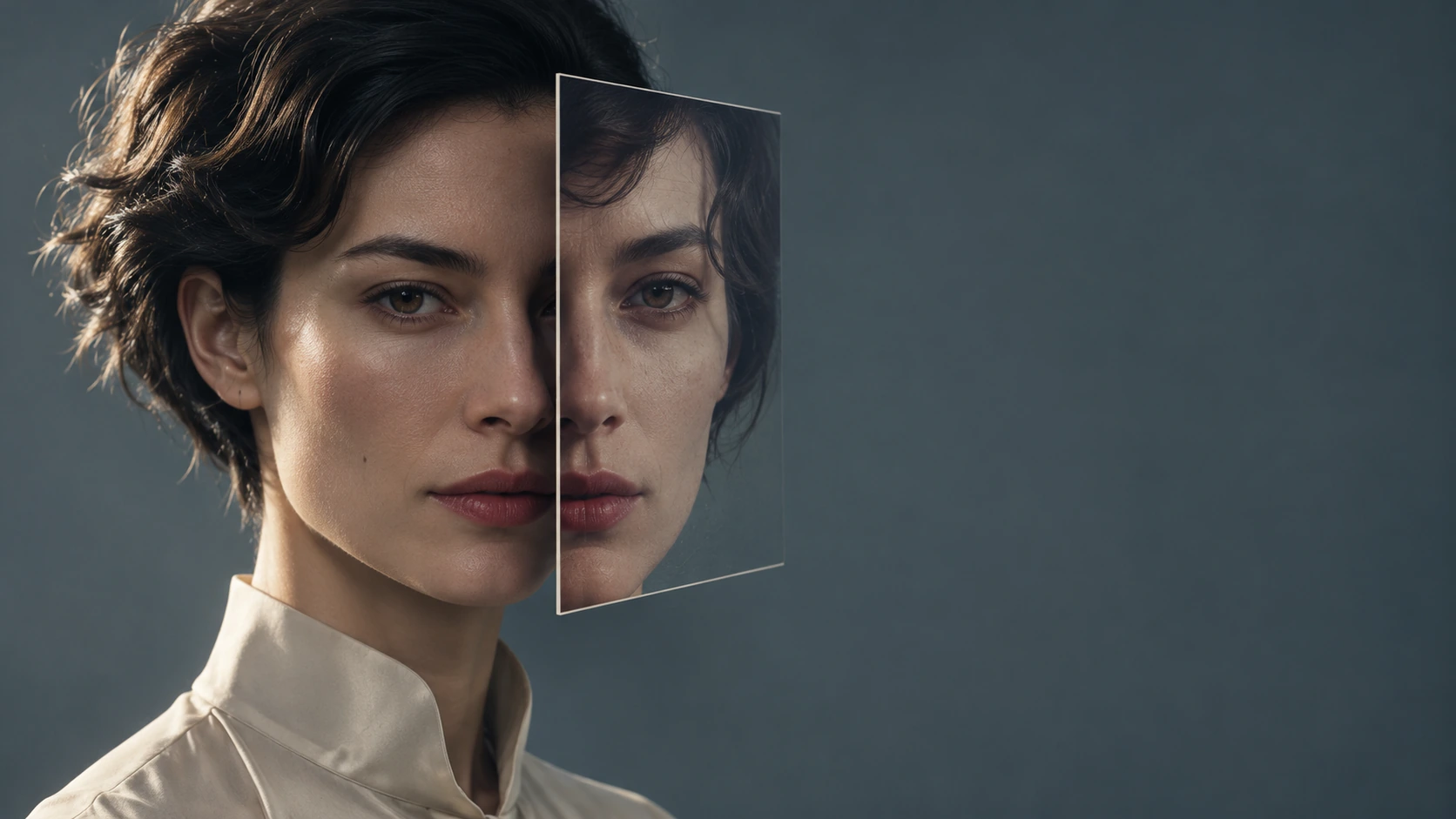
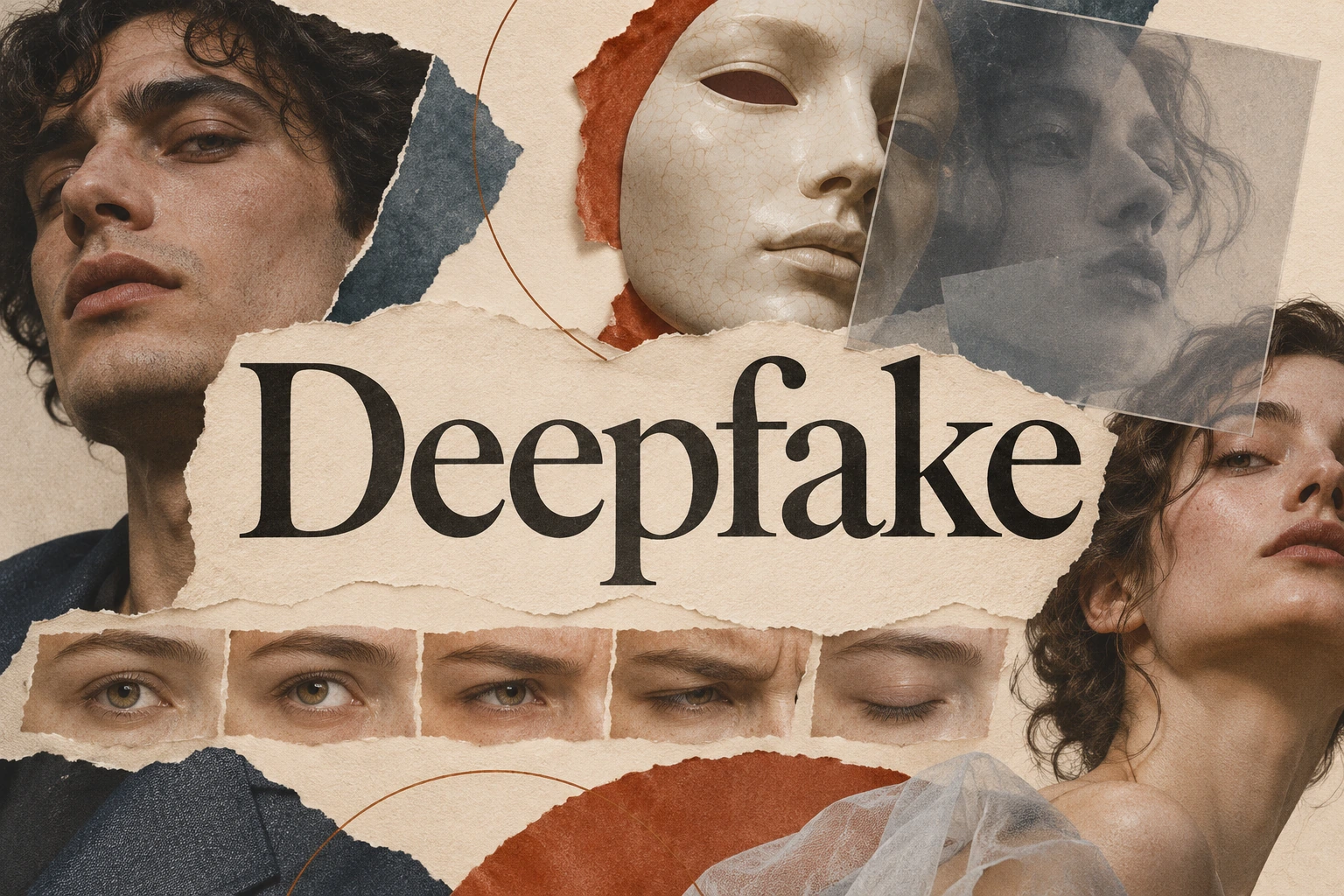
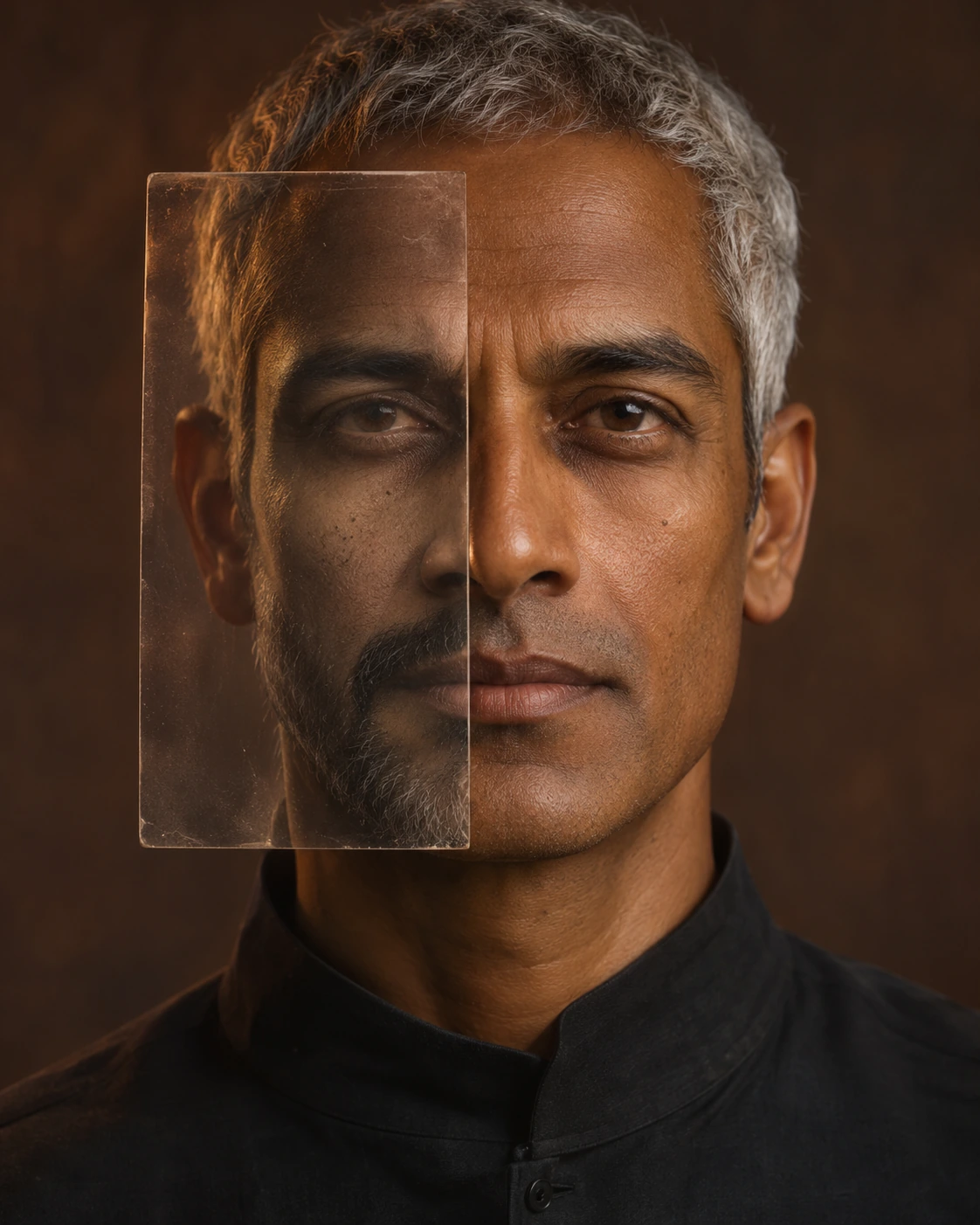
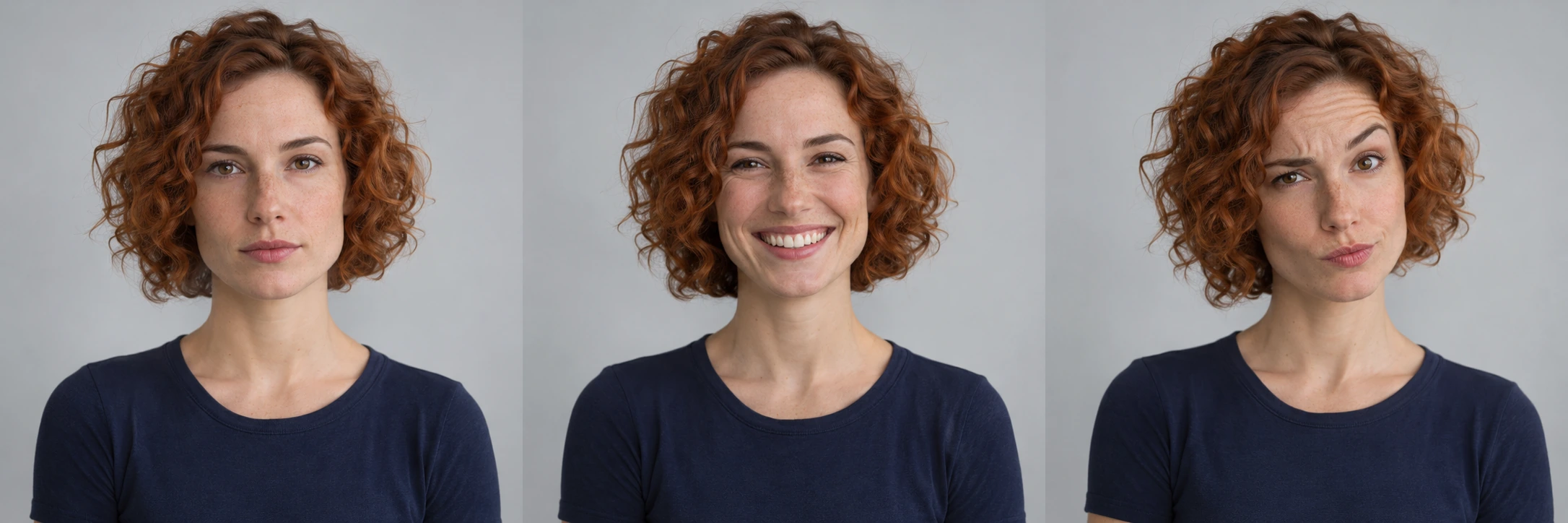
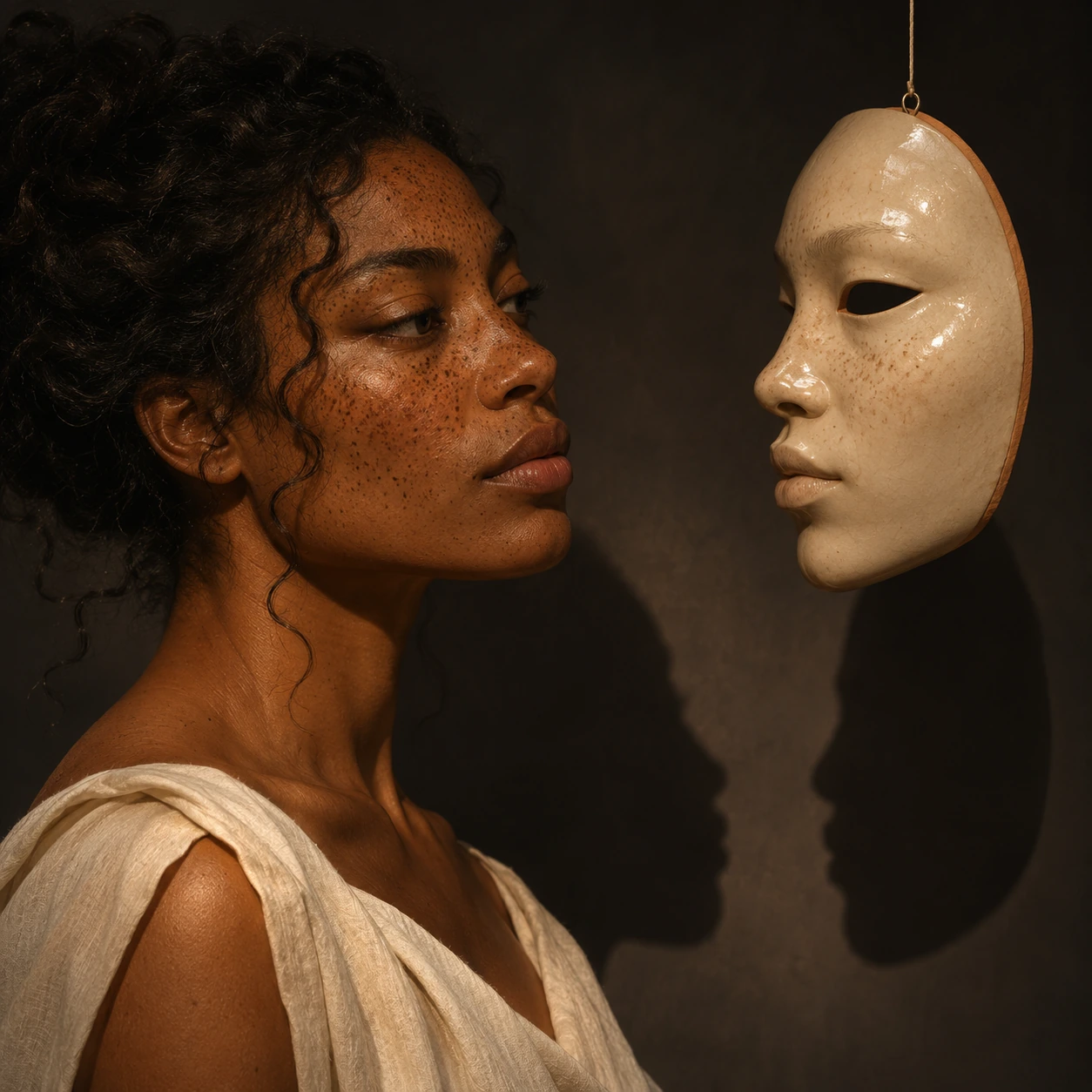
Five original AI-generated conceptual illustrations use invented people to explore synthetic identity. They are not demonstrations or records of actual face-swap or reenactment processing.
Select an image for a closer look. Use the thumbnails, arrow keys or a swipe to compare examples. Zoom in to inspect details, or share the image that inspires you.
Creative toolbox · take this style further
Choose an input and a destination. Search sends your words to the chosen site; Copy & open puts them on your clipboard to paste there.
Create with AI
Turn your chosen input into an image prompt or a new creative direction.
ChatGPT
Copy your input and paste it into a ChatGPT conversation or image request.
Copy & open ChatGPT (new tab)Claude · Anthropic
Develop an image prompt or explore the style in a new Claude conversation.
Copy & open Claude · Anthropic (new tab)Midjourney
Paste your input into the Imagine bar on the Create page.
Copy & open Midjourney (new tab)Adobe Firefly
Copy your input, open Firefly, and paste it into the prompt field.
Copy & open Adobe Firefly (new tab)Leonardo.Ai
Copy your input, open Leonardo, and paste it into the generation field.
Copy & open Leonardo.Ai (new tab)Image search
Find visual references. Short, concrete keywords usually work best.
Lexica
Search AI images and prompts using your selected input.
Search with this input Lexica (new tab)Pexels
Search the photo and video library. Short keywords often work best.
Search with this input Pexels (new tab)Pixabay
Search photos, illustrations and other images.
Search with this input Pixabay (new tab)Unsplash
Search photographs using the style name or your own keywords.
Search with this input Unsplash (new tab)Wikimedia Commons
Search photographs, artworks and historical images. Check each file for its source and reuse terms.
Search with this input Wikimedia Commons (new tab)Art & research
Explore artists, collections and the ideas behind a style.
Wikipedia
Search for background reading. A style may not have its own article.
Search with this input Wikipedia (new tab)WikiArt
Copy your input into WikiArt’s search to explore artists and artworks.
Copy & open WikiArt (new tab)Europeana
Paste your keywords into the search to explore European museum, library and archive collections.
Copy & open Europeana (new tab)Inspiration
Discover portfolios and visual ideas from creative communities.
Instagram hashtags
Search a hashtag made from your input: spaces and punctuation are removed. Instagram may require sign-in.
Search with this input Instagram hashtags (new tab)ArtStation
Paste your input into artwork search for concept art, environments, characters and visual development.
Copy & open ArtStation (new tab)Behance
Paste your input into project search for illustration, design and visual storytelling.
Copy & open Behance (new tab)A closer look
A convincing synthetic portrait may look entirely ordinary. For an explanatory artwork, matched lighting, aligned facial planes and deliberately revealed seams can make the transformation legible. Glitches are optional metaphors, not a definition.
A technique with many possible appearances
Deepfake is a media technique rather than a historical art movement or a single recognizable palette. An artist might use it in a film, an identity study or a staged portrait. The central artistic question is what the replacement changes: whose expression we read, whose voice we imagine, or how a face carries a role. That question should guide the image before the effects begin.
The term became prominent in 2017, including through abusive face substitutions. Its history matters when a work borrows someone else's likeness. This gallery instead uses invented people. Every image is an AI-generated conceptual illustration; none documents an actual face-swap experiment or an event involving a real subject.
Separate identity from performance
The Centre for Data Ethics and Innovation's 2019 overview distinguishes face replacement, facial reenactment, generated faces and speech synthesis. Replacement changes apparent identity. Reenactment changes the performance of a face without necessarily substituting another identity. These distinctions give an art project more precise goals than a general request for a strange digital portrait.
In a still-image study, decide which visual variables remain stable. A repeated head angle with a changing expression suggests performance. A stable pose and lighting with a changing face suggests identity. Let clothing and background act as controls. If every element changes at once, the viewer cannot tell what the comparison is testing.
Make the transformation readable
Begin with coherent eyes, facial proportions and directional light. A small difference in shadow direction can make a composite feel like a pasted cutout. Hair crossing the cheek, translucent glasses and hands near the face introduce useful visual complexity, but each needs a clear spatial relationship.
For an explanatory illustration, a thin displaced portrait plane can expose the idea of substitution. For a theatrical image, repeated expression panels can suggest a performed identity. These are artistic devices. A floating mask or colored mesh does not reveal how all deepfake systems work, and a smooth face does not establish that an image is authentic.
Context belongs in the artwork
An invented performer allows a project to explore synthetic identity without borrowing a real person's biography. When a consenting performer is involved, explain what was changed and keep their role in the work visible. A clear caption can make the difference between an intelligible fiction and an unsupported claim about someone.
NIST's 2024 technical report treats provenance tracking, synthetic-content labelling and detection as distinct approaches to media transparency. For this gallery, the practical commitment is straightforward: preserve the generation record and describe the images as conceptual studies. A caption supplies context; it is not a forensic certificate.
Use restraint to keep the question visible
This subject works well for editorial illustration, speculative portraiture, installation proposals and stories about mediated identity. Its visual weakness is the easy substitution of neon fragments for an actual idea. Keep one decisive alteration and let the rest of the portrait remain convincing.
The showcase moves between a photographic portrait plane, a sequence of expressions and a sculptural mask. Each offers a different way to think about the relationship between a face and a person. Judge the result by whether the transformation clarifies that relationship, rather than by how many digital effects fit around the eyes.
A small poetic detour
Original words from the AOI studio.
Poetry
The face arrives before the name.
A borrowed light stays on the cheek.
The mouth prepares a second frame;
we wait to hear the person speak.
Behind the image, leave a place
for who performed, and whose the face.
The prompt workshop
Original creative exercises. These prompts create new illustrations, not documentary evidence.
One altered plane
Create an editorial concept portrait of an entirely invented adult. Keep the face, shoulders and light coherent, but displace one thin photographic facial plane slightly to reveal the idea of synthetic identity. Quiet gray background, natural skin, restrained composition. Label the finished work as a conceptual illustration.
Performance across three frames
Show the same fictional performer in three aligned portraits: neutral, amused and thoughtful. Preserve clothing, head angle and lighting while changing expression. Fine photographic texture and a calm theatrical background. This is an illustration of performed identity, not a real reenactment result.
The mask and the person
Create an original conceptual portrait of an invented adult beside a carefully lit ceramic mask with related facial proportions. Distinguish living skin, glazed material and their separate shadows. Explore likeness through a physical metaphor, with no actual person's identity or documentary claim.
A smile from the studio
Jokes
The fictional actor asked whether the synthetic understudy could cover tomorrow's rehearsal. It could reproduce the expression perfectly, but somebody still had to remember where the dressing-room key was.