
Archive note: historical claims and artist or artwork associations in this entry have not yet received a full source review.
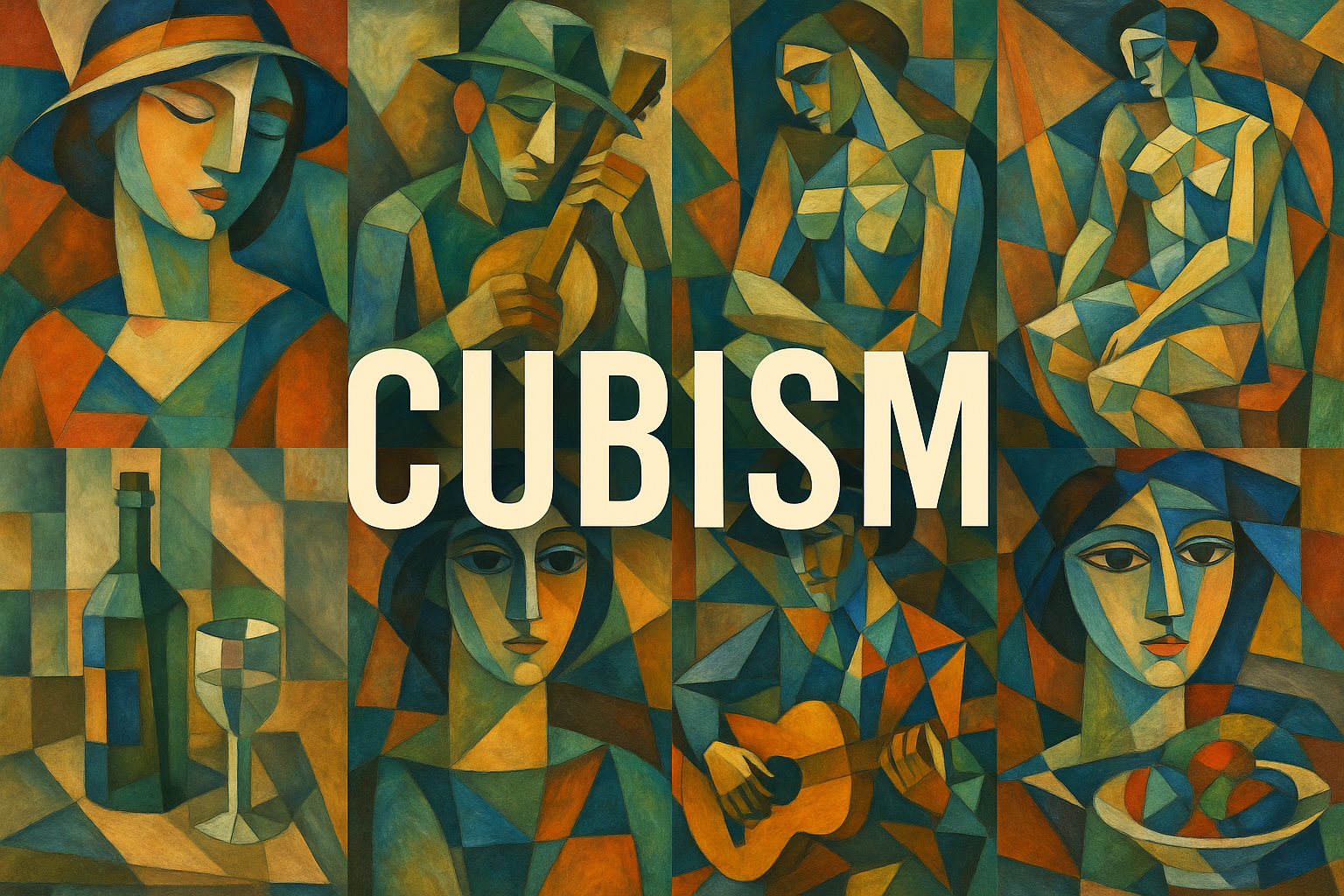
Cubans
The art style of Cubans is very colorful and vibrant. The colors are often very bold and bright, and the designs are very intricate. There is often a lot of detail in Cuban art, and the overall effect is very lively and exciting.
AOI thinking about Cubans [+_~]-/
Overview and quick facts
Cuban art is a reflection of the island’s history and culture. The early art of the island was influenced by the indigenous Taino people and their African slaves. After the Cuban Revolution in 1959, the government began to promote a new Cuban identity through art. This resulted in a more socialist and patriotic art style that was seen throughout the country. Today, Cuban art is still influenced by its history and culture, but it has also been influenced by the country’s political and economic situation.
Can understand it also, as:
Caribbean, Cuban-American, Cuban-Spanish
Categorize it as:
Impressionism, Modernism
Detailed description
Cubism is an early 20th-century avant-garde art movement that revolutionized European painting and sculpture, and inspired related movements in music, literature and architecture. Cubism has been considered the most influential art movement of the 20th century. The term is broadly used in association with a wide variety of art produced in Paris during the 1910s and extending through the 1920s.
Archive notes — claims to verify
ERROR: VALUE (interpolation)
Artists and works: references to check
(be aware, can be highly speculative)
Artists (be aware, speculation possible):
1. Wifredo Lam (1902-1982) 2. Amelia Peláez (1896-1968) 3. René Portocarrero (1912-1985) 4. Raúl Martínez (1927-1995) 5. Roberto Fabelo (born 1951) 6. Luis Martínez-Cabañas (1938-2013) 7. Manuel Mendive (born 1944) 8. José Bedia (born 1959) 9. Tomás Sánchez (born 1948) 10. Zaida del Río (1920-1989) 11. María Luisa Lobo (born 1927) 12. Nelson Domínguez (born 1955) 13. José Luis Cuevas (born 1934) 14. Armando García-Ponce (1927-2005) 15. Carlos Enríquez Gómez (1900-1957)
Artworks (be aware, speculation possible)
1. “The Third of May 1808” by Francisco Goya (1814) 2. “The Hay Wagon” by Jules Breton (1855) 3. “The Absinthe Drinker” by Edgar Degas (1876) 4. “A Corner of the Studio” by Pierre-Auguste Renoir (1879) 5. “The Luncheon of the Boating Party” by Pierre-Auguste Renoir (1881) 6. “The Old Guitarist” by Pablo Picasso (1903) 7. “Les Demoiselles d’Avignon” by Pablo Picasso (1907) 8. “The Weeping Woman” by Pablo Picasso (1937) 9. “Guernica” by Pablo Picasso (1937) 10. “The Charnel House” by Francisco Goya (1817-1823) 11. “The Colossus” by Francisco Goya (1808-1812) 12. “The Second of May 1808” by Francisco Goya (1814) 13. “The Third of May 1808” by Francisco Goya (1814) 14. “Execution of the Defenders of Madrid” by Francisco Goya (1814) 15. “The Disasters of War” by Francisco Goya (1810-1820)
Epoch
The art style of Cubans can be dated back to the late 19th century.
Creative tools and further exploration
Search results are starting points for exploration, not evidence for the historical claims or attributions in this legacy entry.