
Drawing medium
This guide focuses on wax-crayon drawing: a medium of direct color, pressure-sensitive marks and lively interaction with the support. Historical uses of the word “crayon” can refer to other drawing materials and should be read in context.
A visual introduction
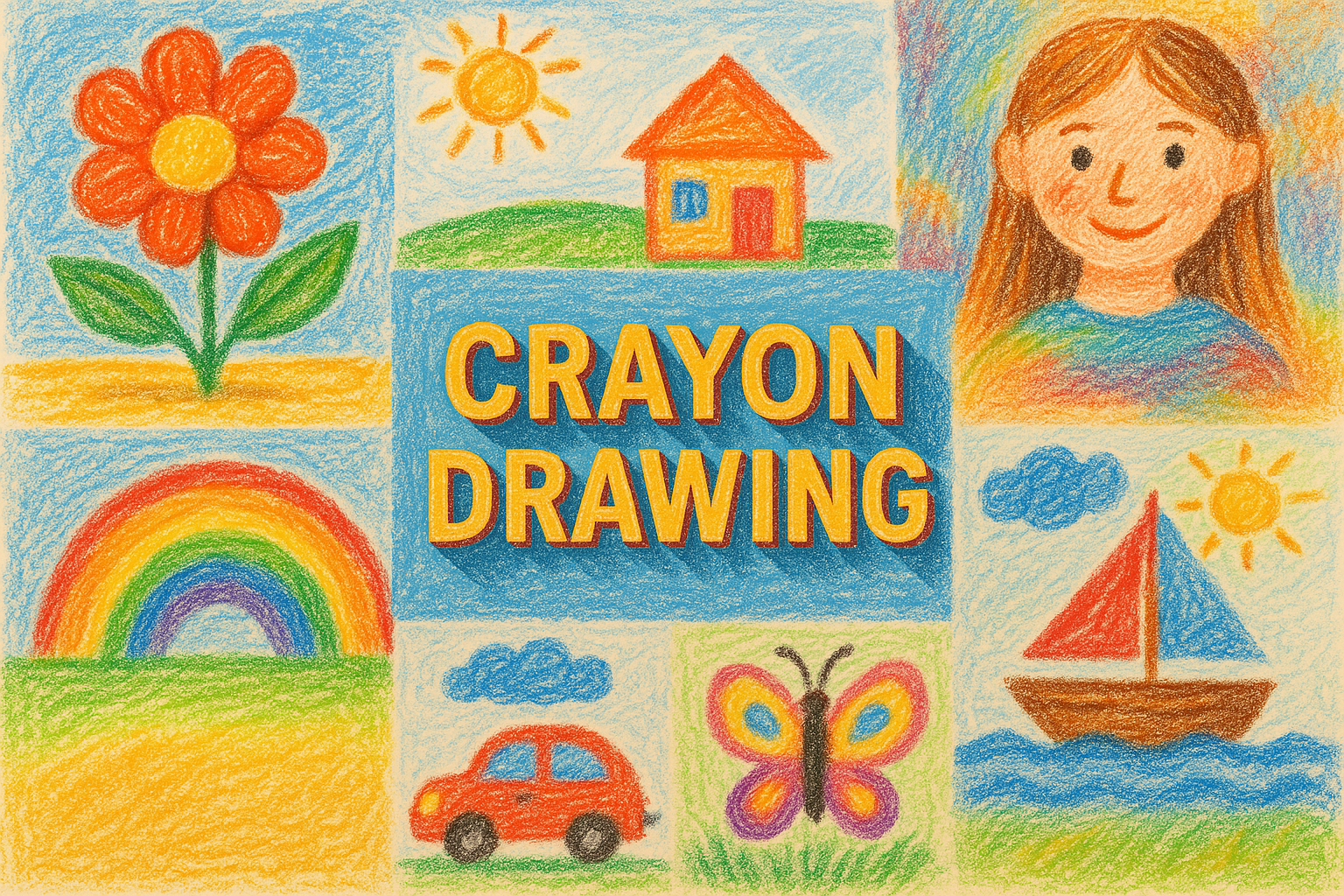
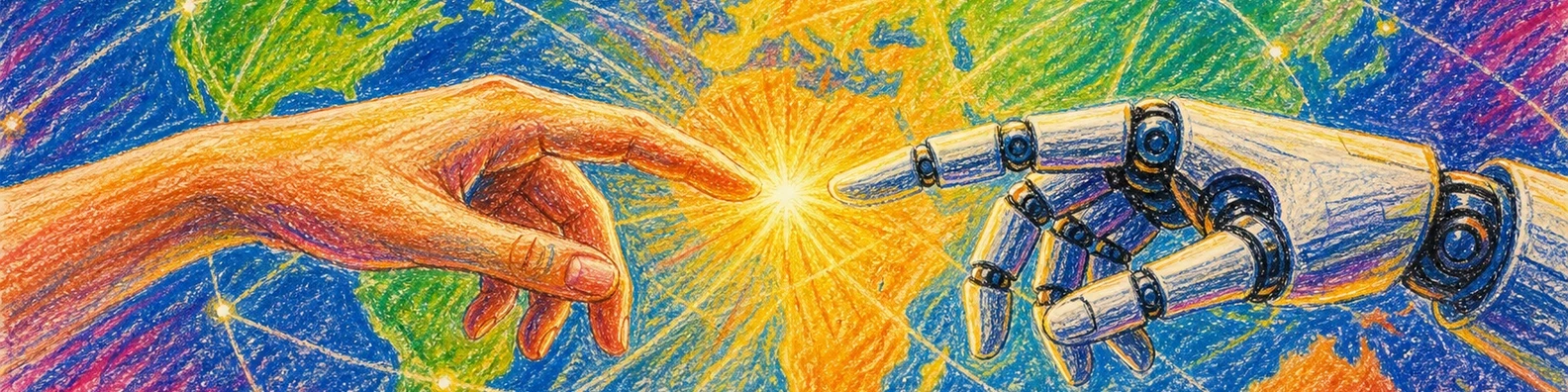
Select an image for a closer look. Use the thumbnails, arrow keys or a swipe to compare examples. Zoom in to inspect details, or share the image that inspires you.

Creative toolbox · take this style further
Choose an input and a destination. Search sends your words to the chosen site; Copy & open puts them on your clipboard to paste there.
Create with AI
Turn your chosen input into an image prompt or a new creative direction.
ChatGPT
Copy your input and paste it into a ChatGPT conversation or image request.
Copy & open ChatGPT (new tab)Claude · Anthropic
Develop an image prompt or explore the style in a new Claude conversation.
Copy & open Claude · Anthropic (new tab)Midjourney
Paste your input into the Imagine bar on the Create page.
Copy & open Midjourney (new tab)Adobe Firefly
Copy your input, open Firefly, and paste it into the prompt field.
Copy & open Adobe Firefly (new tab)Leonardo.Ai
Copy your input, open Leonardo, and paste it into the generation field.
Copy & open Leonardo.Ai (new tab)Image search
Find visual references. Short, concrete keywords usually work best.
Lexica
Search AI images and prompts using your selected input.
Search with this input Lexica (new tab)Pexels
Search the photo and video library. Short keywords often work best.
Search with this input Pexels (new tab)Pixabay
Search photos, illustrations and other images.
Search with this input Pixabay (new tab)Unsplash
Search photographs using the style name or your own keywords.
Search with this input Unsplash (new tab)Wikimedia Commons
Search photographs, artworks and historical images. Check each file for its source and reuse terms.
Search with this input Wikimedia Commons (new tab)Art & research
Explore artists, collections and the ideas behind a style.
Wikipedia
Search for background reading. A style may not have its own article.
Search with this input Wikipedia (new tab)WikiArt
Copy your input into WikiArt’s search to explore artists and artworks.
Copy & open WikiArt (new tab)Europeana
Paste your keywords into the search to explore European museum, library and archive collections.
Copy & open Europeana (new tab)Inspiration
Discover portfolios and visual ideas from creative communities.
Instagram hashtags
Search a hashtag made from your input: spaces and punctuation are removed. Instagram may require sign-in.
Search with this input Instagram hashtags (new tab)ArtStation
Paste your input into artwork search for concept art, environments, characters and visual development.
Copy & open ArtStation (new tab)Behance
Paste your input into project search for illustration, design and visual storytelling.
Copy & open Behance (new tab)A closer look
Broken color on textured paper, broad side strokes, denser accents and selective layering can produce a drawing whose surface remains visibly made by hand.
Define the material rather than a prestige story
Wax crayons are familiar tools, but familiarity does not determine what can be made with them. The important variables are the stick, pressure, support and arrangement of color. Famous paintings such as the Mona Lisa and The Starry Night should not be described as crayon drawings.
The word “crayon” also appears in historical terminology for drawing sticks of other kinds. For example, museum discussions of trois crayons refer to combinations of chalk. Check the medium in an artwork's record rather than assuming that the modern classroom wax crayon was used.
Use point and side differently
The point can define an edge or small accent; the side covers a broader area and reveals more of the paper texture. Compare light pressure with a denser application. A lightly worked patch allows the ground to show through, while a heavily worked one changes both color strength and surface character.
Begin with a simple arrangement of large shapes. Choose where the brightest paper, darkest mark and strongest color belong. Fine detail is easier to judge once those relationships are established. Resist the urge to give every object an equally heavy outline.
Texture can be collected and reorganized
Crayola's rubbing lesson demonstrates placing paper over a textured object and using the side of a crayon. The resulting pattern records contact with the surface, which can then become material for a composition. Use textures with different scales so the drawing does not become one uniform pattern.
A rubbing can describe bark, cloth or an invented terrain, but it need not imitate the original object. Cut or arrange the patterned areas according to a new visual idea. Keep a quiet area beside the busiest texture so its structure remains readable.
Explore resistance as well as layering
Wax can resist a water-based wash, an interaction demonstrated in Crayola's resist projects. Test the particular materials before using them in a finished work. Decide whether the resistant marks will be the main image or a secondary pattern revealed by the wash.
For a digital interpretation, request a consistent scale of wax marks and meaningful paper texture. Do not confuse a crayon-like surface effect with an actual drawing, and avoid treating deliberate simplicity as evidence of a maker's age or ability.
The prompt workshop
Original creative exercises. These prompts create new illustrations, not documentary evidence.
Pressure and paper
Original wax-crayon drawing of a small orchard, broad side strokes on textured paper, light broken color in the distance and dense accents near one tree, restrained palette, deliberate composition.
Texture becomes terrain
Original crayon-rubbing collage concept of an invented island, distinct textures for rock, paths and vegetation, quiet open water and one clear focal region, no map labels or false geography.
Resist pattern
Original mixed-media concept of pale wax-crayon rain marks resisting a blue watercolor-like wash, one simple umbrella shape, visible paper texture and controlled negative space, clearly contemporary illustration.