
Film and stop-motion design reference
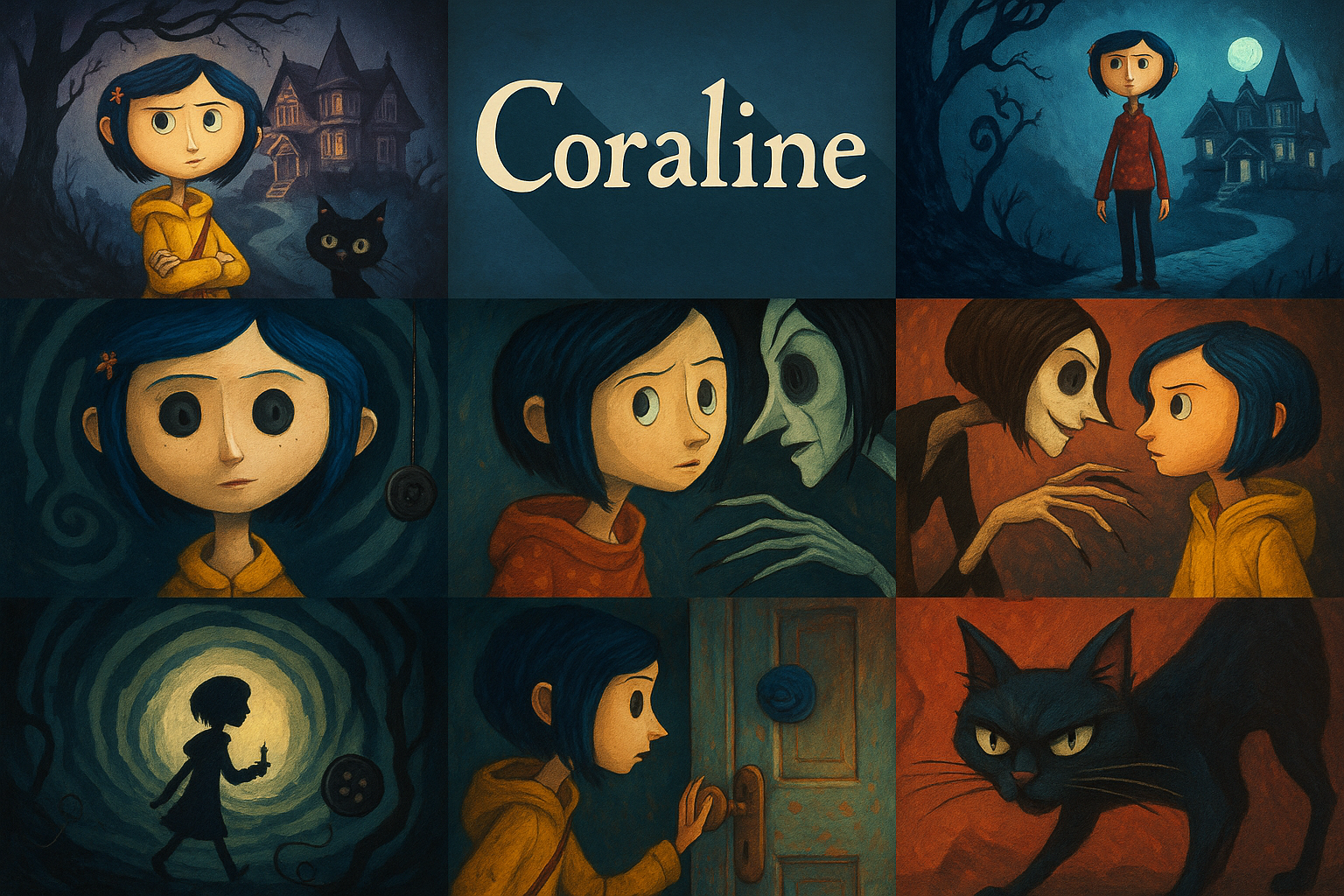
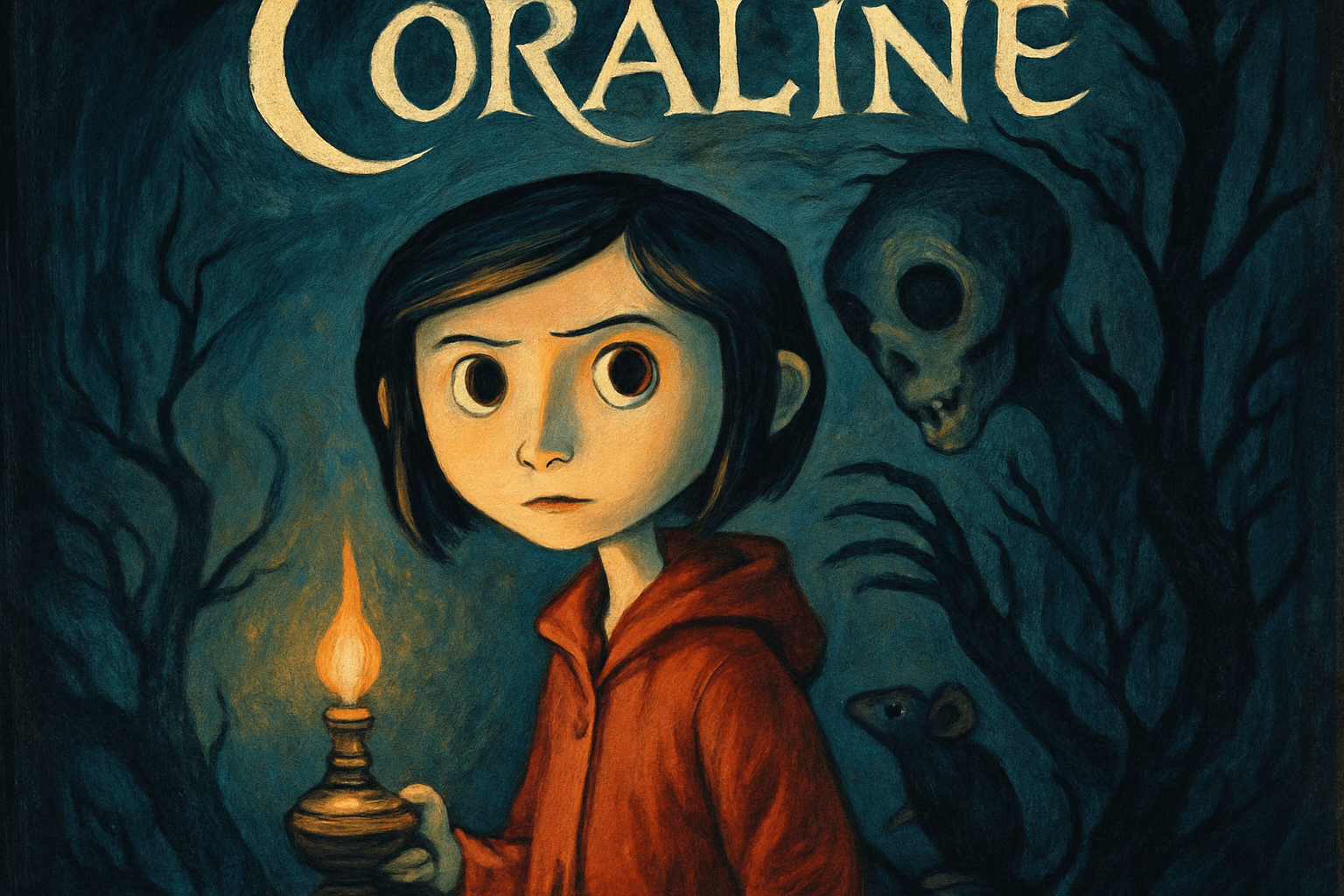
Coraline is a stop-motion film directed by Henry Selick and produced at LAIKA, adapted from Neil Gaiman’s story. Its design makes the attraction and unease of an alternate world part of the viewer’s experience.
A visual introduction
Select an image for a closer look. Use the thumbnails, arrow keys or a swipe to compare examples. Zoom in to inspect details, or share the image that inspires you.
Creative toolbox · take this style further
Choose an input and a destination. Search sends your words to the chosen site; Copy & open puts them on your clipboard to paste there.
Create with AI
Turn your chosen input into an image prompt or a new creative direction.
ChatGPT
Copy your input and paste it into a ChatGPT conversation or image request.
Copy & open ChatGPT (new tab)Claude · Anthropic
Develop an image prompt or explore the style in a new Claude conversation.
Copy & open Claude · Anthropic (new tab)Midjourney
Paste your input into the Imagine bar on the Create page.
Copy & open Midjourney (new tab)Adobe Firefly
Copy your input, open Firefly, and paste it into the prompt field.
Copy & open Adobe Firefly (new tab)Leonardo.Ai
Copy your input, open Leonardo, and paste it into the generation field.
Copy & open Leonardo.Ai (new tab)Image search
Find visual references. Short, concrete keywords usually work best.
Lexica
Search AI images and prompts using your selected input.
Search with this input Lexica (new tab)Pexels
Search the photo and video library. Short keywords often work best.
Search with this input Pexels (new tab)Pixabay
Search photos, illustrations and other images.
Search with this input Pixabay (new tab)Unsplash
Search photographs using the style name or your own keywords.
Search with this input Unsplash (new tab)Wikimedia Commons
Search photographs, artworks and historical images. Check each file for its source and reuse terms.
Search with this input Wikimedia Commons (new tab)Art & research
Explore artists, collections and the ideas behind a style.
Wikipedia
Search for background reading. A style may not have its own article.
Search with this input Wikipedia (new tab)WikiArt
Copy your input into WikiArt’s search to explore artists and artworks.
Copy & open WikiArt (new tab)Europeana
Paste your keywords into the search to explore European museum, library and archive collections.
Copy & open Europeana (new tab)Inspiration
Discover portfolios and visual ideas from creative communities.
Instagram hashtags
Search a hashtag made from your input: spaces and punctuation are removed. Instagram may require sign-in.
Search with this input Instagram hashtags (new tab)ArtStation
Paste your input into artwork search for concept art, environments, characters and visual development.
Copy & open ArtStation (new tab)Behance
Paste your input into project search for illustration, design and visual storytelling.
Copy & open Behance (new tab)A closer look
Tactile miniature materials, stylized proportions, carefully controlled depth and contrasts between familiar and altered spaces give the fantasy its persuasive physical presence.
Design participates in the story
In his Focus Features interview, Selick describes using a more muted palette and shallower spaces for Coraline's ordinary world, then expanding depth as the other world draws her in. This is a specific narrative use of design. It should not become a rule that every frightening scene must be dark or every inviting scene must be safe.
The useful question is what a place promises and what gradually makes that promise questionable. An overly perfect arrangement, an unexpected material or a repeated detail can change the meaning of an otherwise welcoming room. The contrast works best when the ordinary version has been established clearly.
Handmade does not mean technologically simple
Selick explains that physical stop-motion production worked alongside digital capture, compositing and cleanup. Replacement facial animation and the removal of support rigs helped the performances reach the screen. The film's tactile character should not be mistaken for an absence of modern production tools.
For an original material study, choose a few surfaces that behave differently: woven cloth, painted wood, polished metal and a soft modeled face. Keep their scale consistent. An oversized fabric weave or a full-size household texture can make a miniature setting feel accidentally mismatched.
Character and costume share a silhouette
Costume designer Deborah Cook describes clothing as part of the characters' development, with material and structure contributing to their changing appearance. In a new design, ask how the costume affects posture and outline. A garment should move with the character rather than appear as a decorative shell pasted around it.
Limit the strongest accent to a feature that matters to the scene. A distinctive coat, gesture or object can guide the eye through a detailed set. Too many equally bright props weaken that hierarchy.
Build an original threshold
Design one everyday room and a subtly altered counterpart. Keep the viewpoint and basic layout comparable, then change depth, texture or the arrangement of light. Let the viewer discover the difference rather than covering the second room with generic horror symbols.
AOI's images and prompts are interpretive studies, not official frames or production assets. Their purpose is to investigate material storytelling and the tension between invitation and unease with original settings and characters.
The prompt workshop
Original creative exercises. These prompts create new illustrations, not documentary evidence.
An uneasy invitation
Original stop-motion-inspired concept of a small guest room that seems welcoming but is slightly too symmetrical, tactile cloth and painted wood, one doorway with unexpected depth, original adult character, no Coraline motifs.
Two versions of a room
Two original miniature-set concepts of the same kitchen: one modest and shallow, one richly inviting with subtly exaggerated depth, consistent camera and layout, distinct material cues, no franchise characters.
Costume tells the story
Original puppet-character concept of a meticulous host in a structured coat, expressive silhouette, tiny credible fabric details and restrained accent color, soft set lighting, unfamiliar design, no button-eye motif.