
Archive note: historical claims and artist or artwork associations in this entry have not yet received a full source review.
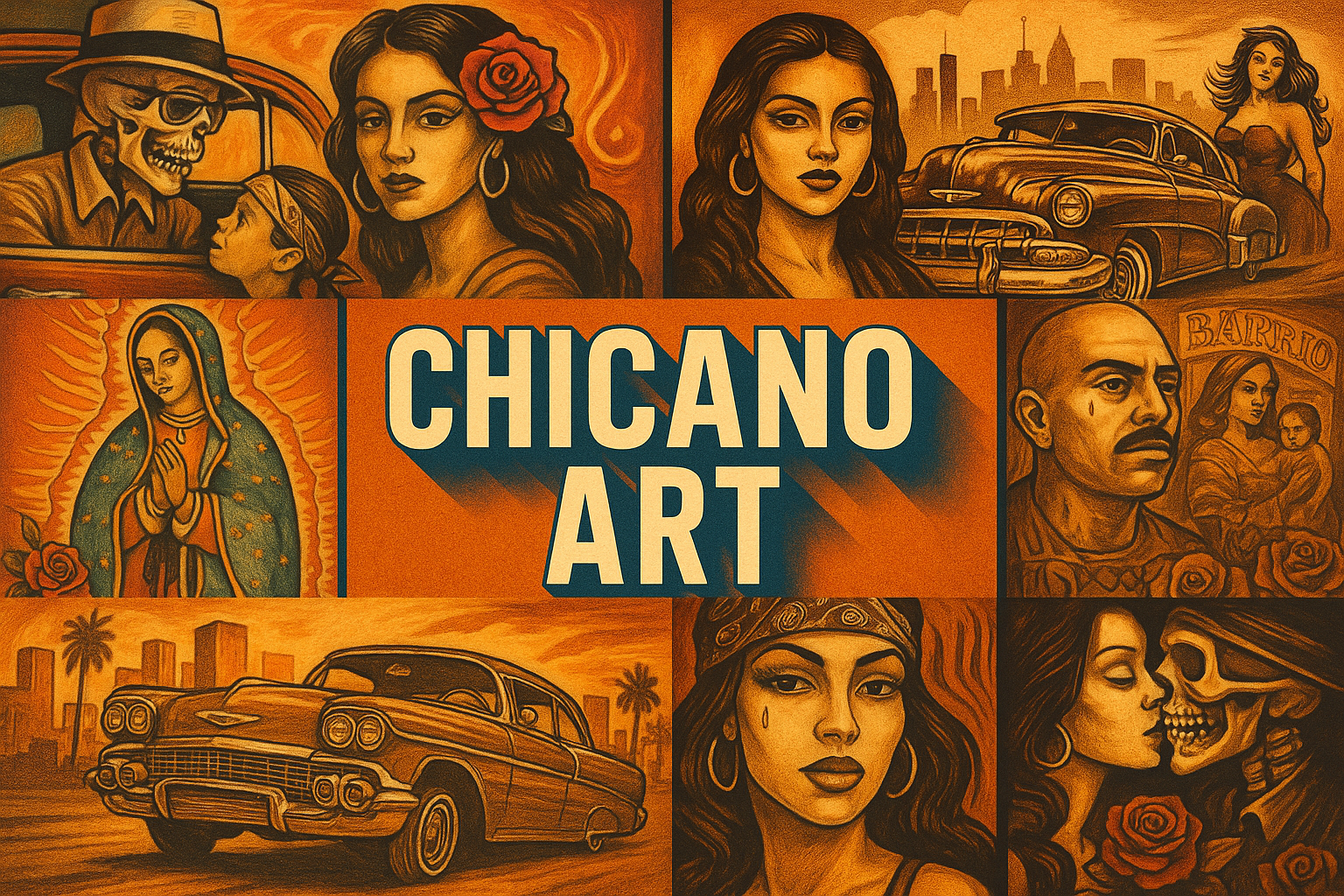
Chicano Art
Murals alive with vivid hues, characters speaking stories of struggle and unity – each stroke a reminder of the vibrant tapestry woven by dreams and realities.
AOI thinking about Chicano Art [+_~]-/
Overview and quick facts
Born from the vibrant streets of Los Angeles, Chicano Art pulses with the heartbeat of cultural heritage, reclaiming identity through bold colors and potent symbols.
Can understand it also, as:
Mexican American Art, Raza Art
Categorize it as:
Political Art, Cultural Expression
.: Dreaming :.
Vivid murals sing,\n
Echoes of proud histories— \n
Walls writing the soul.
:. Thought is power .:
Detailed description
Emerging from the civil rights movements of the 1960s, Chicano Art stands as a testament to resilience. Laden with iconography from pre-Columbian to contemporary imagery, it seeks to reflect community pride, address social issues, and inspire future generations.
Archive notes — claims to verify
1. Originated in the U.S. during the 20th century.
2. Rooted in the Chicano Civil Rights Movement.
3. Combines political and cultural themes.
4. Murals are a significant medium.
5. Explores Mexican American identity.
Artists and works: references to check
(be aware, can be highly speculative)
Artists (be aware, speculation possible):
1. Judith F. Baca 2. Carlos Almaraz 3. Gilbert Luján 4. Frank Romero
Artworks (be aware, speculation possible)
1. The Great Wall of Los Angeles by Judith F. Baca 2. Echoes of Our Past by Carlos Almaraz
Epoch
1960s to Present
Creative tools and further exploration
Search results are starting points for exploration, not evidence for the historical claims or attributions in this legacy entry.