
Drawing and temporary public-art practice
Chalk art can range from intimate drawings on paper to temporary work on boards and pavement. In public-space examples, the existing surface, viewing position and passing audience become part of the composition.
A visual introduction
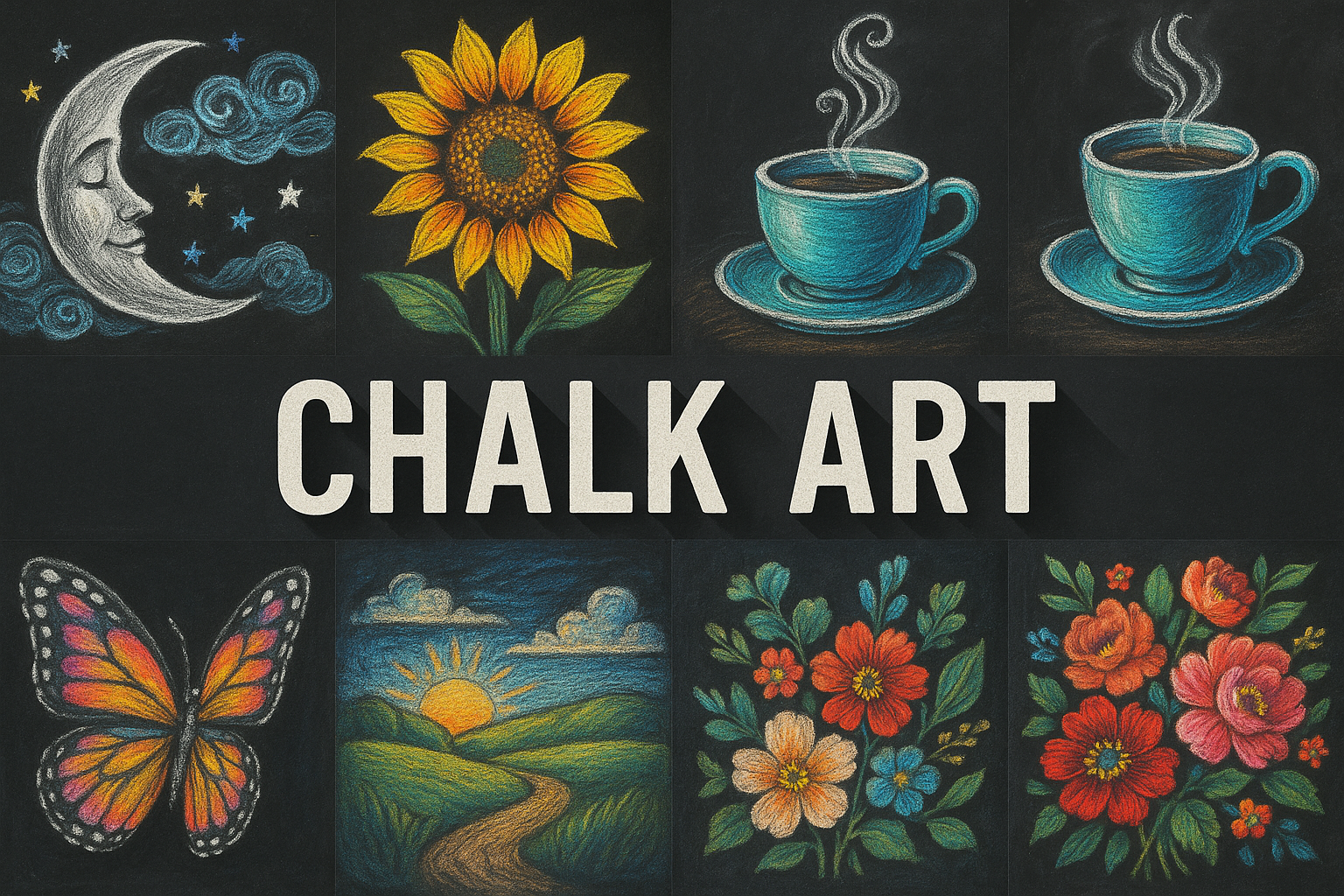
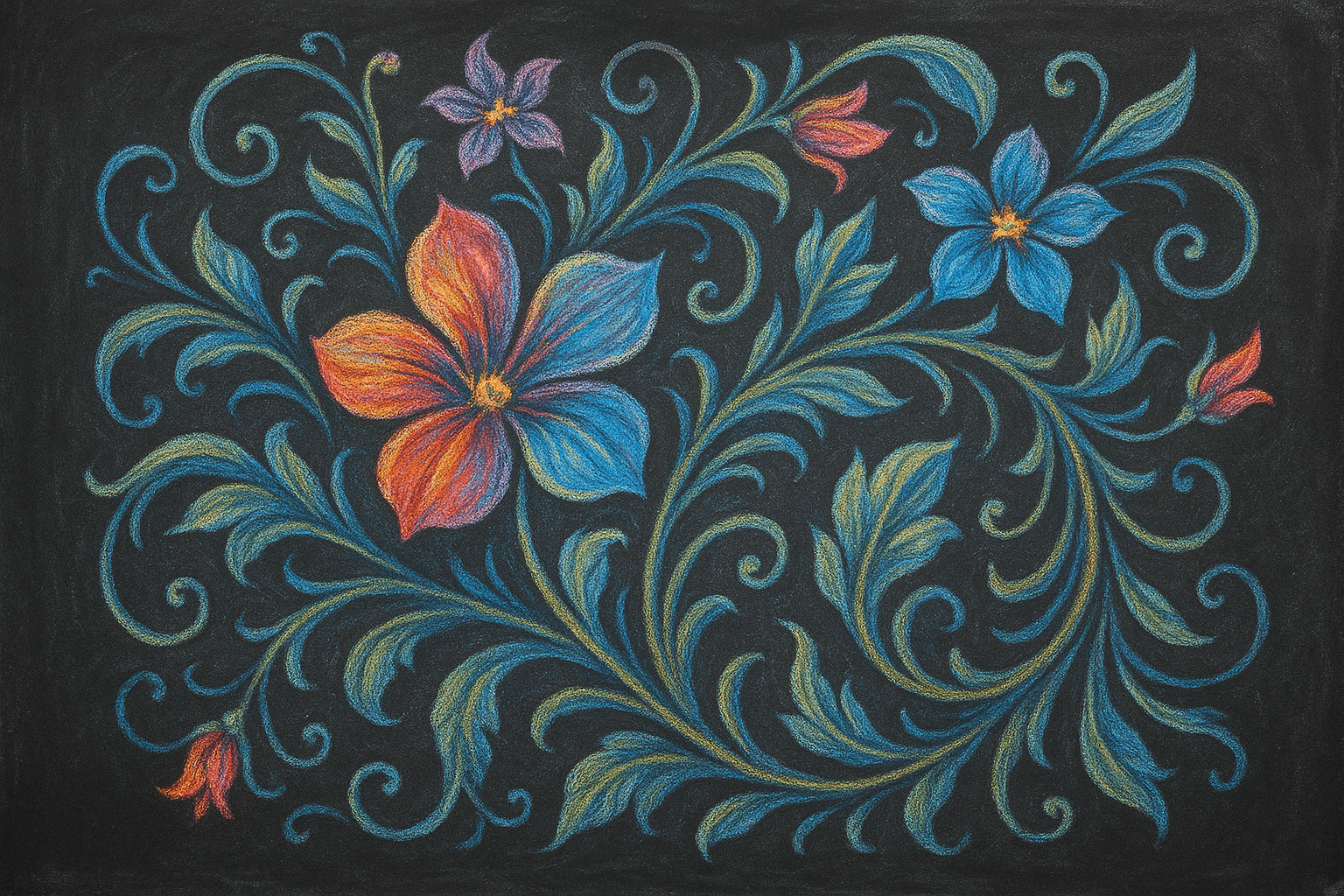
Select an image for a closer look. Use the thumbnails, arrow keys or a swipe to compare examples. Zoom in to inspect details, or share the image that inspires you.
Creative toolbox · take this style further
Choose an input and a destination. Search sends your words to the chosen site; Copy & open puts them on your clipboard to paste there.
Create with AI
Turn your chosen input into an image prompt or a new creative direction.
ChatGPT
Copy your input and paste it into a ChatGPT conversation or image request.
Copy & open ChatGPT (new tab)Claude · Anthropic
Develop an image prompt or explore the style in a new Claude conversation.
Copy & open Claude · Anthropic (new tab)Midjourney
Paste your input into the Imagine bar on the Create page.
Copy & open Midjourney (new tab)Adobe Firefly
Copy your input, open Firefly, and paste it into the prompt field.
Copy & open Adobe Firefly (new tab)Leonardo.Ai
Copy your input, open Leonardo, and paste it into the generation field.
Copy & open Leonardo.Ai (new tab)Image search
Find visual references. Short, concrete keywords usually work best.
Lexica
Search AI images and prompts using your selected input.
Search with this input Lexica (new tab)Pexels
Search the photo and video library. Short keywords often work best.
Search with this input Pexels (new tab)Pixabay
Search photos, illustrations and other images.
Search with this input Pixabay (new tab)Unsplash
Search photographs using the style name or your own keywords.
Search with this input Unsplash (new tab)Wikimedia Commons
Search photographs, artworks and historical images. Check each file for its source and reuse terms.
Search with this input Wikimedia Commons (new tab)Art & research
Explore artists, collections and the ideas behind a style.
Wikipedia
Search for background reading. A style may not have its own article.
Search with this input Wikipedia (new tab)WikiArt
Copy your input into WikiArt’s search to explore artists and artworks.
Copy & open WikiArt (new tab)Europeana
Paste your keywords into the search to explore European museum, library and archive collections.
Copy & open Europeana (new tab)Inspiration
Discover portfolios and visual ideas from creative communities.
Instagram hashtags
Search a hashtag made from your input: spaces and punctuation are removed. Instagram may require sign-in.
Search with this input Instagram hashtags (new tab)ArtStation
Paste your input into artwork search for concept art, environments, characters and visual development.
Copy & open ArtStation (new tab)Behance
Paste your input into project search for illustration, design and visual storytelling.
Copy & open Behance (new tab)A closer look
Powdery marks, broken edges and broad tonal areas can interact with cracks, joints or a dark ground; illusionistic pavement work additionally depends on a chosen viewpoint.
Clarify which kind of chalk art is meant
Chalk has a long history as a drawing material. The Metropolitan Museum describes red, black and white chalk in both preparatory studies and finished drawings. Contemporary pavement work is one part of a wider field, so it is inaccurate to describe all chalk art as a recent invention.
This page concentrates on the relationship between drawing and place. The companion Chalk Drawing article addresses marks and modeling on paper in more detail. A board, paving stone and sheet of toned paper offer different scales, textures and viewing conditions.
Let the surface supply information
An existing line or small irregularity can become part of an invented scene. The challenge is to connect the added drawing convincingly to what is already there. A shadow, contact point or continuation of a contour can make the relationship readable without covering the whole surface.
David Zinn's own site presents his temporary street work as a practice rooted in everyday surroundings. Study the particular encounter between image and place rather than copying a recognizable character. A modest visual discovery can be more engaging than a large image unrelated to its setting.
Illusion depends on the viewing position
Kurt Wenner's account explains how his pavement compositions are organized for an oblique viewpoint. This is a specific use of perspective, not evidence that every chalk drawing is three-dimensional. An elongated shape on the ground can appear coherent from the intended position and stretched from another.
For a small original study, choose the viewing point first and test the illusion from there. Include a visible edge or real object that helps establish the relationship between the drawn space and the actual surface. A photograph should not conceal the fact that the work is a flat drawing.
Use a hierarchy of marks
Broad side strokes can establish a mass; a firmer edge can clarify a focal feature. Leave quieter areas where the ground can participate. Uniformly outlining every object may weaken the illusion of light and volume.
For real public work, use an appropriate permitted surface and consider how people will pass through it. For generated concepts, label the image as a proposal or interpretation. It is not documentation of an artwork that has actually been made on that street.
The prompt workshop
Original creative exercises. These prompts create new illustrations, not documentary evidence.
A small discovery
Original chalk-art concept of an invented tiny creature using a real-looking pavement joint as a bridge, convincing contact shadow, powdery marks and visible paving texture, no copied character or false location claim.
Viewpoint illusion
Concept photograph of an original small chalk drawing that suggests a shallow folded-paper staircase on flat pavement, one clearly intended oblique viewpoint, coherent perspective and visible surface edges.
Ground as midtone
Original white and red chalk drawing of a simple jug on a dark board, broad soft masses and selected sharp edges, the untouched board forming the midtones, no lettering.