
Historical artistic tendency
Caravaggisti were painters who responded to Caravaggio’s example in different places and ways. The term describes a network of artistic influence, not a single workshop or a rule that every painting must be almost black.
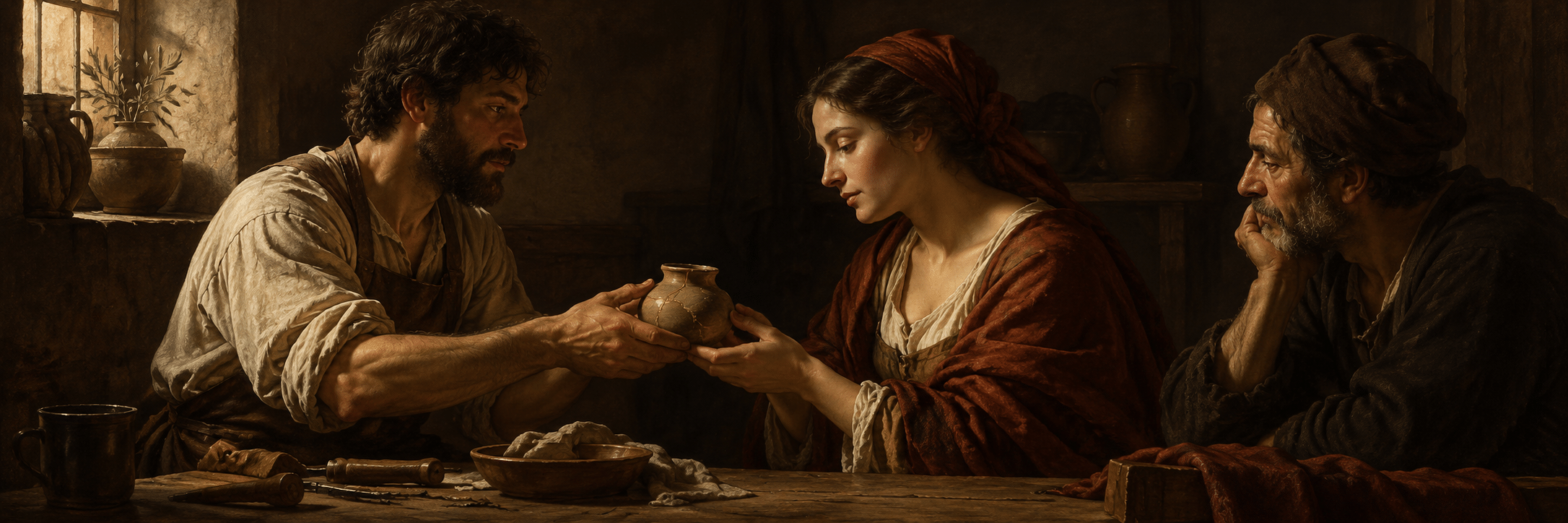
A visual introduction
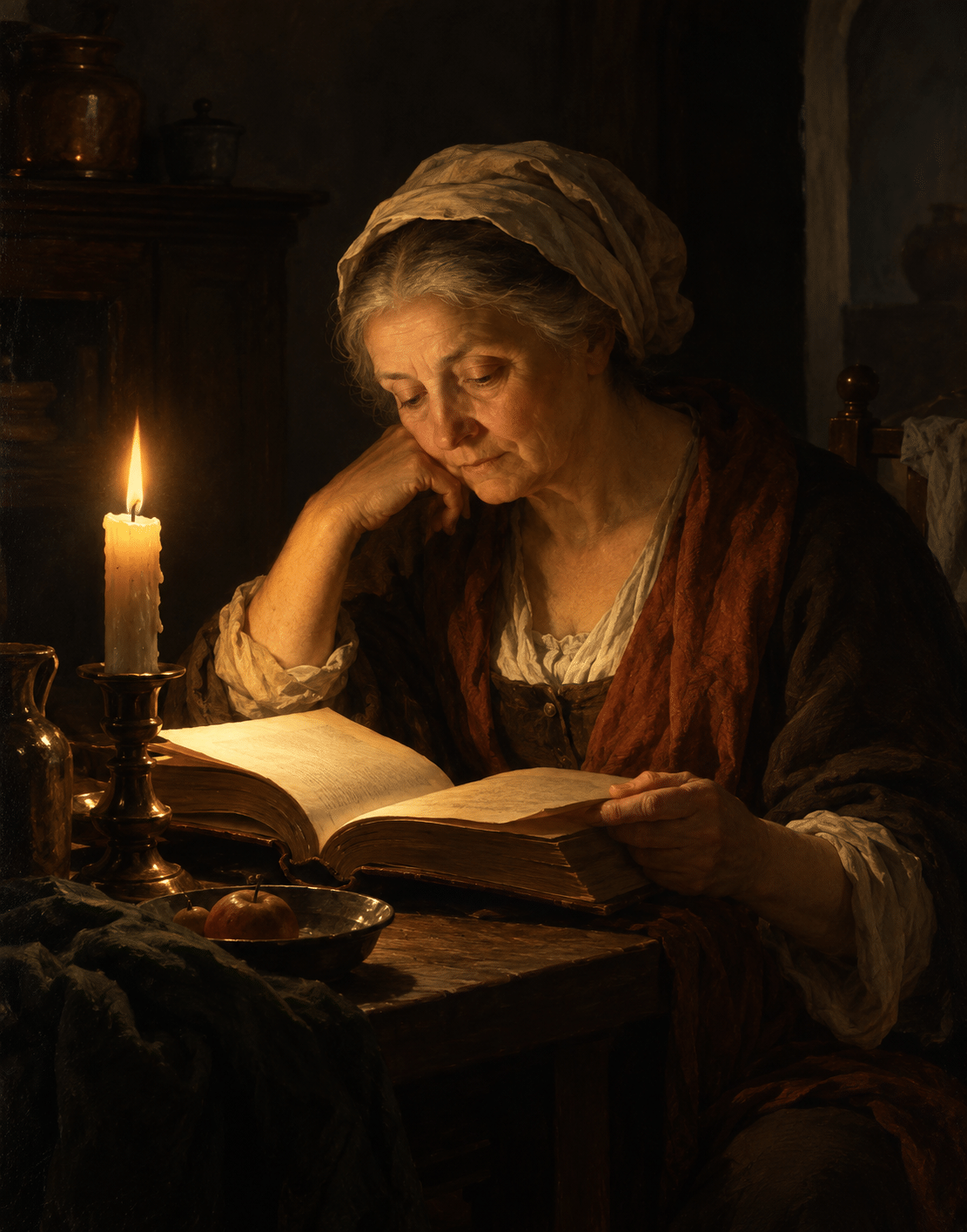
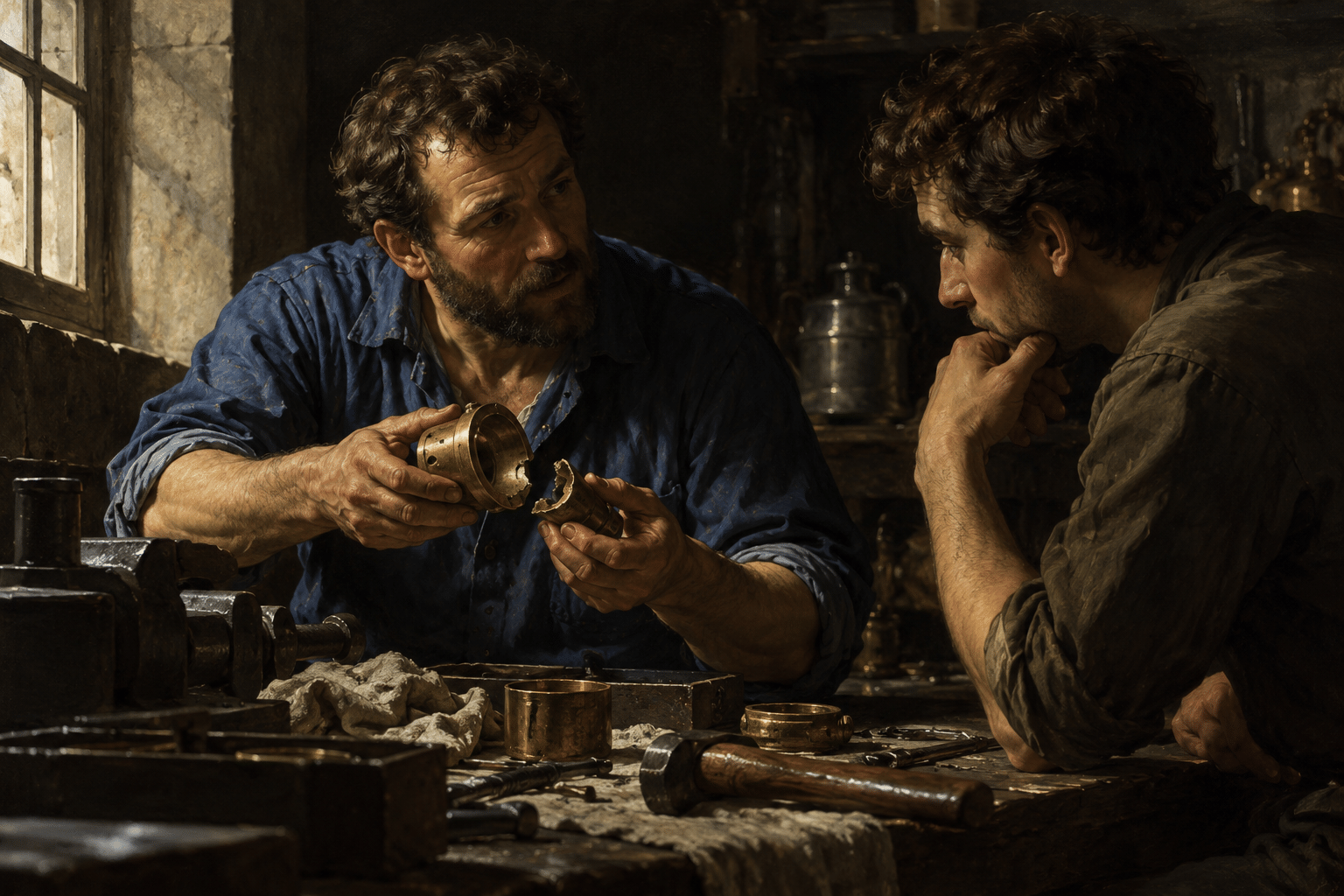
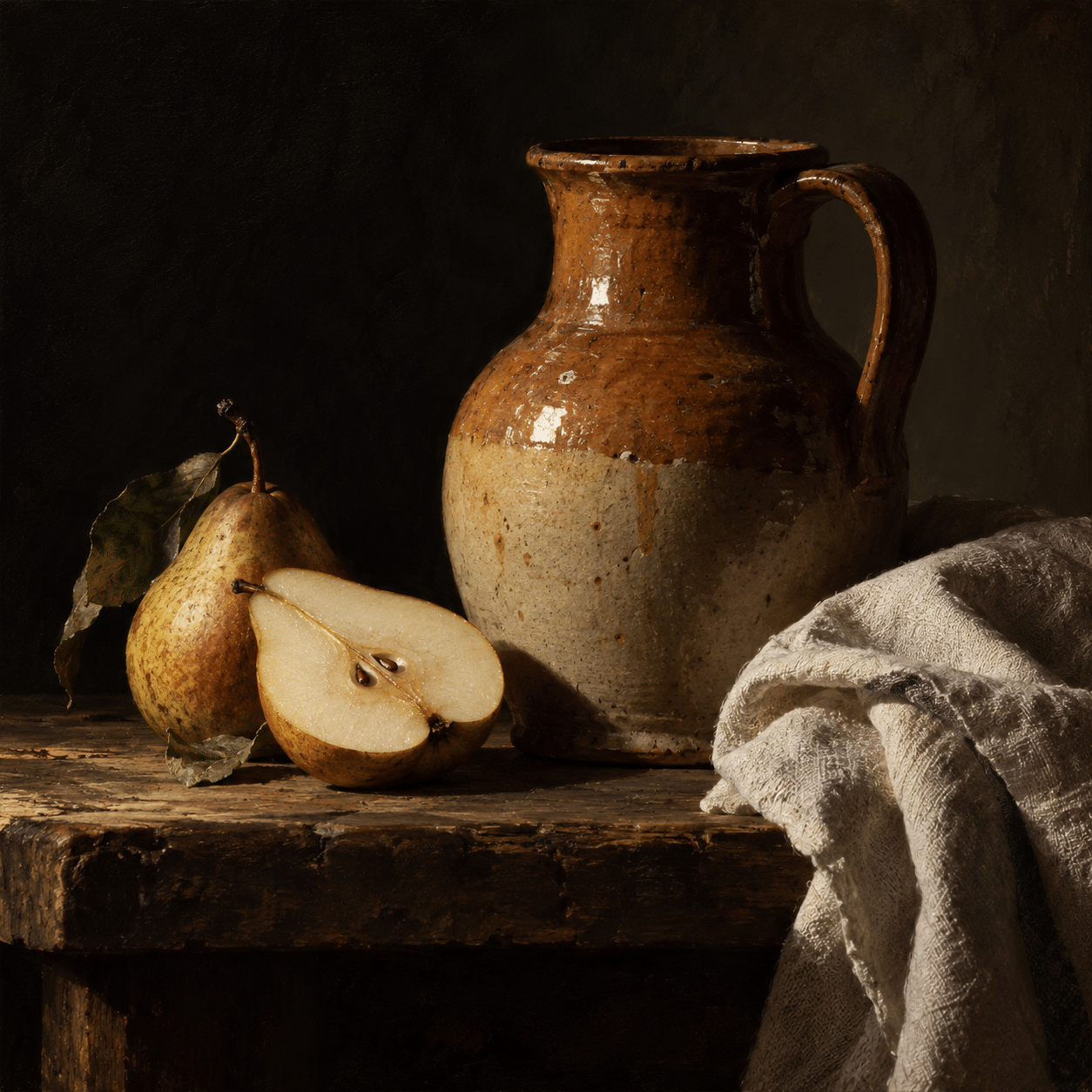
Seven new AI-generated studies explore close encounters, listening, reading, repair and material presence through concentrated light. They are original interpretations, not historical paintings. The earlier illustration is retained.
Select an image for a closer look. Use the thumbnails, arrow keys or a swipe to compare examples. Zoom in to inspect details, or share the image that inspires you.

Creative toolbox · take this style further
Choose an input and a destination. Search sends your words to the chosen site; Copy & open puts them on your clipboard to paste there.
Create with AI
Turn your chosen input into an image prompt or a new creative direction.
ChatGPT
Copy your input and paste it into a ChatGPT conversation or image request.
Copy & open ChatGPT (new tab)Claude · Anthropic
Develop an image prompt or explore the style in a new Claude conversation.
Copy & open Claude · Anthropic (new tab)Midjourney
Paste your input into the Imagine bar on the Create page.
Copy & open Midjourney (new tab)Adobe Firefly
Copy your input, open Firefly, and paste it into the prompt field.
Copy & open Adobe Firefly (new tab)Leonardo.Ai
Copy your input, open Leonardo, and paste it into the generation field.
Copy & open Leonardo.Ai (new tab)Image search
Find visual references. Short, concrete keywords usually work best.
Lexica
Search AI images and prompts using your selected input.
Search with this input Lexica (new tab)Pexels
Search the photo and video library. Short keywords often work best.
Search with this input Pexels (new tab)Pixabay
Search photos, illustrations and other images.
Search with this input Pixabay (new tab)Unsplash
Search photographs using the style name or your own keywords.
Search with this input Unsplash (new tab)Wikimedia Commons
Search photographs, artworks and historical images. Check each file for its source and reuse terms.
Search with this input Wikimedia Commons (new tab)Art & research
Explore artists, collections and the ideas behind a style.
Wikipedia
Search for background reading. A style may not have its own article.
Search with this input Wikipedia (new tab)WikiArt
Copy your input into WikiArt’s search to explore artists and artworks.
Copy & open WikiArt (new tab)Europeana
Paste your keywords into the search to explore European museum, library and archive collections.
Copy & open Europeana (new tab)Inspiration
Discover portfolios and visual ideas from creative communities.
Instagram hashtags
Search a hashtag made from your input: spaces and punctuation are removed. Instagram may require sign-in.
Search with this input Instagram hashtags (new tab)ArtStation
Paste your input into artwork search for concept art, environments, characters and visual development.
Copy & open ArtStation (new tab)Behance
Paste your input into project search for illustration, design and visual storytelling.
Copy & open Behance (new tab)A closer look
Concentrated light, substantial figures and readable gestures can bring an encounter close to the viewer; darkness works through its relationship to illuminated forms.
Influence took different forms
The Rijksmuseum describes Caravaggio's forceful naturalism and the response of painters including Utrecht artists Gerrit van Honthorst, Hendrick ter Brugghen and Dirck van Baburen. Their engagement with his work did not make their paintings interchangeable.
Begin with a particular artist or picture. Compare how many figures occupy the space, how close they appear and where the light originates. Similar contrasts can serve different subjects, from sacred narratives to musical and everyday encounters.
Design the illuminated action
Choose the action that the viewer must understand first. A hand extending an object, a face turning or a body leaning can become the composition's center. Let the light make that relationship legible before adding texture to clothing or background.
A concentrated light source should affect the whole scene consistently. Check cast shadows, reflected light and the transition across rounded forms. A bright face pasted onto an unrelated dark setting produces a spotlight effect without convincing volume.
Darkness is an interval, not an empty default
Shadow can conceal a secondary figure, separate overlapping bodies or compress the apparent space. Keep enough information for the viewer to understand how the figures stand and interact. Pure black everywhere may flatten the very drama the lighting is intended to create.
Use the background to regulate attention. A small visible edge may establish depth, while a quieter passage allows a gesture to carry more weight. Compare the image at thumbnail size to see whether the main encounter survives.
Naturalism and staging coexist
Specific faces, worn surfaces and ordinary objects can give an image physical presence. They do not make the composition an unplanned document. Consider how the event has been arranged for a viewer and what emotional response that arrangement invites.
An original study can use a contemporary subject with these principles. There is no need to invent a biblical attribution or imitate an existing painting's figures. Keep Caravaggism distinct from the broader use of chiaroscuro, which is not exclusive to this circle.
A network of responses, not a single schoolroom
The National Gallery’s Beyond Caravaggio account explains that demand for Caravaggio’s paintings and related work helped a wider Caravaggesque tendency develop. Many painters knew the pictures without knowing the artist personally. Artemisia Gentileschi, Orazio Gentileschi and the Utrecht painters belong to distinct careers and settings; the shared influence should not erase their individual choices.
The term is most useful when it opens a comparison. Ask how an artist stages the encounter, positions the viewer and balances visible and concealed information. Dramatic light may be a common resource, but it can support sacred narrative, music, everyday exchange or psychological attention. Darkness by itself does not establish a historical affiliation.
The body gives the light something to explain
A lit face needs a head with volume, and a lit hand needs a clear relationship to its arm and the object it touches. Establish those connections before intensifying contrast. A small reflected light can make a shadowed cheek turn away from the viewer; a darker interval between fingers can clarify a grip. The drama becomes more convincing when the anatomy remains ordinary and substantial.
Close framing can place the viewer near the event. A table edge, cropped sleeve or forward-moving hand helps establish that proximity. Use overlaps deliberately so that the figures occupy a shared space. If every face receives an isolated bright patch, the scene may look like several portraits assembled against black rather than a single encounter.
Color and material within a dark composition
A restrained earth palette can give warm skin, cloth and wood a common atmosphere while preserving their differences. A deep red sleeve or blue work shirt can serve as a measured accent. Keep the brightest highlight for a surface or gesture that matters. A ceramic vessel, metal component and linen fold should not reflect light in exactly the same way.
The direction and quality of light also shape the mood. A high window can organize a group through a broad diagonal, while a visible candle creates a more local relationship between faces, hands and nearby objects. In either case, preserve enough shadow information to locate the figures. Strong contrast is most useful when it makes the action more legible.
The new gallery: encounter, listening, reading and repair
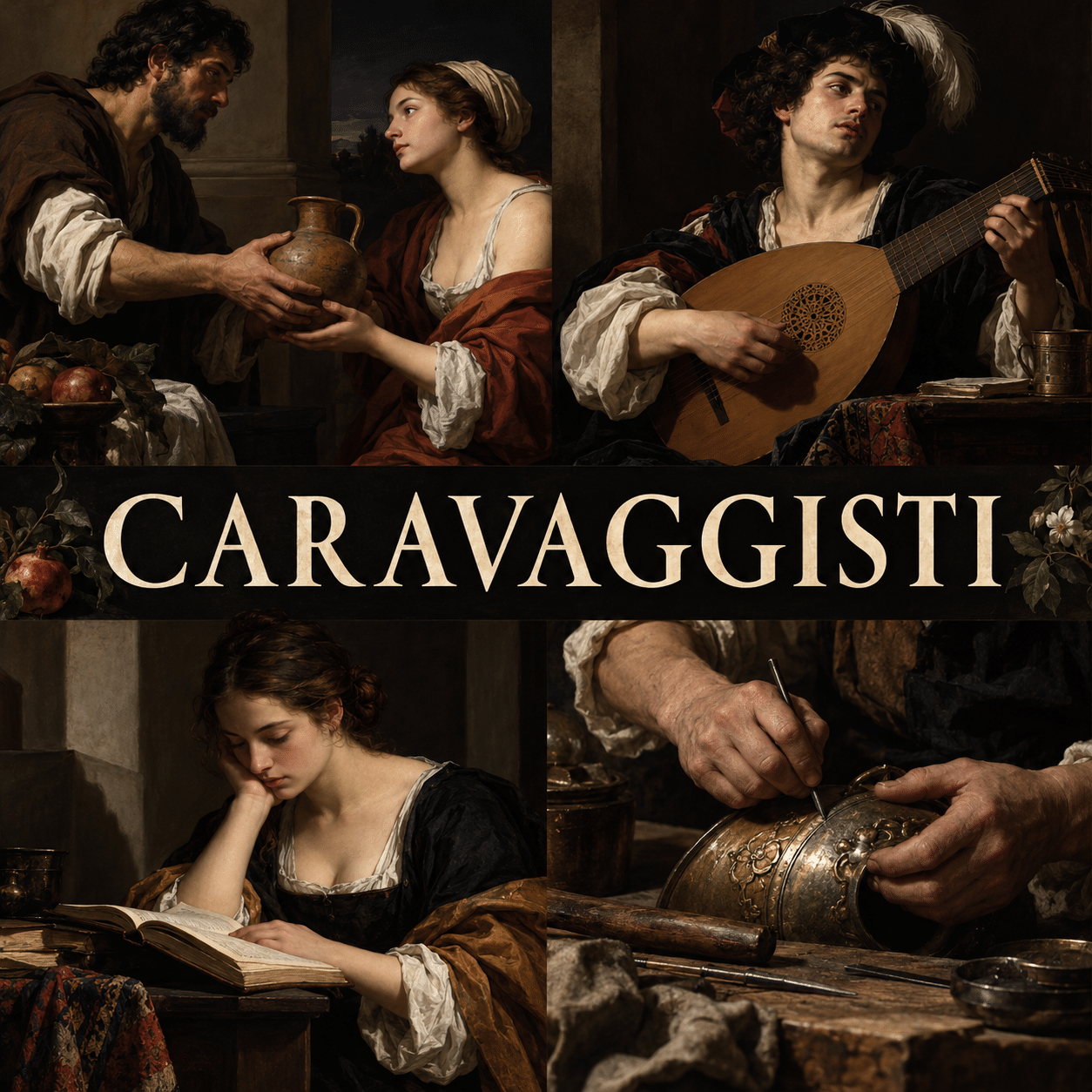
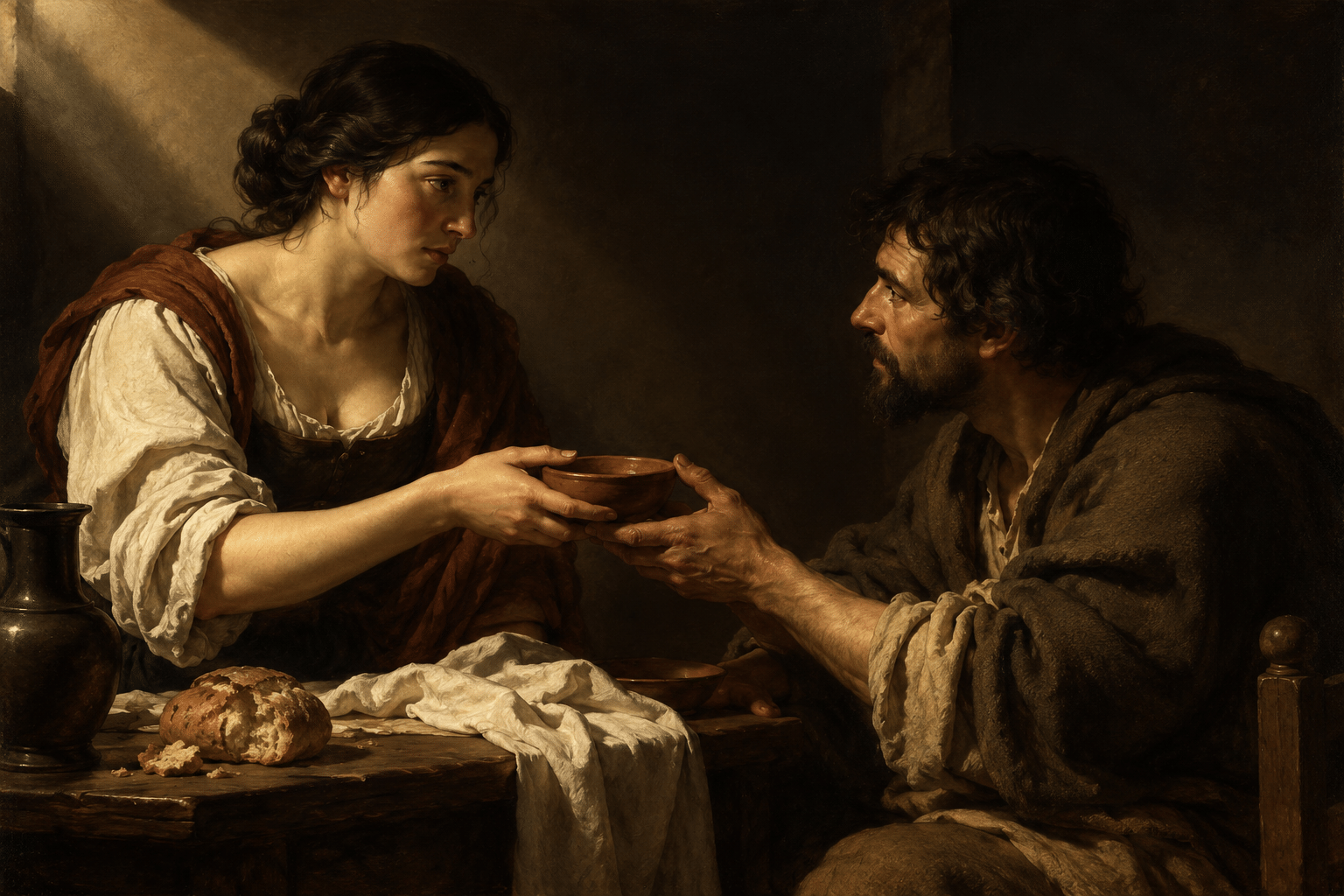
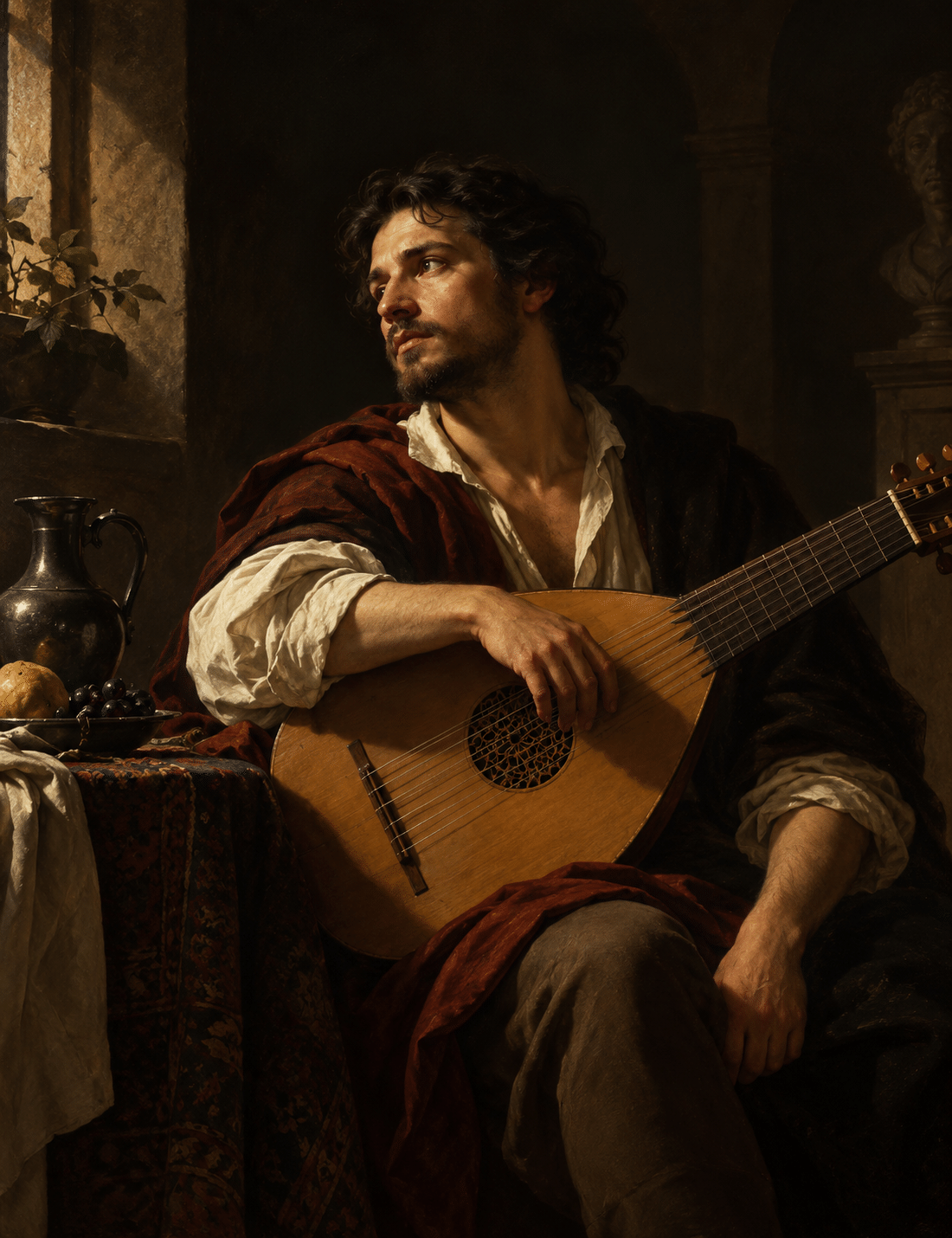
The banner centers on a repaired vessel passing between people, with a third figure observing. The titled collage gathers different types of attention. The two-person exchange study concentrates on hands, object and eye contact. The lute player pauses to listen, allowing the instrument and the face to share the light without turning the scene into a display of virtuosity.
The reading study brings a candle close to a book and face. The contemporary workshop scene translates the principles into a repair discussion, using ordinary work clothes and a small component. The still life isolates the material question in a pear, jug and linen. It is an exercise related to the figure studies, not evidence that a dark still life is automatically Caravaggesque.
All seven images are AI-generated interpretations created for this article. They are not paintings by Caravaggio or his followers and do not reconstruct specific historical works. Earlier imagery is retained. The museum links provide authentic examples and context for comparing these simplified exercises with individual artistic practices.
A practical method for staging light
Choose a single action that can be understood in a sentence. Place the figures and the object before specifying elaborate costumes or props. Decide what the viewer should notice first, then position a light that connects those elements. Keep a quieter secondary area so the principal gesture has room to register.
Useful prompt language includes substantial figures, a coherent side light, readable hands, restrained background detail and a decisive exchange. For a revision, change the height or distance of the light while keeping the action fixed. Compare whether the change improves volume, obscures a necessary gesture or shifts the emotional emphasis. A brighter image is not necessarily a clearer one.
Positive editorial assessment — AI-authored
Caravaggesque approaches can make an encounter feel immediate by connecting light, bodily presence and gesture. The new exchange and repair studies are strongest where attention converges on a small object between people. They show how a historical visual resource can support an original contemporary subject without copying a famous composition.
Critical editorial assessment — AI-authored
The most common weakness is reducing the subject to bright faces against black. That formula can flatten space, obscure anatomy and substitute theatrical mood for a meaningful action. Generated hands and instruments also need cautious interpretation. The studies demonstrate visual choices, but their polish should not be confused with the historical complexity or material authority of authentic paintings.
Neutral editorial assessment — AI-authored
Caravaggisti describes varied painters influenced by Caravaggio, rather than one uniform workshop practice. Chiaroscuro is a broader resource used beyond this circle. These examples are useful for learning how light can structure an encounter; the linked collections support the historical distinctions that a general lighting exercise cannot establish on its own.
A small poetic detour
Original words from the AOI studio.
Poetry
What the Light Chooses
The room keeps most of what it knows;
a window lends a narrow share.
A hand receives a mended bowl,
a second hand still lingers there.
The darkness does not end the world;
it lets the smallest gesture stay.
A face turns slowly toward a voice,
and light gives listening a way.
The prompt workshop
Original creative exercises. These prompts create new illustrations, not documentary evidence.
A decisive exchange
Original painterly scene of two adults exchanging a small object at a table, one coherent side light, readable hands and substantial forms emerging from controlled shadow.
Listening
Original intimate scene of three musicians pausing to listen, concentrated light connecting their faces and gestures, distinct silhouettes and restrained background detail.
A contemporary encounter
Original dramatic painting of a repair worker showing a broken component to a colleague, ordinary materials, close framing and physically consistent chiaroscuro.
People & works to explore
Speculative or unverified references from the database. Check the names, dates and associations before treating them as facts.
Artists and practitioners
Artemisia Gentileschi
Orazio Gentileschi
Gerrit van Honthorst
Hendrick ter Brugghen
Dirck van Baburen
A smile from the studio
Jokes
The painter asked the shadows to be more dramatic. They suggested giving the hands something meaningful to do first.