
Original AOI style proposal
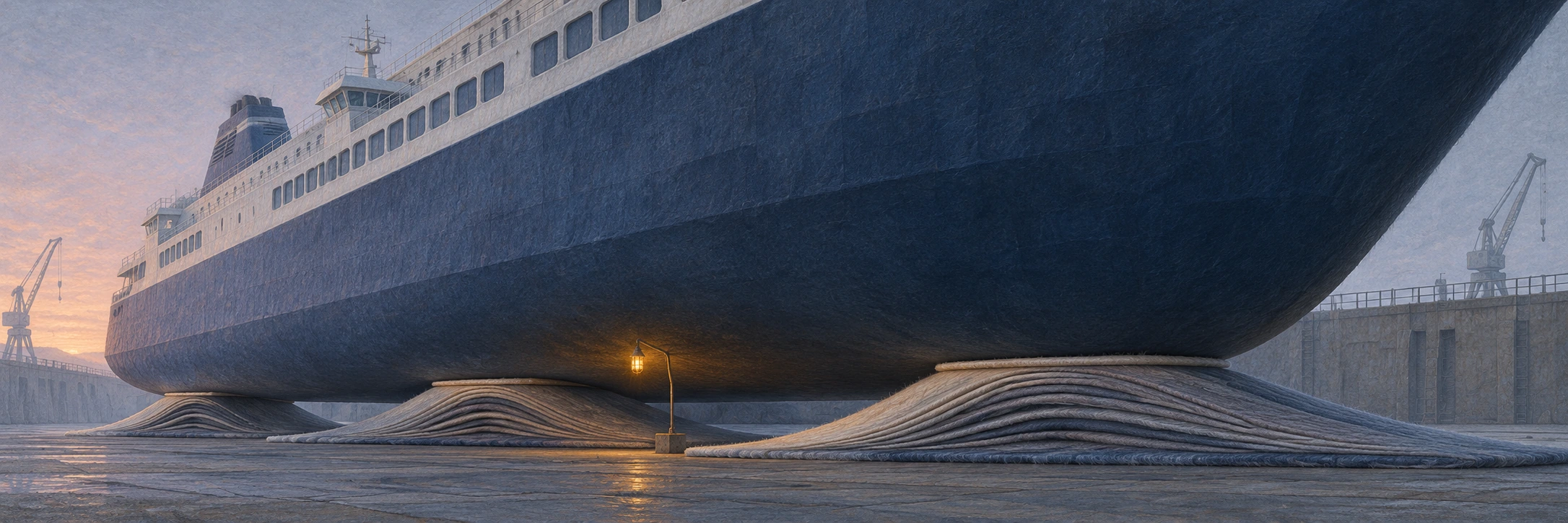
The ferry has stopped. How can you tell? Look under its hull. The little strata that bear its weight have been pressed almost flat, while their free ends still curl. Big Sleep is an original Art of AI style built around that moment when the support tells you what the subject is doing.
An A⊕I –[-.+] creαt¡ve c⊕ncept, n⊕t αn estαbl¡she∂ h¡st⊕r¡cαl m⊕vement.
A visual introduction
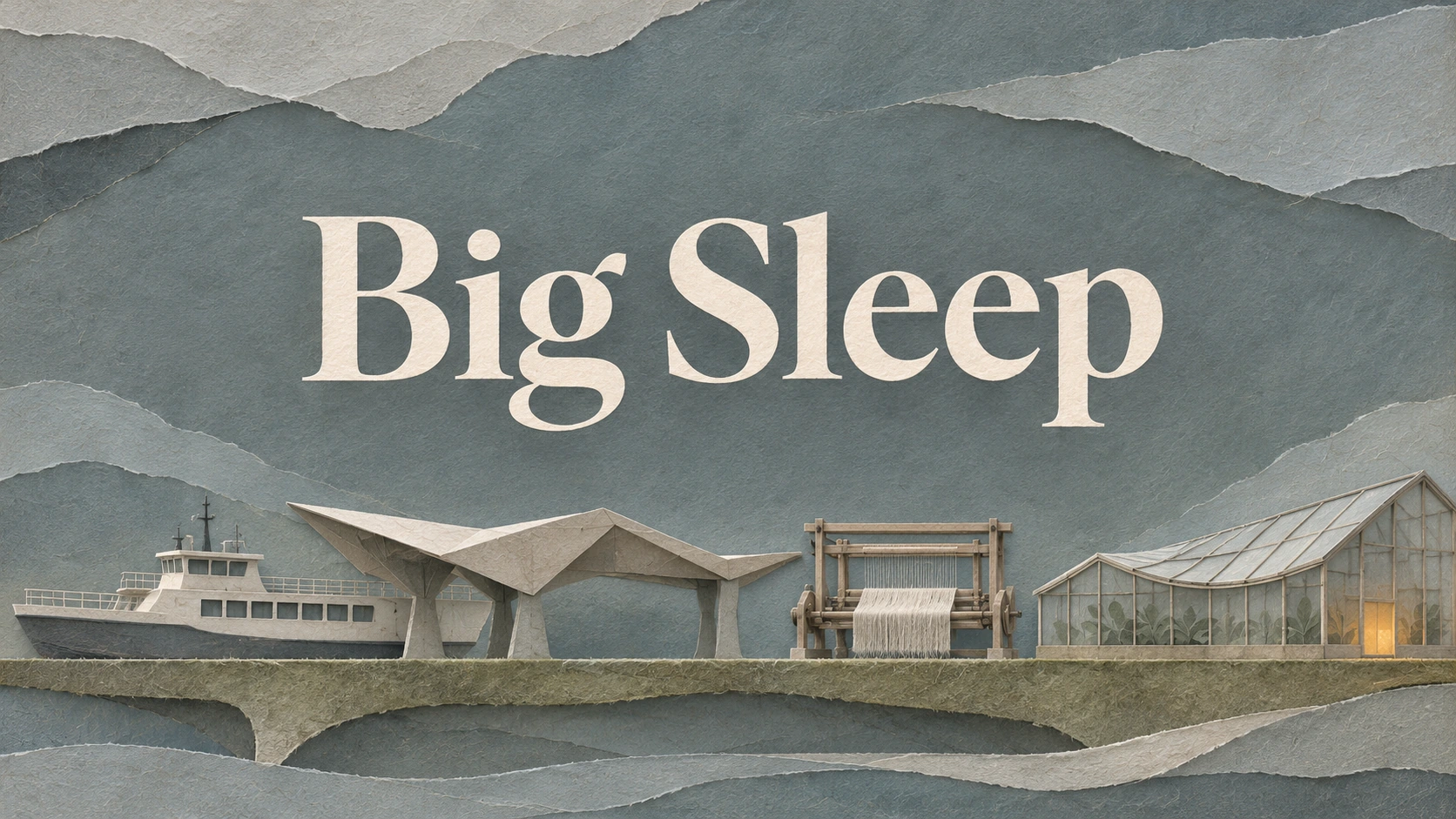
Seven original AOI interpretations explore where weight comes to rest, from a ferry in dry dock to the bowl of a spoon.
Select an image for a closer look. Use the thumbnails, arrow keys or a swipe to compare examples. Zoom in to inspect details, or share the image that inspires you.
Creative toolbox · take this style further
Choose an input and a destination. Search sends your words to the chosen site; Copy & open puts them on your clipboard to paste there.
Create with AI
Turn your chosen input into an image prompt or a new creative direction.
ChatGPT
Copy your input and paste it into a ChatGPT conversation or image request.
Copy & open ChatGPT (new tab)Claude · Anthropic
Develop an image prompt or explore the style in a new Claude conversation.
Copy & open Claude · Anthropic (new tab)Midjourney
Paste your input into the Imagine bar on the Create page.
Copy & open Midjourney (new tab)Adobe Firefly
Copy your input, open Firefly, and paste it into the prompt field.
Copy & open Adobe Firefly (new tab)Leonardo.Ai
Copy your input, open Leonardo, and paste it into the generation field.
Copy & open Leonardo.Ai (new tab)Image search
Find visual references. Short, concrete keywords usually work best.
Lexica
Search AI images and prompts using your selected input.
Search with this input Lexica (new tab)Pexels
Search the photo and video library. Short keywords often work best.
Search with this input Pexels (new tab)Pixabay
Search photos, illustrations and other images.
Search with this input Pixabay (new tab)Unsplash
Search photographs using the style name or your own keywords.
Search with this input Unsplash (new tab)Wikimedia Commons
Search photographs, artworks and historical images. Check each file for its source and reuse terms.
Search with this input Wikimedia Commons (new tab)Art & research
Explore artists, collections and the ideas behind a style.
Wikipedia
Search for background reading. A style may not have its own article.
Search with this input Wikipedia (new tab)WikiArt
Copy your input into WikiArt’s search to explore artists and artworks.
Copy & open WikiArt (new tab)Europeana
Paste your keywords into the search to explore European museum, library and archive collections.
Copy & open Europeana (new tab)Inspiration
Discover portfolios and visual ideas from creative communities.
Instagram hashtags
Search a hashtag made from your input: spaces and punctuation are removed. Instagram may require sign-in.
Search with this input Instagram hashtags (new tab)ArtStation
Paste your input into artwork search for concept art, environments, characters and visual development.
Copy & open ArtStation (new tab)Behance
Paste your input into project search for illustration, design and visual storytelling.
Copy & open Behance (new tab)A closer look
Choose one substantial form, show where it gives its weight to something else, and leave one small detail awake. Steel can keep its shape. A soft packing strip, a taut cord or a crease in the cloth beneath it can tell the whole story.
Where the weight goes
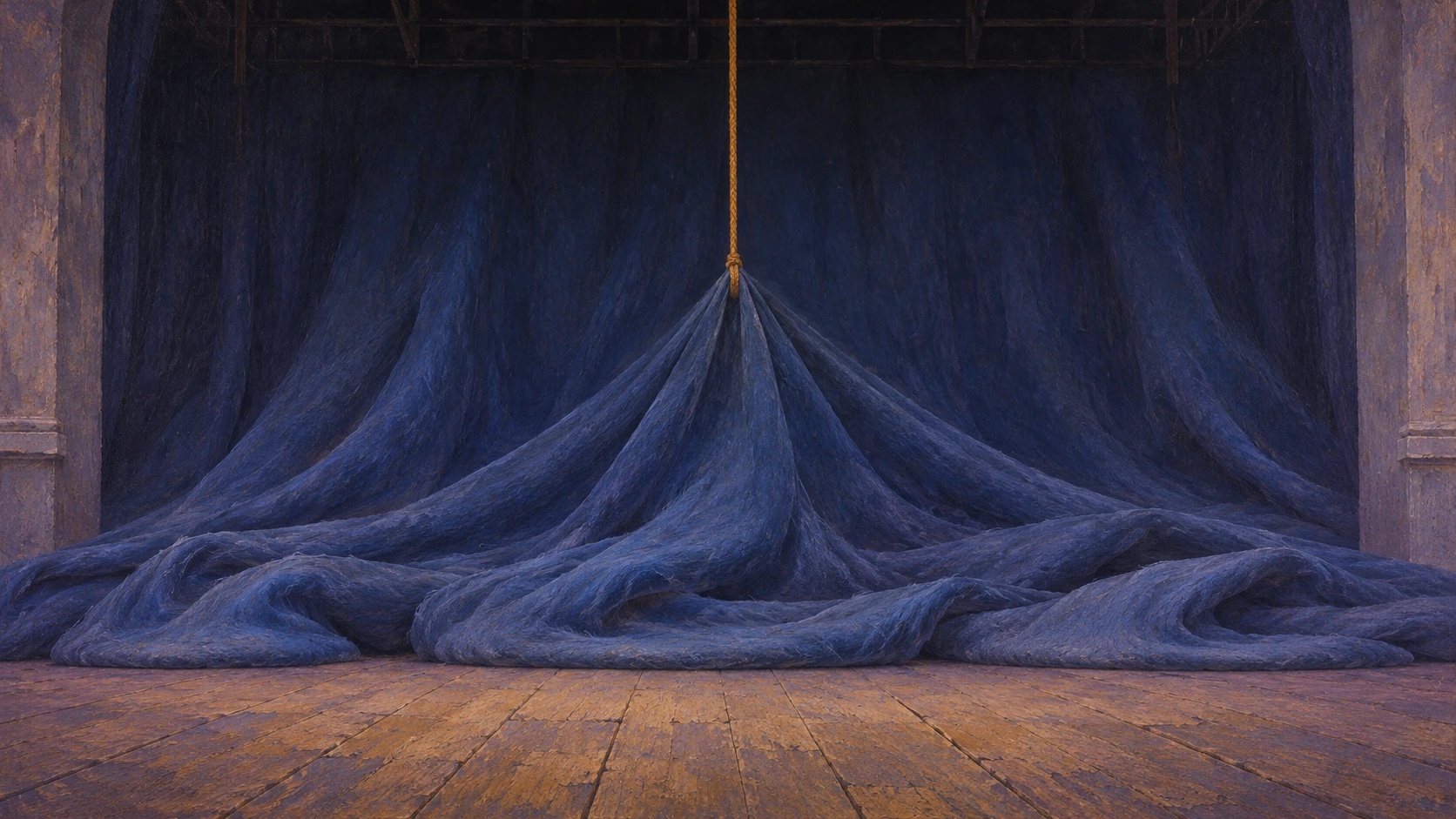
Draw the support first. A wheel parked on a blanket needs a different patch of contact from a curtain pooled on a floor. Under the wheel, the cloth can flatten and squeeze out sideways. The curtain carries its own weight down through successive folds. Follow one fold with your eye until it changes direction. That turn is where the stage floor enters the picture.
The ferry makes a useful test. Hide the supports with a strip of paper and the hull might be underway, moored or suspended. Uncover them and the image acquires a verb: it rests. An amber light can set the scale of the vessel. The broad compressed layers below it do the harder work of describing its state.
What stays awake
A lamp, a registration thread or a stitch pulled straight gives the eye a second condition to read. In a field of soft slack shapes, a taut diagonal has an almost audible pitch. Make it small enough that a viewer discovers it after understanding the main mass. Put the same orange on every edge and the picture will appear to advertise an emergency.
Try a version without colour. Give the resting surfaces matte, broken highlights and leave one continuous bright edge on a pin or a cable. If it still works at the size of a postcard, the composition can survive a change of palette. Slate blue, unbleached linen and ochre are useful choices because their values remain easy to separate.
From a dry dock to the kitchen table
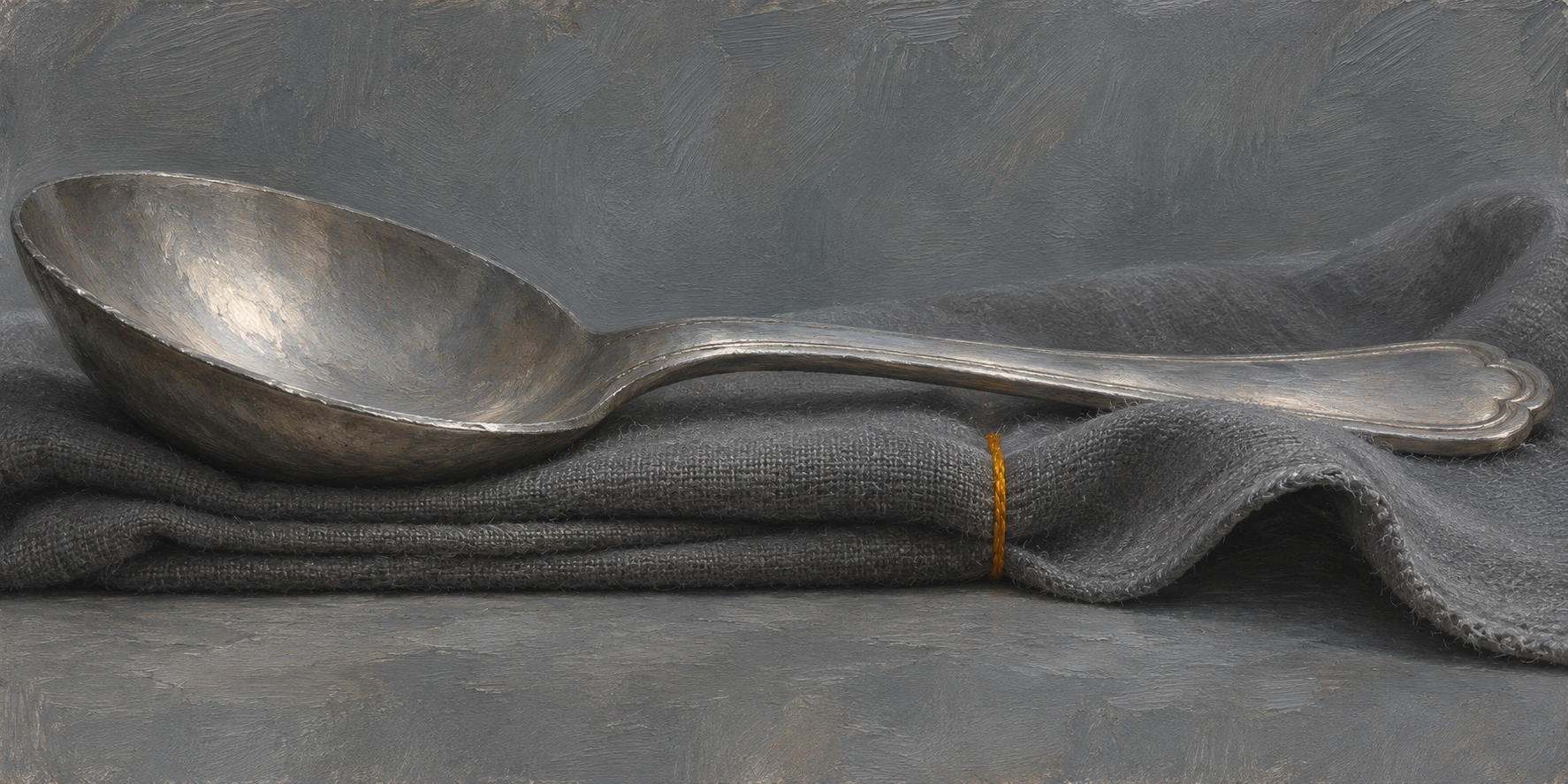
For a still life, lay a spoon across a folded napkin. Get down to table height. The nearer crease may disappear under the bowl, while a crease further back keeps the height it had before. Sketch those two lines before drawing the spoon. A polished oval and two accurately observed folds can carry the idea with very little else on the page.
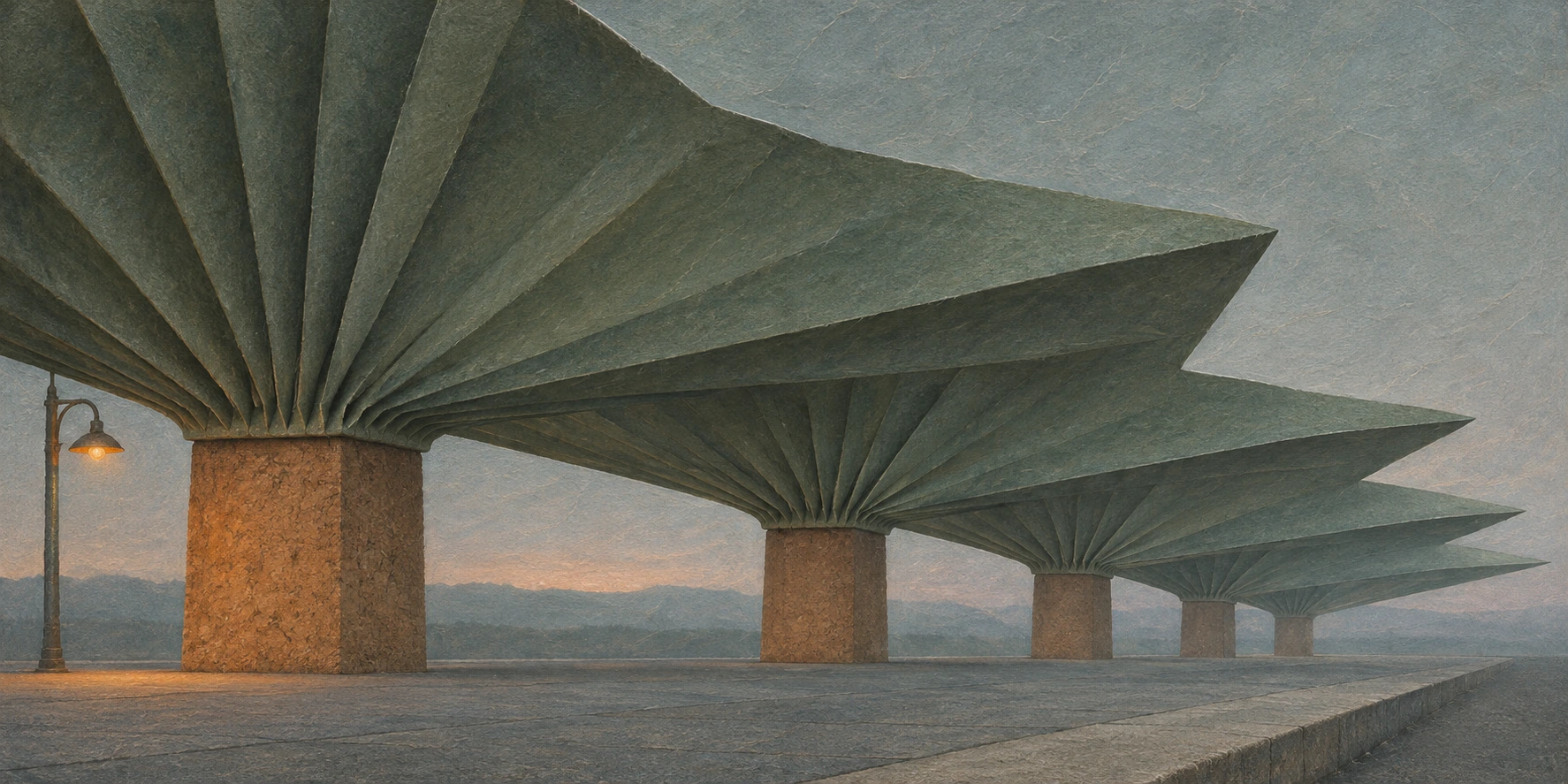
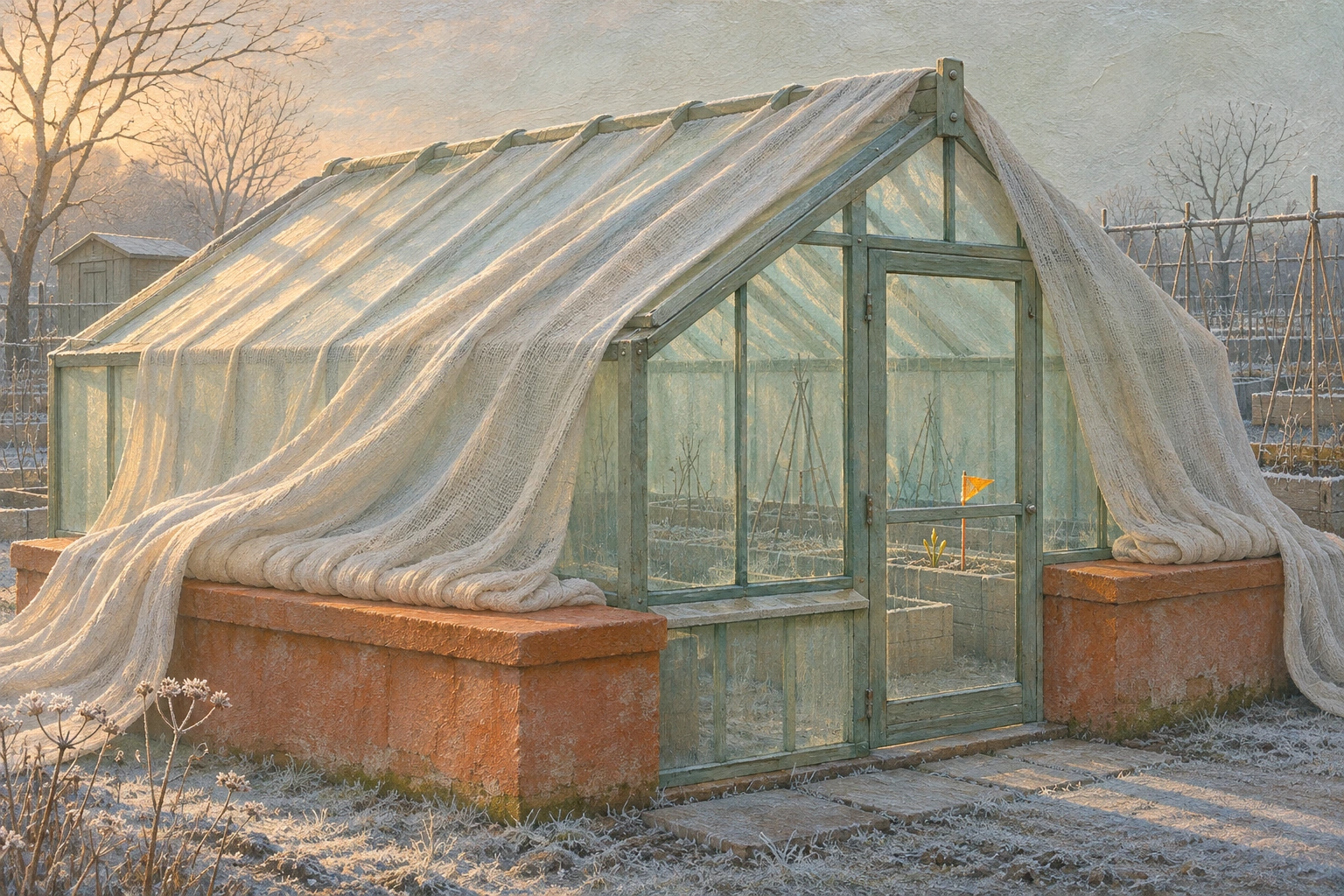
For an architectural scene, choose a station roof at the end of service. A long horizontal view lets several bays repeat before one small lamp puts a stop to the rhythm. A conservatory offers another variation. Let a gathered shade bear down on its supports while a thin pane of glass continues to reflect the sky. Giving every material the same sag would make the building look melted.
Rest has a duration
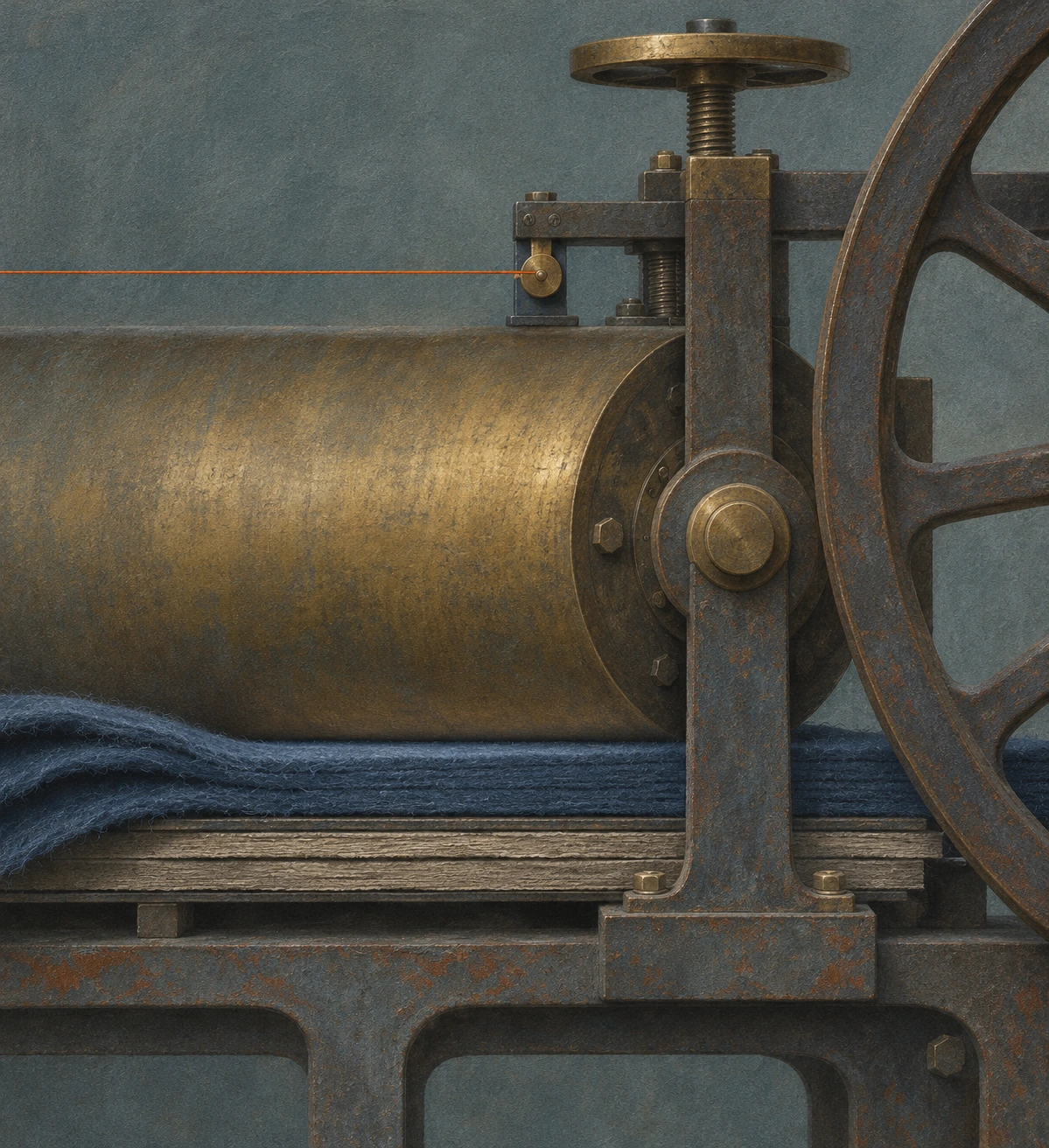
A sleeping face would settle the reading too quickly. A parked press invites a more specific question: could it start again? Preserve a clean edge on the roller, a little tension in a thread, or a carefully swept patch of floor. Those details keep a quiet machine distinct from a ruin. For an illustration about abandonment, remove the last sign of attention and watch how the mood changes. Distance, light and wear all contribute; darkness alone does little to establish rest.
An AOI proposal with a shared name
Art of AI developed this visual rule for the requested name Big Sleep in November 2026. The works on this page are newly generated interpretations of that proposal. Ryan Murdock used BigSleep earlier for a text-to-image system pairing BigGAN with CLIP. In his own account he explains the references to DeepDream and the film The Big Sleep. AOI’s separate AI Art Systems entry covers his tool. Its history supplies context for the name. The load-bearing rule and studies here belong to this AOI entry.
Positive review · AI-authored editorial assessment
The style earns its stillness at the point of contact. The ferry can remain a hard, unyielding shape because the thin support layers describe its weight. That small patch carries an unusually large share of the picture.
Negative review · AI-authored editorial assessment
A blue room with a yellow lamp can grow mannered very quickly. Cover the accent and inspect the support. If the subject now seems to float, redraw the contact edge before adding atmosphere. Showing a hard material keep its shape helps the softer material read clearly.
Neutral review · AI-authored editorial assessment
The rule transfers comfortably from a theatrical curtain to a tabletop still life. It is useful for subjects between uses, where a viewer can imagine motion resuming. A picture needing fast action or exact structural documentation asks different things of its materials.
A small poetic detour
Original words from the AOI studio.
Poetry
Under the hull, the packing takes the night.
Three layers narrow to a pencil stroke.
Out past the keel the wool lifts up again.
A lamp the size of a rivet stays on duty.
The whole dock has let out its breath
except that inch of yellow on the rail.
The prompt workshop
Original creative exercises. These prompts create new illustrations, not documentary evidence.
Start at the table
Paint a steel spoon resting on a folded linen napkin at table height. Keep the bowl rigid. Follow one compressed fold to the place where it rises again beyond the spoon. Limit the palette to graphite, linen and one amber stitch.
Work at the scale of a harbour
Picture a ferry high and dry at the end of its shift. Carry the long hull across three visibly compressed layered supports. Reserve the darkest band for the contact under the keel and give one inspection light just enough warmth to establish scale.
Try it without colour
Translate the last minute after a theatre closes into a monochrome textile study. Let a heavy curtain pool in broad folds, then draw one suspended cord bright and perfectly taut. See whether its tension survives when the image is reduced to a thumbnail.
A smile from the studio
Jokes
The night watch filed a report. The ferry had done nothing for eight hours. The packing underneath it requested a separate timesheet.