
Historical association of landscape painters
The Barbizon School names a group of nineteenth-century painters associated with landscape and the area around the Forest of Fontainebleau. It was not a school with one compulsory technique or identical artistic aims.
A visual introduction
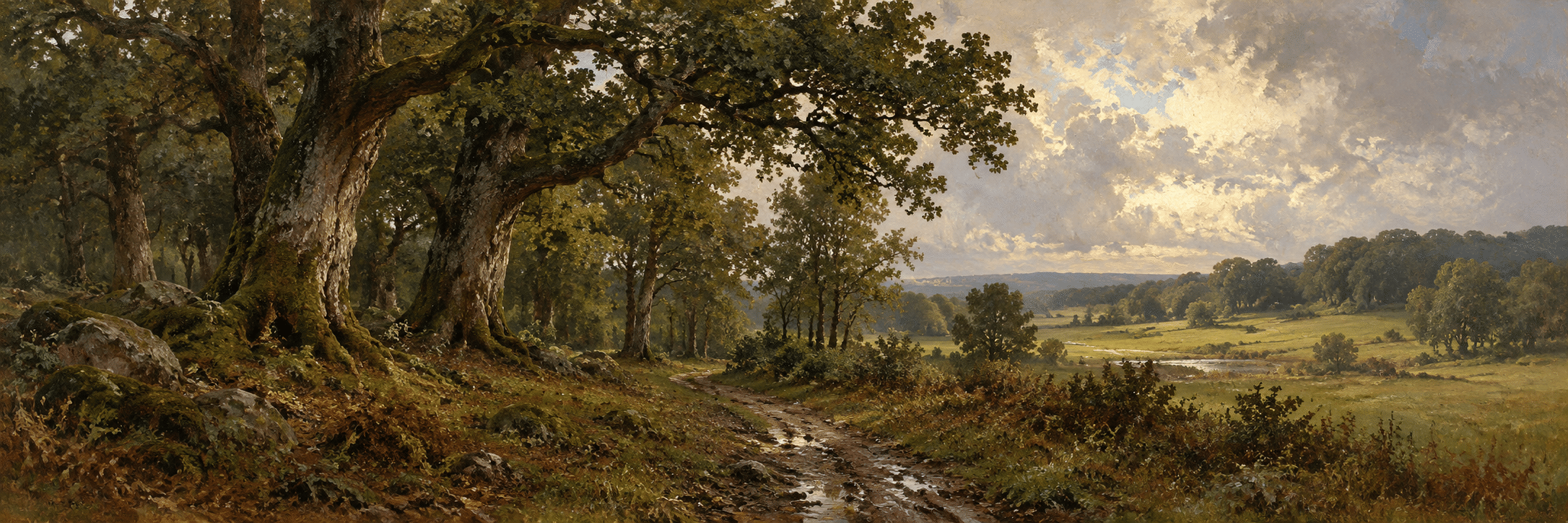
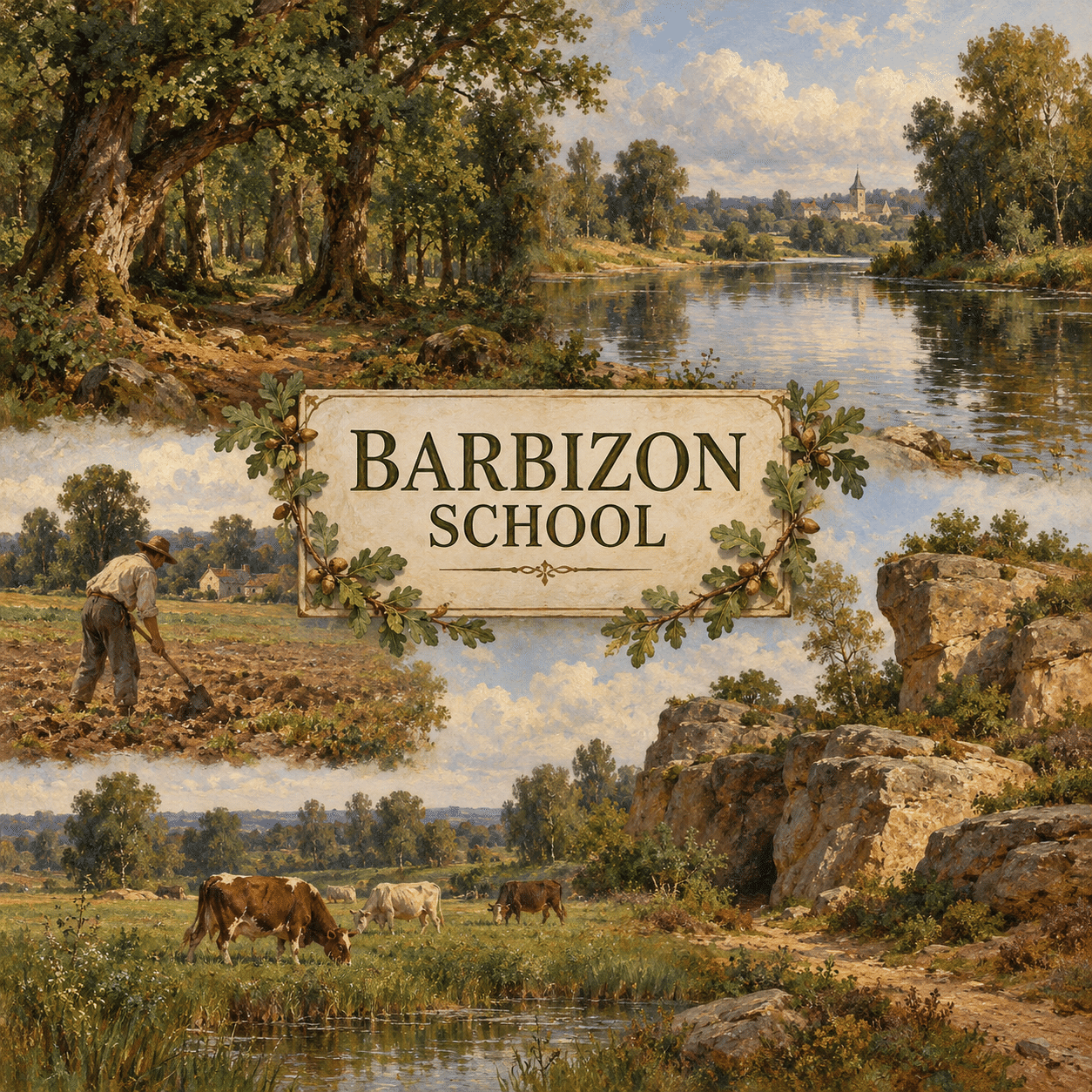
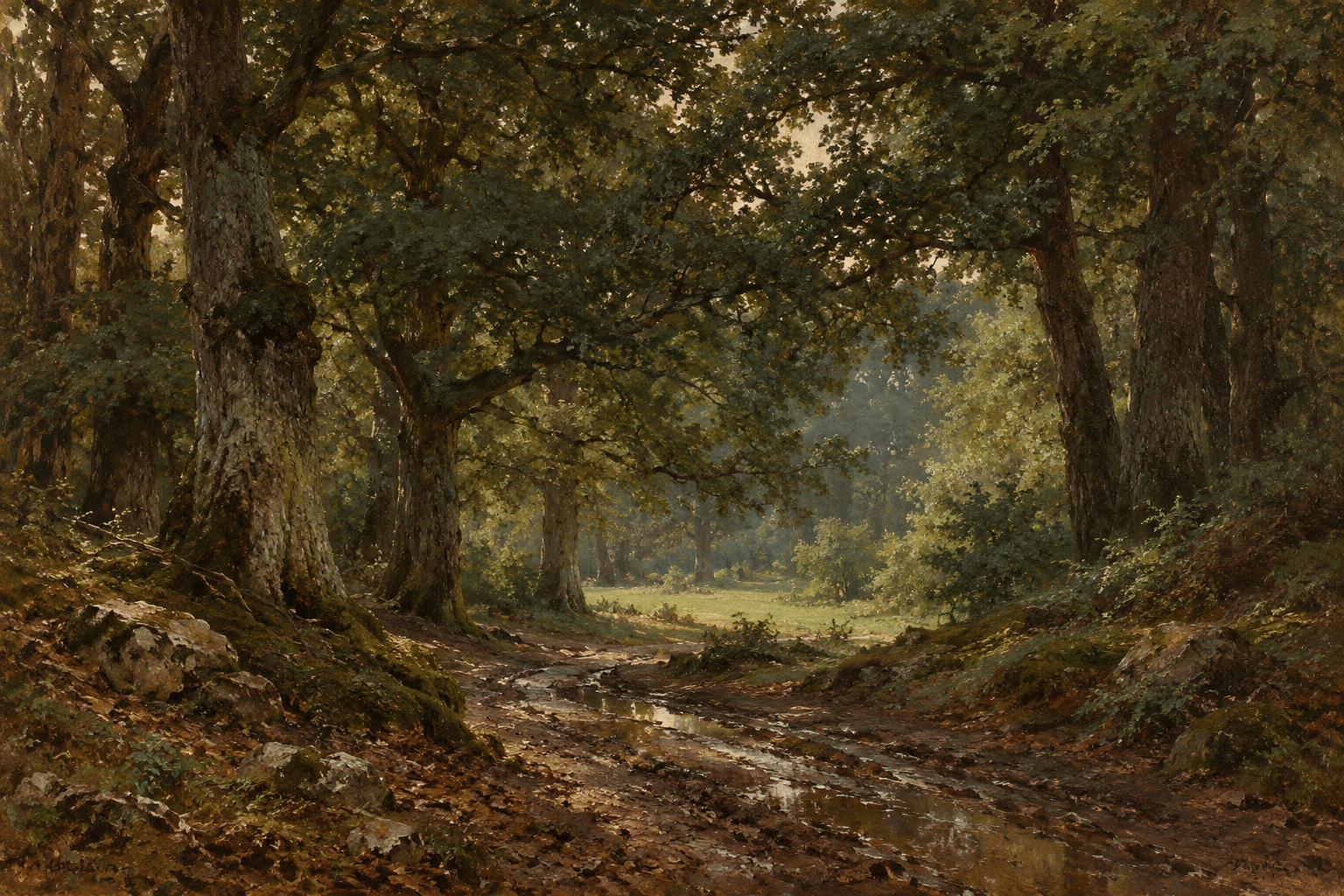
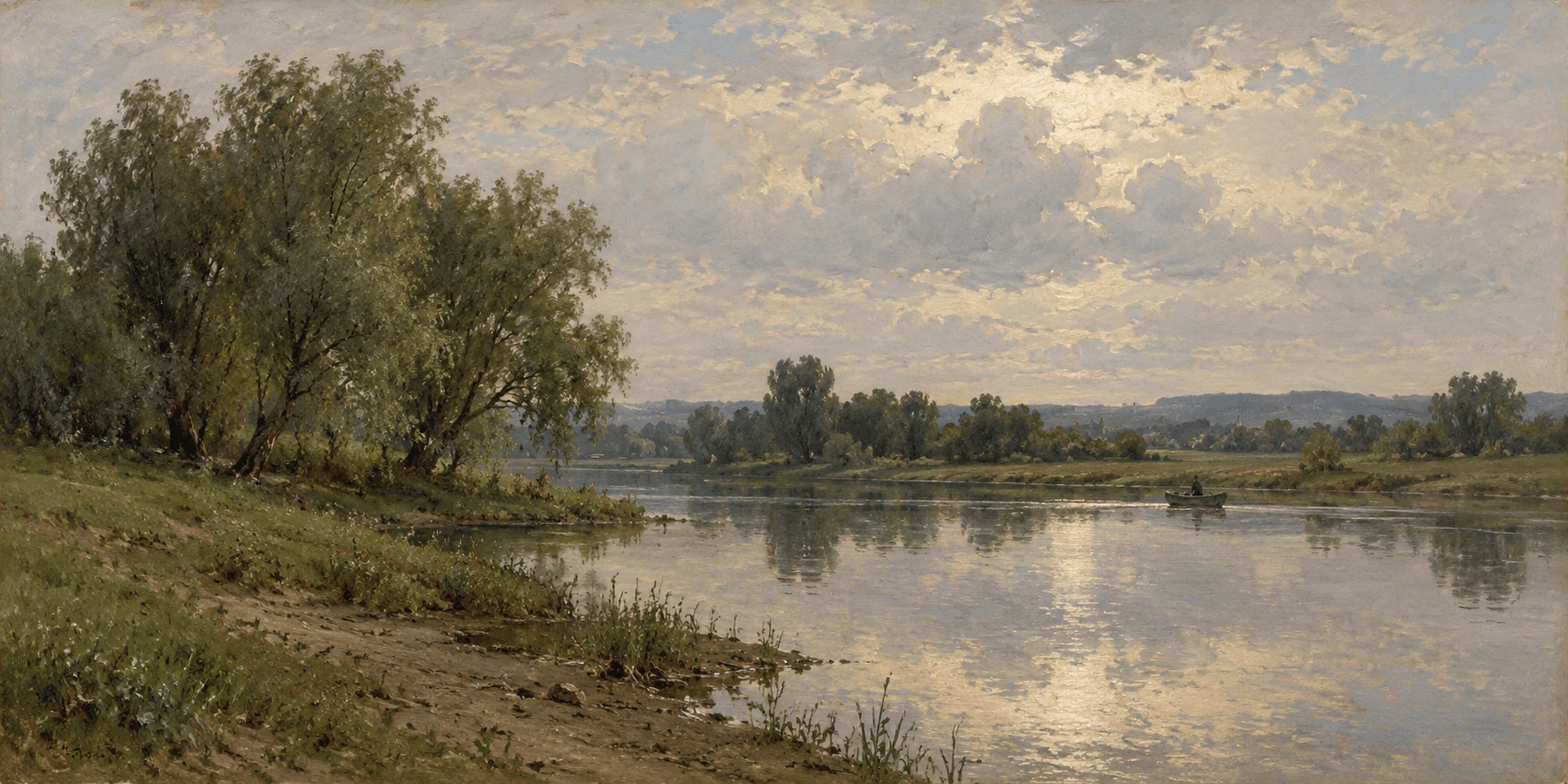
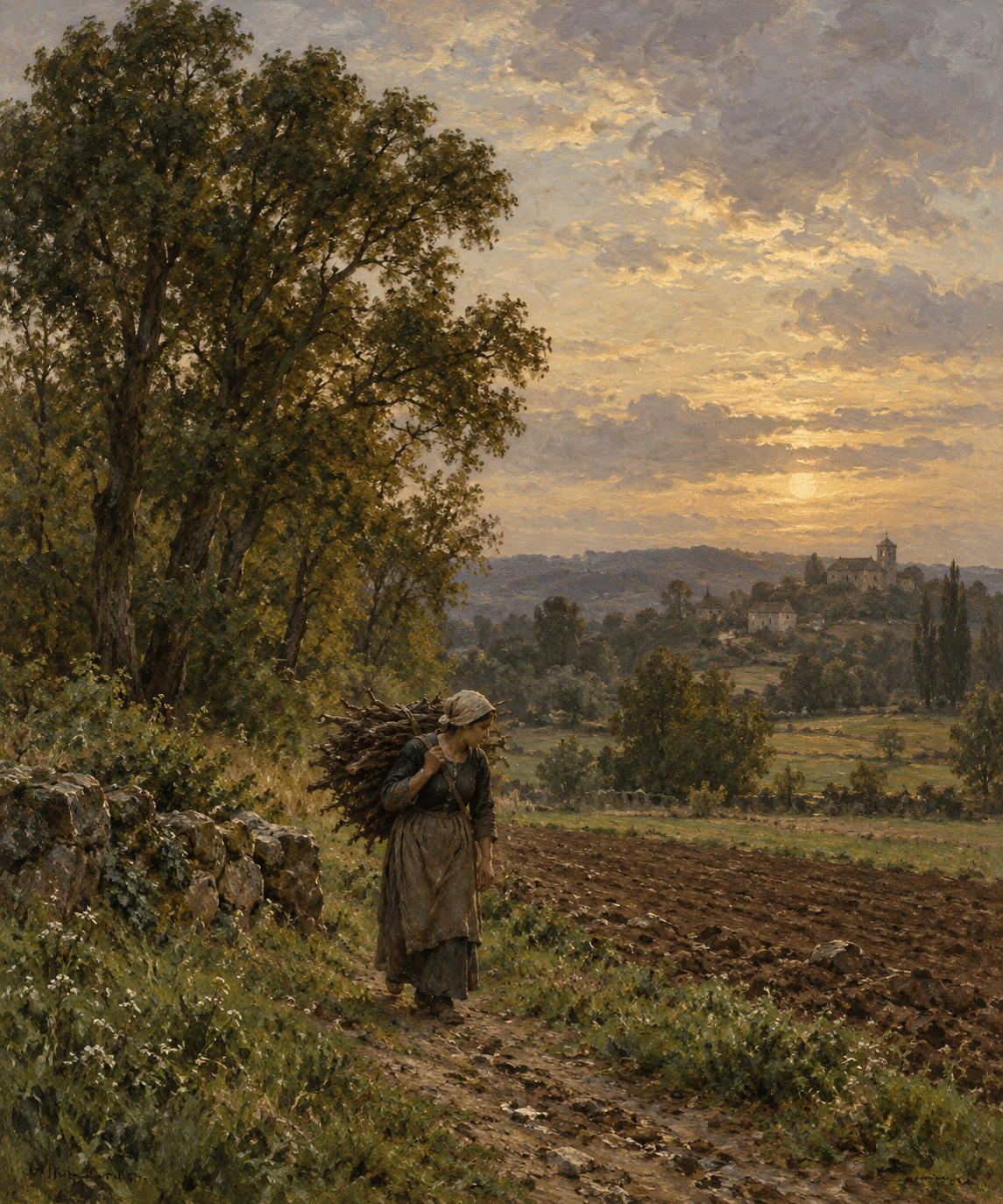
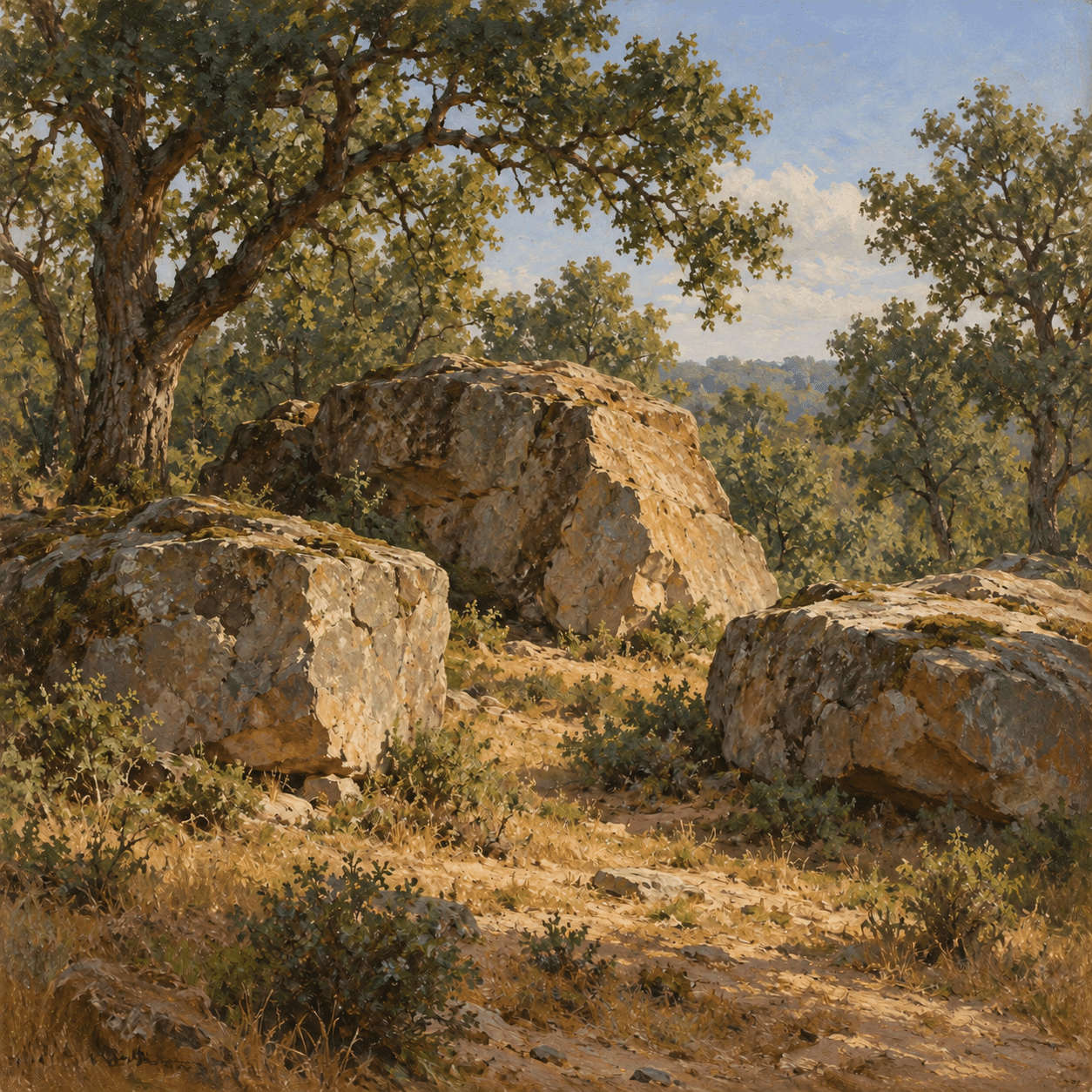
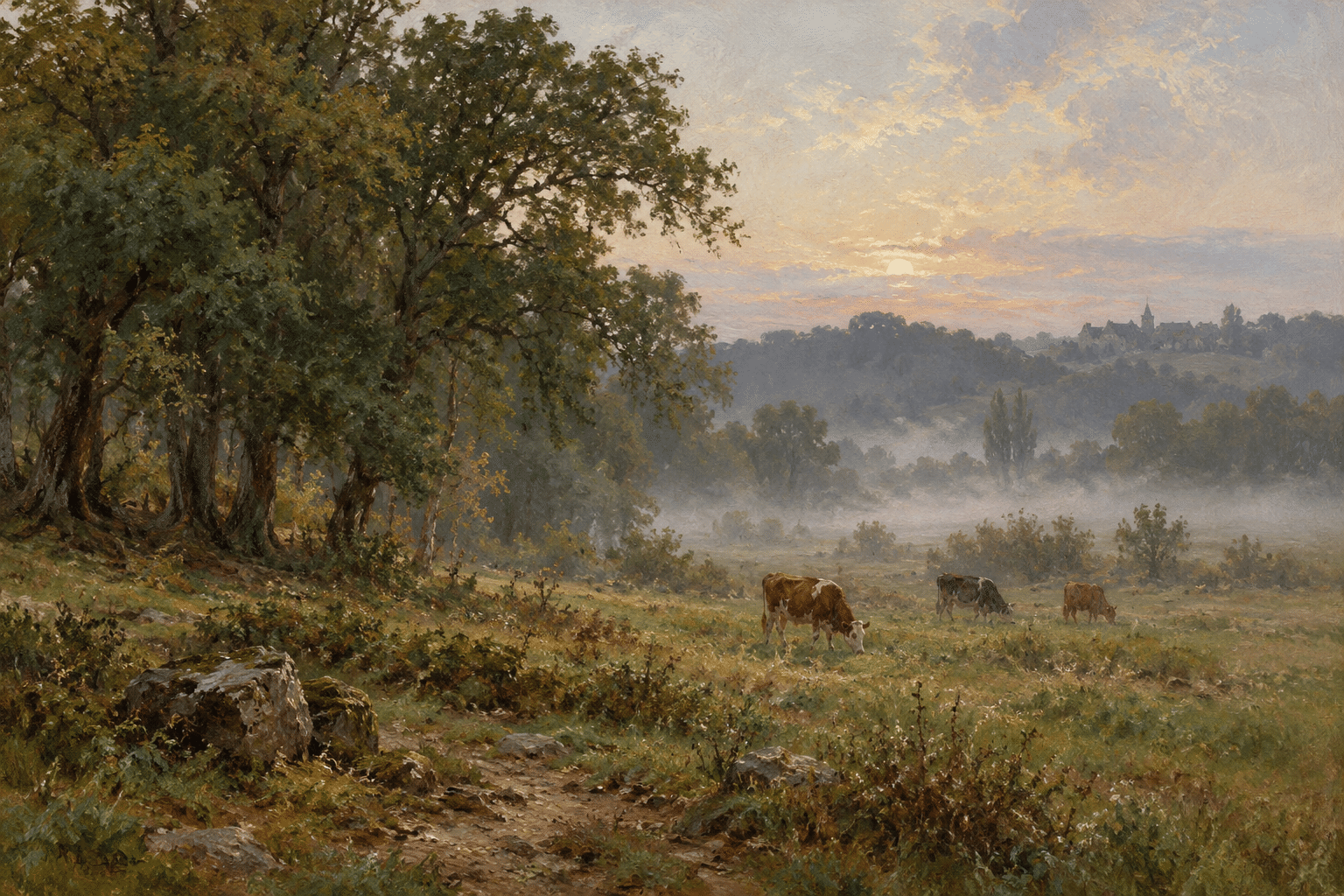
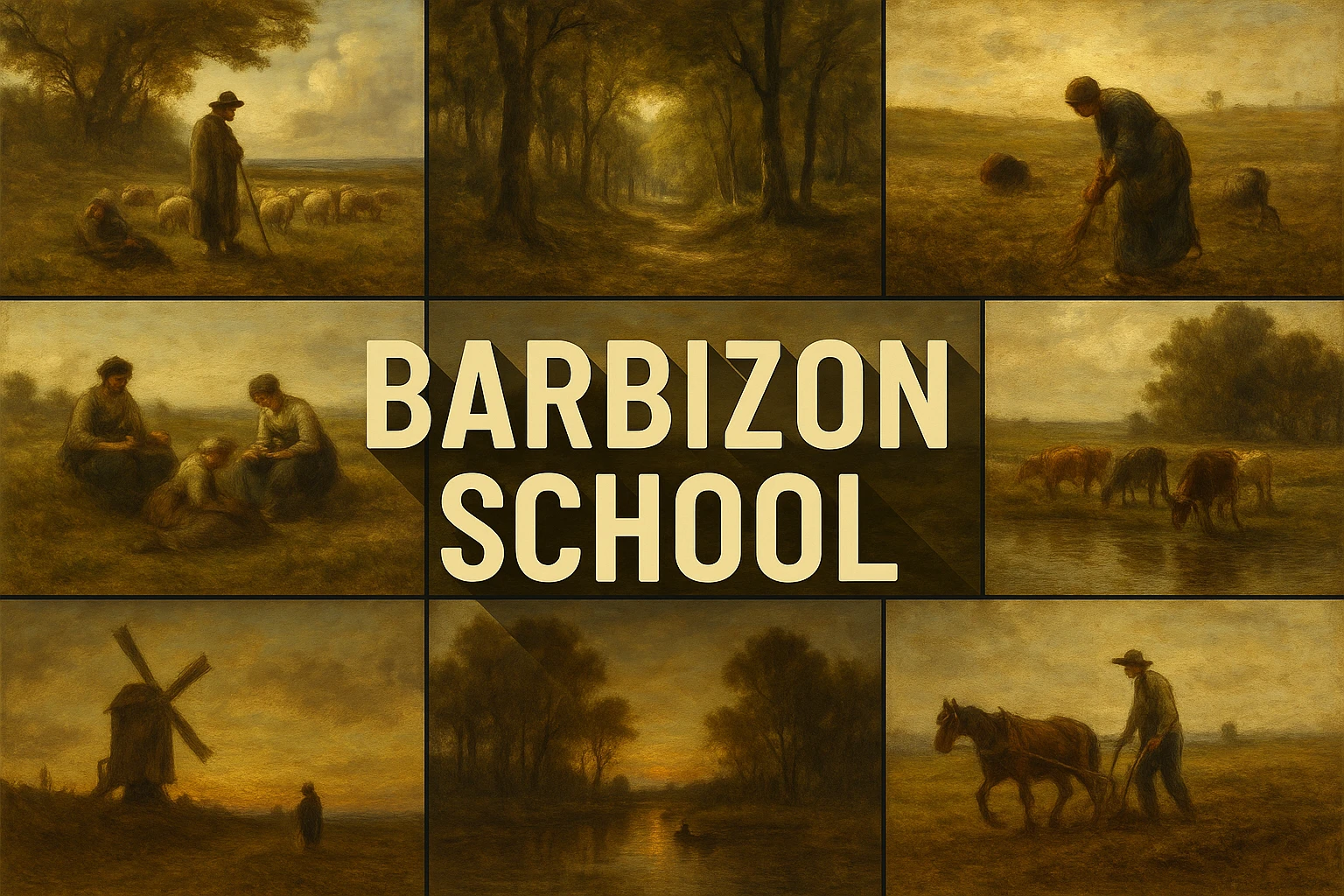
Seven new AI-generated landscape studies explore woodland, river, rural work, sandstone and grazing animals. They interpret compositional principles rather than reproduce historical paintings. The earlier illustration is retained.
Select an image for a closer look. Use the thumbnails, arrow keys or a swipe to compare examples. Zoom in to inspect details, or share the image that inspires you.
Creative toolbox · take this style further
Choose an input and a destination. Search sends your words to the chosen site; Copy & open puts them on your clipboard to paste there.
Create with AI
Turn your chosen input into an image prompt or a new creative direction.
ChatGPT
Copy your input and paste it into a ChatGPT conversation or image request.
Copy & open ChatGPT (new tab)Claude · Anthropic
Develop an image prompt or explore the style in a new Claude conversation.
Copy & open Claude · Anthropic (new tab)Midjourney
Paste your input into the Imagine bar on the Create page.
Copy & open Midjourney (new tab)Adobe Firefly
Copy your input, open Firefly, and paste it into the prompt field.
Copy & open Adobe Firefly (new tab)Leonardo.Ai
Copy your input, open Leonardo, and paste it into the generation field.
Copy & open Leonardo.Ai (new tab)Image search
Find visual references. Short, concrete keywords usually work best.
Lexica
Search AI images and prompts using your selected input.
Search with this input Lexica (new tab)Pexels
Search the photo and video library. Short keywords often work best.
Search with this input Pexels (new tab)Pixabay
Search photos, illustrations and other images.
Search with this input Pixabay (new tab)Unsplash
Search photographs using the style name or your own keywords.
Search with this input Unsplash (new tab)Wikimedia Commons
Search photographs, artworks and historical images. Check each file for its source and reuse terms.
Search with this input Wikimedia Commons (new tab)Art & research
Explore artists, collections and the ideas behind a style.
Wikipedia
Search for background reading. A style may not have its own article.
Search with this input Wikipedia (new tab)WikiArt
Copy your input into WikiArt’s search to explore artists and artworks.
Copy & open WikiArt (new tab)Europeana
Paste your keywords into the search to explore European museum, library and archive collections.
Copy & open Europeana (new tab)Inspiration
Discover portfolios and visual ideas from creative communities.
Instagram hashtags
Search a hashtag made from your input: spaces and punctuation are removed. Instagram may require sign-in.
Search with this input Instagram hashtags (new tab)ArtStation
Paste your input into artwork search for concept art, environments, characters and visual development.
Copy & open ArtStation (new tab)Behance
Paste your input into project search for illustration, design and visual storytelling.
Copy & open Behance (new tab)A closer look
Trees, paths, fields and changing light can become substantial subjects; broad masses and observed relationships matter as much as picturesque detail.
Landscape deserves sustained attention
The Met's account describes artists gathering around Barbizon and treating landscape as a subject in its own right. The label brings together painters with distinct practices, including Théodore Rousseau, Jean-François Millet and Charles-François Daubigny. It should not erase those differences.
The Städel's overview also distinguishes outdoor studies from paintings developed in the studio. Working from nature did not require every finished canvas to be completed entirely outdoors. Observation, memory, selection and revision could contribute to the final image.
Choose a particular piece of ground
A useful study begins with a specific arrangement: a tree group at a field edge, a wet track beneath foliage or the meeting of cultivated land and woods. Identify the largest shapes before cataloguing leaves and branches.
Ask what gives the place weight. A dark canopy may press against a pale opening; a path may connect foreground texture to distant light. These relationships can sustain attention without requiring a spectacular landmark or a dramatic narrative.
Make weather visible through its effects
Instead of naming an atmosphere, show what it does. Damp ground reflects differently from dry earth; distant forms may soften; a break in cloud can isolate one plane. Keep these effects consistent across the scene.
Limit the initial color study so that value relationships remain clear. Add smaller color differences after the composition works at a distance. An abundance of green tones is less useful than a convincing distinction between lit foliage, shaded mass and open air.
Observation is not a single style filter
Do not turn the subject into a recipe of brown trees and nostalgia. Compare different painters and individual works. A field can be a place of labor as well as a pleasing arrangement of forms, and a landscape's human presence need not be a decorative accessory.
For a contemporary interpretation, record what you actually observe and identify what you change. A generated image can explore the compositional principles, but it should not be presented as a recovered Barbizon painting or as evidence of a real location's historical appearance.
A shared place, different artistic concerns
The Met’s overview connects the painters’ interest in landscape with the Forest of Fontainebleau and the village of Barbizon, where artists gathered from the 1820s. It describes Rousseau’s sustained attention to trees, Millet’s focus on rural labor and Daubigny’s interest in water and changing skies. These differences are central to the group’s value: a shared commitment to landscape did not produce one interchangeable manner.
The label is therefore best used as an introduction to particular artists and works. A forest interior, a cultivated field and a riverbank bring different questions of scale, movement and human presence. Comparing them can reveal how a modest subject becomes substantial through selection and arrangement rather than through a grand historical narrative.
Build the landscape from large relationships
Begin with three or four principal masses: sky, canopy, ground and perhaps water. Decide which is dominant and where the eye can move between them. A narrow opening in dark foliage can carry the composition, while a path can connect rough foreground texture with softer distance. Keep the largest value relationships readable before introducing small branches or grasses.
A tree should belong to the ground. Its trunk, roots and surrounding shadows need to explain weight and placement, even when brushwork remains broad. Similarly, a river should sit within its banks rather than appear as a separate strip of blue. These structural relationships give a landscape credibility without requiring every leaf to be individually described.
Earth color does not mean uniform brown
Look for differences within restrained color. A cool shaded green can sit against a warmer lit leaf mass; damp soil may carry a muted reflection of the sky; sandstone can shift between ochre, grey and pale pink. The painting becomes richer when these relationships remain organized by light instead of being scattered as isolated accents.
Brushwork can also distinguish surfaces. A broad horizontal passage may hold water still, while broken marks suggest rough bark or grass. Reserve sharper detail for the places where it helps orientation. Excessive finish everywhere can make a scene feel catalogued rather than experienced, while indiscriminate softness can dissolve the structure that gives it weight.
The new gallery: forest, river, work, stone and animals
The banner places a substantial tree group beside a path and a brighter opening. The titled collage connects five different landscape subjects. The woodland example studies the pressure of a canopy against a small clearing; the river scene uses horizontal reflection and a distant boat to organize space. Neither depends on spectacular scenery.
The worker study gives human activity a place within the field rather than using a figure only as decoration. The sandstone clearing turns attention to the relationship between rock masses, sandy ground and trees. The cattle scene uses animals to establish scale and rhythm within a meadow. Together these examples broaden the subject beyond a generic forest filter.
All seven new images are AI-generated interpretations of compositional principles. They are not paintings by Barbizon artists, records of nineteenth-century places or reconstructions of particular historical works. The earlier illustration remains in the gallery. Use the museum sources to compare authentic works and the variety of individual practices.
Practical exercises and neighboring approaches
Try a small value study of a familiar place before making a color version. Keep the same viewpoint and identify what the color adds: warmth, distance, reflected light or a change of surface. Then make a second composition that moves the horizon or changes the balance between open ground and tree mass. This turns observation into a sequence of decisions rather than a search for picturesque details.
Barbizon painting is often discussed in relation to Realism and the development of outdoor landscape painting before Impressionism. Those relationships are useful, but should not reduce the group to a stepping stone. Its attention to trees, land, work and weather can be studied on its own terms. In a prompt, specify the actual piece of ground, its light and its principal masses instead of relying on the label alone.
Positive editorial assessment — AI-authored
The Barbizon approach gives sustained attention to subjects that can otherwise seem ordinary. Its strongest lesson for contemporary image-making is the weight of a few well-observed relationships: tree against sky, path into distance, worker within land. The new set makes that range visible without requiring a single dramatic landmark.
Critical editorial assessment — AI-authored
A generalized Barbizon treatment can turn into brown-green nostalgia and erase the differences between artists. Generated rural scenes may also romanticize labor or imply an untouched countryside. The studies should be read as compositional exercises, with authentic works and historical context supplying the complexity that an attractive landscape alone cannot provide.
Neutral editorial assessment — AI-authored
The Barbizon School is an informal historical grouping associated with nineteenth-century French landscape painting. Its members shared interests but differed in subject, technique and working practice. The gallery offers contemporary interpretations of selected principles; the linked museum accounts provide a route into the documented works and their context.
A small poetic detour
Original words from the AOI studio.
Poetry
The Ordinary Ground
No monument commands the field;
the oak has kept its patient place.
A track takes water from the sky,
a cloud moves slowly through its face.
The worker crosses, small but known,
the cattle turn toward cooler shade.
We stay until the common ground
reveals the picture it has made.
The prompt workshop
Original creative exercises. These prompts create new illustrations, not documentary evidence.
Edge of the forest
Original landscape study of a field meeting dense woodland, strong masses, a narrow pale opening and observed earth colors, no imitation signature.
After rain
Original painterly study of a muddy forest track after rain, consistent damp reflections, restrained detail and a clear route into the composition.
A working landscape
Original rural scene with a distant worker and broad cultivated ground, the human presence integrated into scale and rhythm, no picturesque costume emphasis.
A smile from the studio
Jokes
The oak refused to pose more dramatically. It had been working on this silhouette for years.
Sources and further exploration
The Met — Barbizon painters and landscape as a subject
Städel Museum — the group and the relation between field study and studio