
Art-historical and critical term
Avant-garde describes work understood as challenging established artistic conventions in a particular context. It is a relationship to existing expectations, not a single palette, medium or permanent certificate of innovation.
A visual introduction
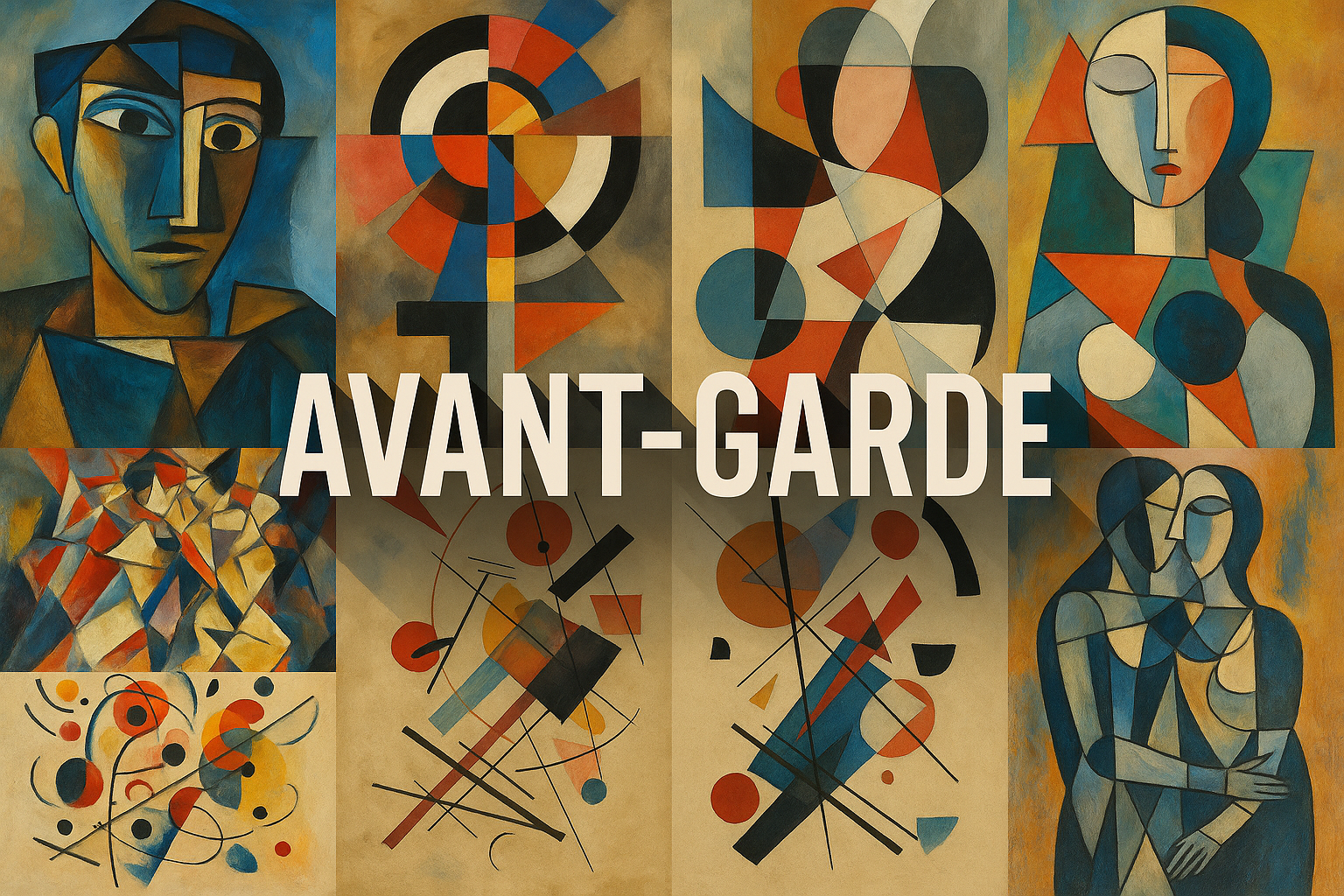
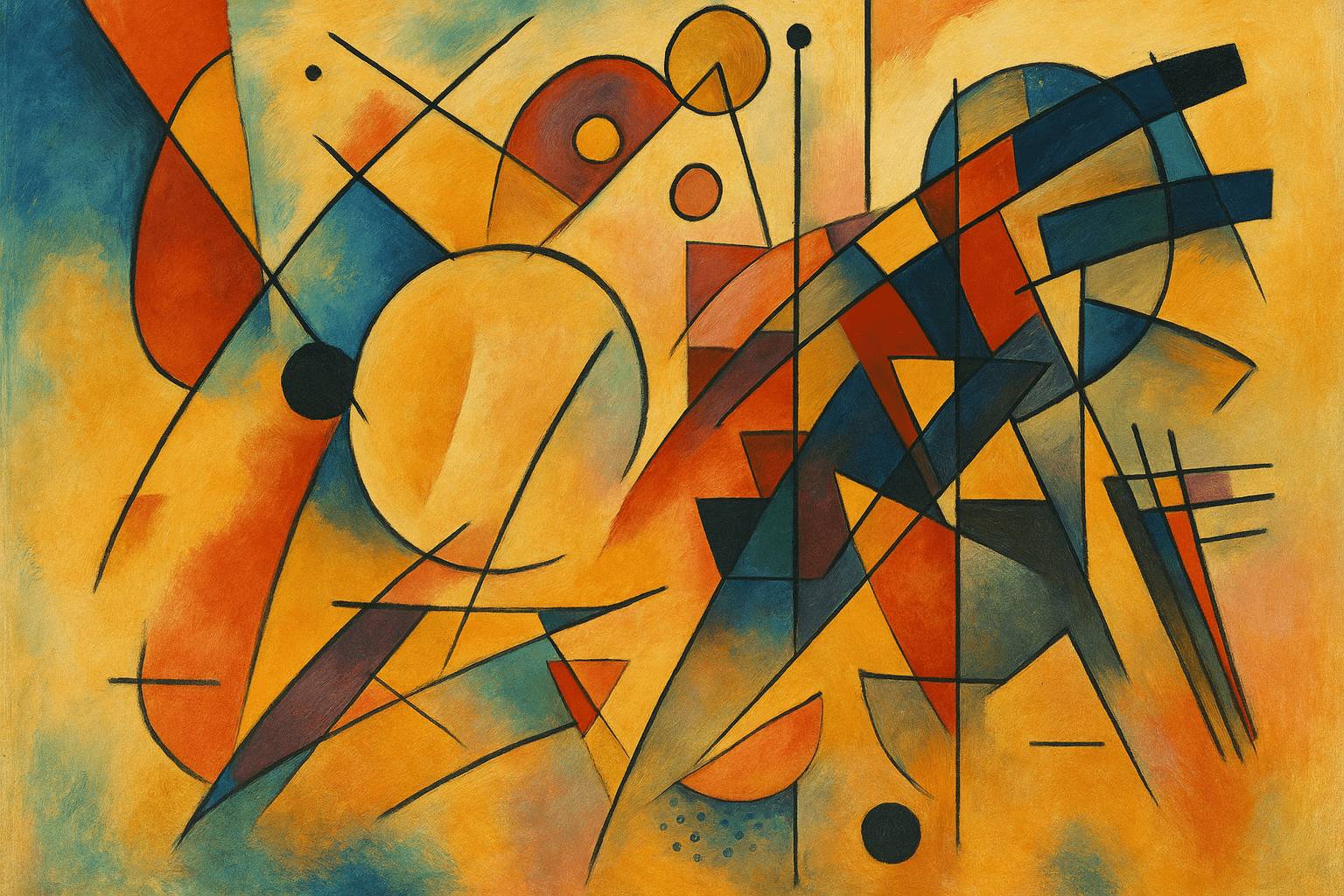
Select an image for a closer look. Use the thumbnails, arrow keys or a swipe to compare examples. Zoom in to inspect details, or share the image that inspires you.
Creative toolbox · take this style further
Choose an input and a destination. Search sends your words to the chosen site; Copy & open puts them on your clipboard to paste there.
Create with AI
Turn your chosen input into an image prompt or a new creative direction.
ChatGPT
Copy your input and paste it into a ChatGPT conversation or image request.
Copy & open ChatGPT (new tab)Claude · Anthropic
Develop an image prompt or explore the style in a new Claude conversation.
Copy & open Claude · Anthropic (new tab)Midjourney
Paste your input into the Imagine bar on the Create page.
Copy & open Midjourney (new tab)Adobe Firefly
Copy your input, open Firefly, and paste it into the prompt field.
Copy & open Adobe Firefly (new tab)Leonardo.Ai
Copy your input, open Leonardo, and paste it into the generation field.
Copy & open Leonardo.Ai (new tab)Image search
Find visual references. Short, concrete keywords usually work best.
Lexica
Search AI images and prompts using your selected input.
Search with this input Lexica (new tab)Pexels
Search the photo and video library. Short keywords often work best.
Search with this input Pexels (new tab)Pixabay
Search photos, illustrations and other images.
Search with this input Pixabay (new tab)Unsplash
Search photographs using the style name or your own keywords.
Search with this input Unsplash (new tab)Wikimedia Commons
Search photographs, artworks and historical images. Check each file for its source and reuse terms.
Search with this input Wikimedia Commons (new tab)Art & research
Explore artists, collections and the ideas behind a style.
Wikipedia
Search for background reading. A style may not have its own article.
Search with this input Wikipedia (new tab)WikiArt
Copy your input into WikiArt’s search to explore artists and artworks.
Copy & open WikiArt (new tab)Europeana
Paste your keywords into the search to explore European museum, library and archive collections.
Copy & open Europeana (new tab)Inspiration
Discover portfolios and visual ideas from creative communities.
Instagram hashtags
Search a hashtag made from your input: spaces and punctuation are removed. Instagram may require sign-in.
Search with this input Instagram hashtags (new tab)ArtStation
Paste your input into artwork search for concept art, environments, characters and visual development.
Copy & open ArtStation (new tab)Behance
Paste your input into project search for illustration, design and visual storytelling.
Copy & open Behance (new tab)A closer look
There is no universal avant-garde look: the decisive feature may be a new material, an altered viewing situation, an unfamiliar structure or a challenge to how art is defined.
Ask which convention is being challenged
MoMA explains the term's military origin and its application to art in early nineteenth-century France. In artistic discussion it refers to work that breaks with precedent. That definition requires a comparison: what was conventional in the relevant time and place, and what did the work do differently?
An unfamiliar-looking image is not automatically avant-garde. A once-radical device can become a familiar commercial convention. Conversely, an apparently quiet work can challenge expectations through its context, materials or method of distribution. The term is most useful when attached to a specific argument rather than used as a synonym for impressive novelty.
Separate a movement from the wider idea
Constructivism and Dada are historical examples of avant-garde activity, but they had different aims and practices. MoMA's accounts connect Constructivism to socially directed construction and Dada to challenges involving chance, everyday objects, performance and media culture. Their differences should not be flattened into a general story about unusual shapes.
Cubism is likewise not simply a sculptural technique, and Abstract Expressionism cannot be defined as a style of sculpture based on texture. When discussing a work, name the actual medium and the particular problem it addresses. Historical labels are tools for understanding relationships, not substitutes for looking.
Design an experiment with a clear constraint
For an original exercise, choose one expectation to alter. A portrait might withhold the face; a landscape might be organized by the sounds recorded there; an object might change meaning when placed in an unexpected display situation. Define what the viewer normally receives and what your work changes.
Keep other decisions sufficiently clear for that change to register. If scale, material, sequence and subject all become arbitrary at once, the viewer may encounter confusion without understanding the experiment. A constraint can give an unconventional work precision.
Evaluate consequences, not just surprise
Ask what becomes possible through the change. Does it reveal a neglected relationship, redistribute attention or question an assumption? Consider what it makes harder to understand as well. Innovation does not remove the need for careful editing.
In AI-assisted work, an unusual output is a starting point for judgment. Explain the experiment honestly instead of claiming that a generated picture establishes a new historical movement. The retained images on this page are interpretations within that discussion.
The prompt workshop
Original creative exercises. These prompts create new illustrations, not documentary evidence.
A portrait through absence
An original conceptual portrait represented only by the arrangement of someone’s everyday objects, deliberate negative space where a face might be expected, restrained composition and precise material detail, no imitation signature.
Change the viewing rule
Original gallery-installation concept in which a quiet landscape is distributed across several translucent planes, one viewpoint aligns them and another separates them, coherent physical structure and restrained light.
One rigorous interruption
Original abstract composition built from a consistent grid of paper folds with one carefully placed interruption, material tension and empty space as the subject, no random decorative effects.