
Artistic challenge: Dada and its legacies
Anti-Art challenges accepted ideas about what art is, who can make it and what gives it value. Closely associated with Dada and the readymade, it is a critical position expressed through objects, chance, collage, performance and provocation—not a single distressed painting style.
A visual introduction
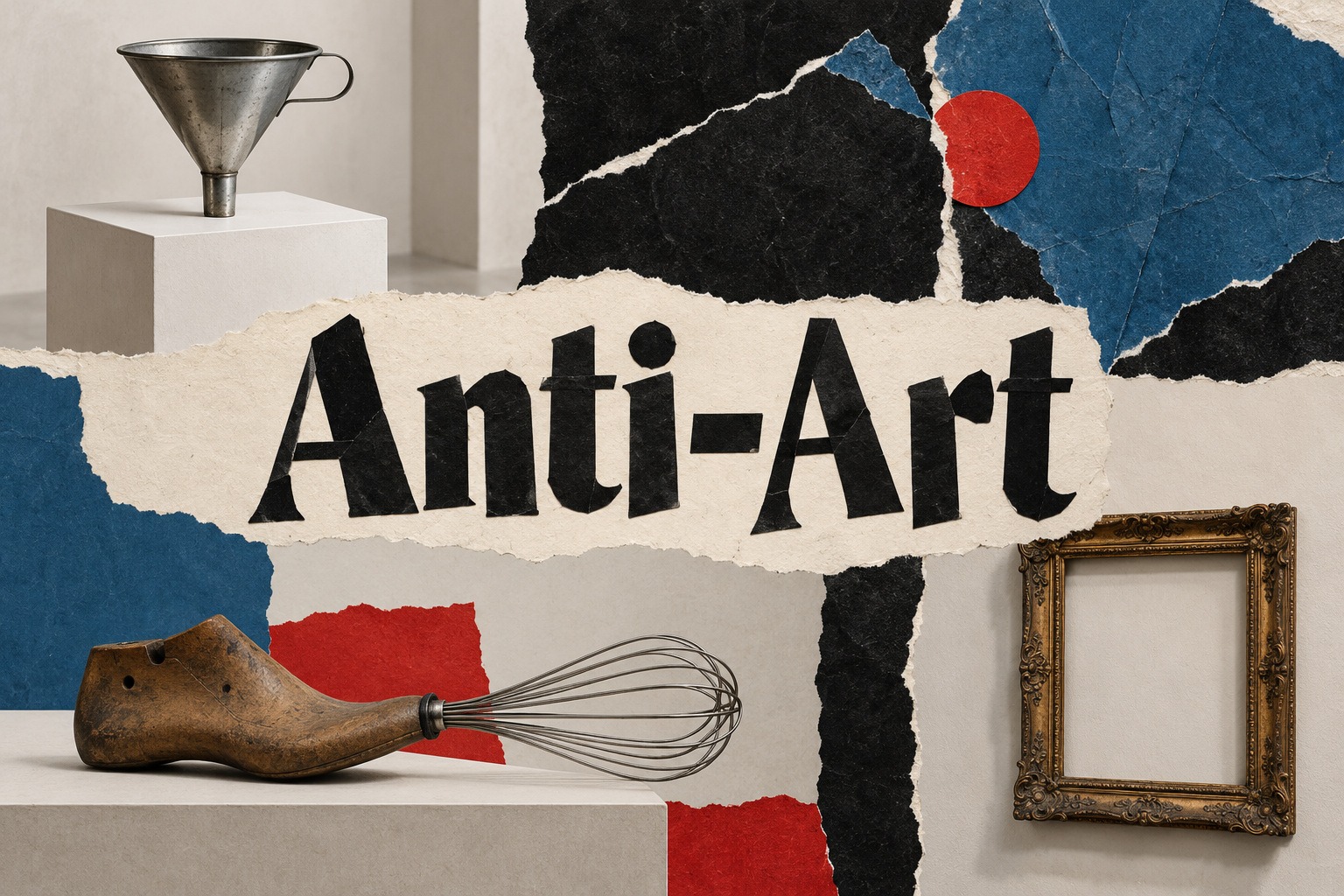
Five original generated propositions explore context, chance-like composition, absurd function and empty display. They illustrate questions associated with Anti-Art; they are not historical Dada works or documentation of actual chance procedures.
Select an image for a closer look. Use the thumbnails, arrow keys or a swipe to compare examples. Zoom in to inspect details, or share the image that inspires you.
Creative toolbox · take this style further
Choose an input and a destination. Search sends your words to the chosen site; Copy & open puts them on your clipboard to paste there.
Create with AI
Turn your chosen input into an image prompt or a new creative direction.
ChatGPT
Copy your input and paste it into a ChatGPT conversation or image request.
Copy & open ChatGPT (new tab)Claude · Anthropic
Develop an image prompt or explore the style in a new Claude conversation.
Copy & open Claude · Anthropic (new tab)Midjourney
Paste your input into the Imagine bar on the Create page.
Copy & open Midjourney (new tab)Adobe Firefly
Copy your input, open Firefly, and paste it into the prompt field.
Copy & open Adobe Firefly (new tab)Leonardo.Ai
Copy your input, open Leonardo, and paste it into the generation field.
Copy & open Leonardo.Ai (new tab)Image search
Find visual references. Short, concrete keywords usually work best.
Lexica
Search AI images and prompts using your selected input.
Search with this input Lexica (new tab)Pexels
Search the photo and video library. Short keywords often work best.
Search with this input Pexels (new tab)Pixabay
Search photos, illustrations and other images.
Search with this input Pixabay (new tab)Unsplash
Search photographs using the style name or your own keywords.
Search with this input Unsplash (new tab)Wikimedia Commons
Search photographs, artworks and historical images. Check each file for its source and reuse terms.
Search with this input Wikimedia Commons (new tab)Art & research
Explore artists, collections and the ideas behind a style.
Wikipedia
Search for background reading. A style may not have its own article.
Search with this input Wikipedia (new tab)WikiArt
Copy your input into WikiArt’s search to explore artists and artworks.
Copy & open WikiArt (new tab)Europeana
Paste your keywords into the search to explore European museum, library and archive collections.
Copy & open Europeana (new tab)Inspiration
Discover portfolios and visual ideas from creative communities.
Instagram hashtags
Search a hashtag made from your input: spaces and punctuation are removed. Instagram may require sign-in.
Search with this input Instagram hashtags (new tab)ArtStation
Paste your input into artwork search for concept art, environments, characters and visual development.
Copy & open ArtStation (new tab)Behance
Paste your input into project search for illustration, design and visual storytelling.
Copy & open Behance (new tab)A closer look
The decisive feature may be a change of context or a rule rather than a distinctive surface. An ordinary object, an absurd juxtaposition or an act of refusal can question the authority of artistic taste and institutions.
What Anti-Art challenges
Anti-Art names an opposition to established definitions and expectations of art. It asks why beauty, skilled handwork, originality or institutional approval should determine an object’s status. The term is strongly associated with the Dada movement, but it does not describe a unified school with one palette, technique or membership list. The common thread is a challenge to the rules by which art is recognized.
That challenge should not be confused with simply disliking art, painting badly or making an ugly image. A polished object can provoke a question, while a rough picture can remain entirely conventional. To understand a particular work, identify the convention it confronts and the action through which it does so. Its historical setting and mode of presentation may matter as much as its visible form.
Dada and the disruption of convention
MoMA situates Dada in response to the disasters of the First World War and the developing culture of modern media and machines. Artists used chance, irreverence and disruptions of ordinary logic across collage, photomontage, everyday objects and performance. The movement developed internationally, with important activity in Zurich, New York, Berlin and other centers.
These strategies were not interchangeable decorations. Cutting and recombining printed material could unsettle familiar messages; an absurd performance could disrupt the expected behavior of an audience; a chance procedure could question the artist’s control over composition. The point is not that every Dada work says the same thing, but that the making and reception of art became available for deliberate interrogation.
The readymade changes the question
Marcel Duchamp’s readymades offer a central example. Instead of representing an everyday object in paint, he selected an existing manufactured object and presented it as art. MoMA explains how this shifted attention from manual skill and visual beauty toward choice and idea. A title, orientation or exhibition context could change how the object was encountered without making it a virtuoso handmade sculpture.
Fountain, the urinal submitted for exhibition in 1917, is a famous case, but it should not reduce Anti-Art to a single scandal or a reusable visual joke. A contemporary image of an object on a plinth does not automatically repeat the historical intervention. Ask what changes when the object enters the gallery, who has the power to accept it and whether its ordinary function remains visible.
Chance, materials and the absence of a house style
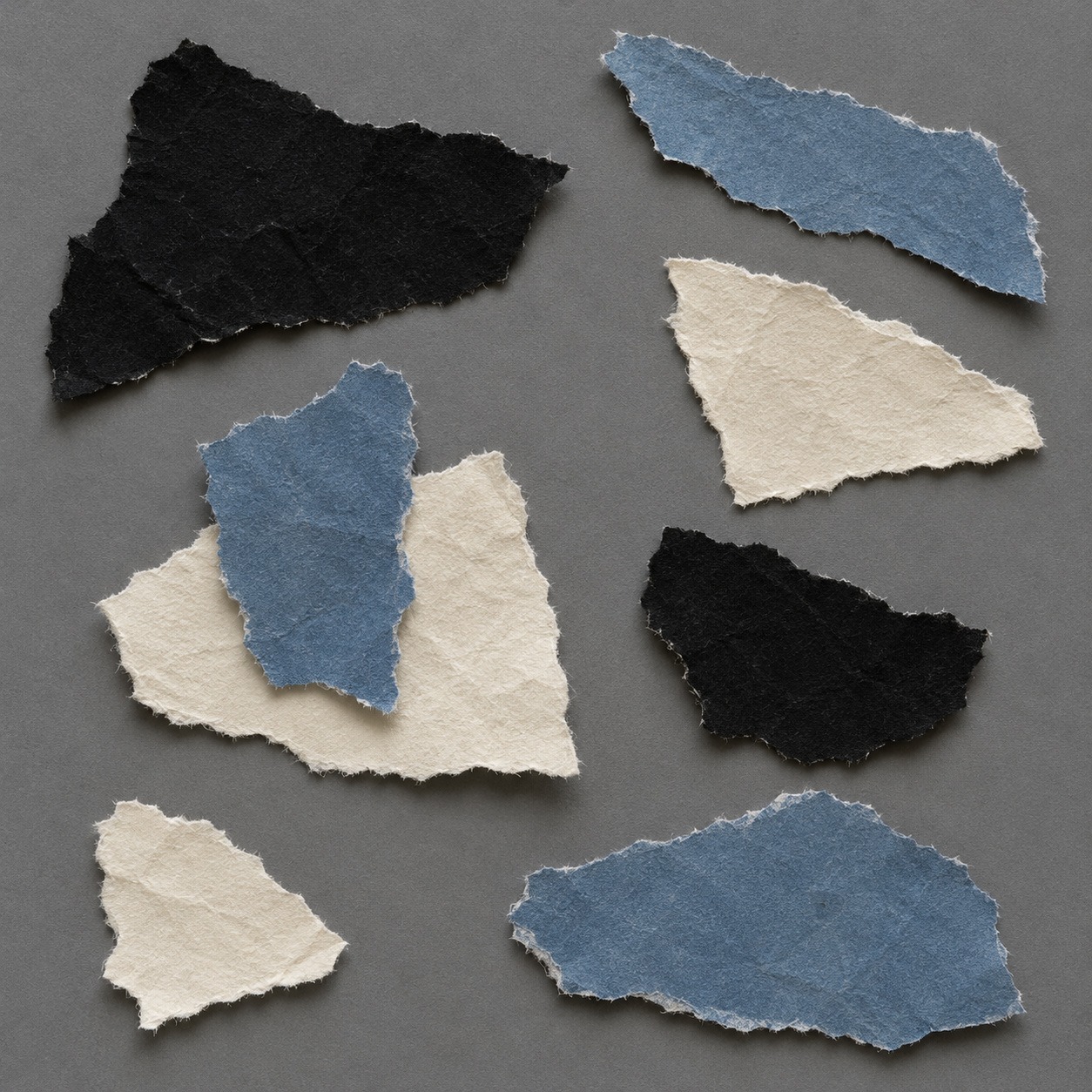
MoMA’s educational material on Jean Arp’s chance collages offers another route: torn pieces and gravity can participate in an arrangement. This makes the procedure an explicit part of the work. A generated illustration of scattered paper can explain that idea, but it is not proof that a physical chance operation occurred. The distinction between a procedure and its simulated appearance is especially useful in AI art.
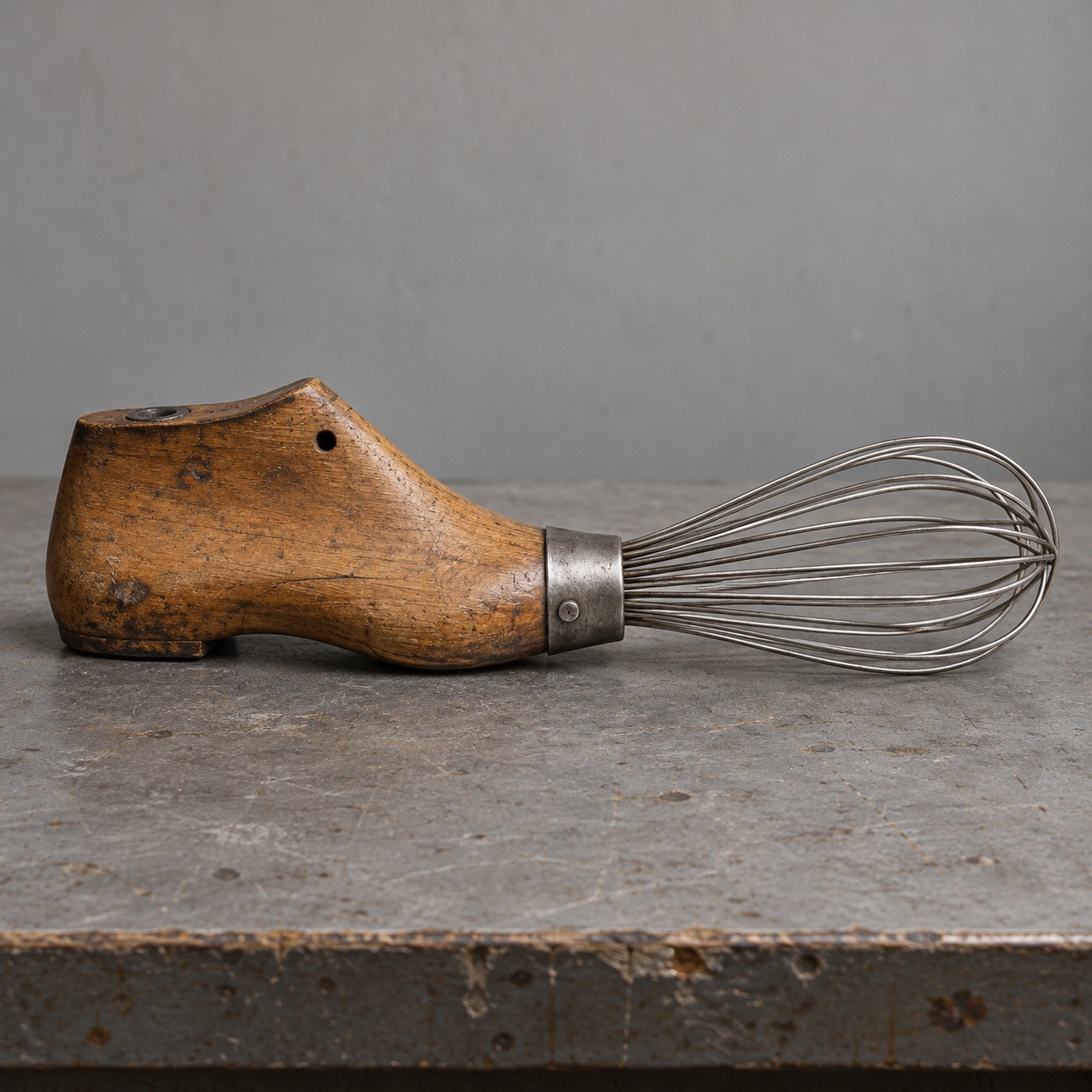
There is no required Anti-Art palette. Printed scraps, utilitarian surfaces, monochrome photographs or theatrical actions may all be relevant. The gallery therefore separates an ordinary object displaced into display, a chance-like paper arrangement, an absurd assemblage and an empty presentation setting. These are contemporary teaching propositions, not authenticated Dada works or documents of historical performances.
A useful question for contemporary practice
Begin with a convention you want to examine: authorship, ownership, taste, originality or the museum’s power to confer status. Choose a precise action that makes the question legible. Avoid treating provocation as sufficient in itself; without a clear target, it can become another marketable look. When using AI, explain what was generated and what conceptual decision was yours. Anti-Art is most useful here as a way of examining assumptions, including those built into the image-making tool.
About this guide
This AI-authored AOI guide appears under Penny Wraiter, AOI’s editorial persona. Sources support the historical context; exercises, prompts and poetry are original editorial interpretations. Image captions distinguish generated studies from documented works.
A small poetic detour
Original words from the AOI studio.
Poetry
The plinth is ready; what arrives?
A thing that had another task.
The label alters many lives,
The room decides what we may ask.
A scrap falls where the hand lets go,
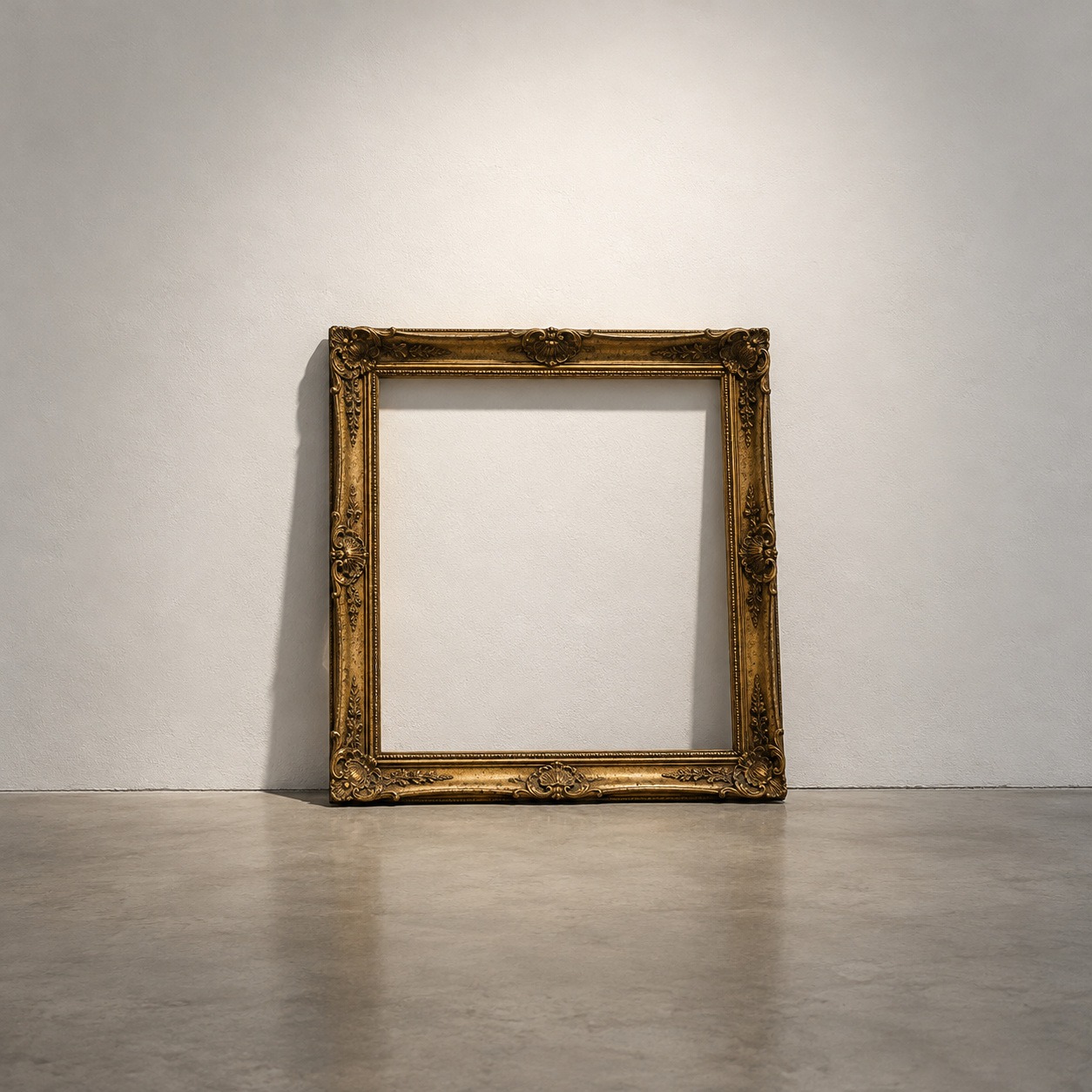
A frame presents an empty wall;
What makes it art? What makes us know?
The question need not end at all.
The prompt workshop
Original creative exercises. These prompts create new illustrations, not documentary evidence.
Change the context
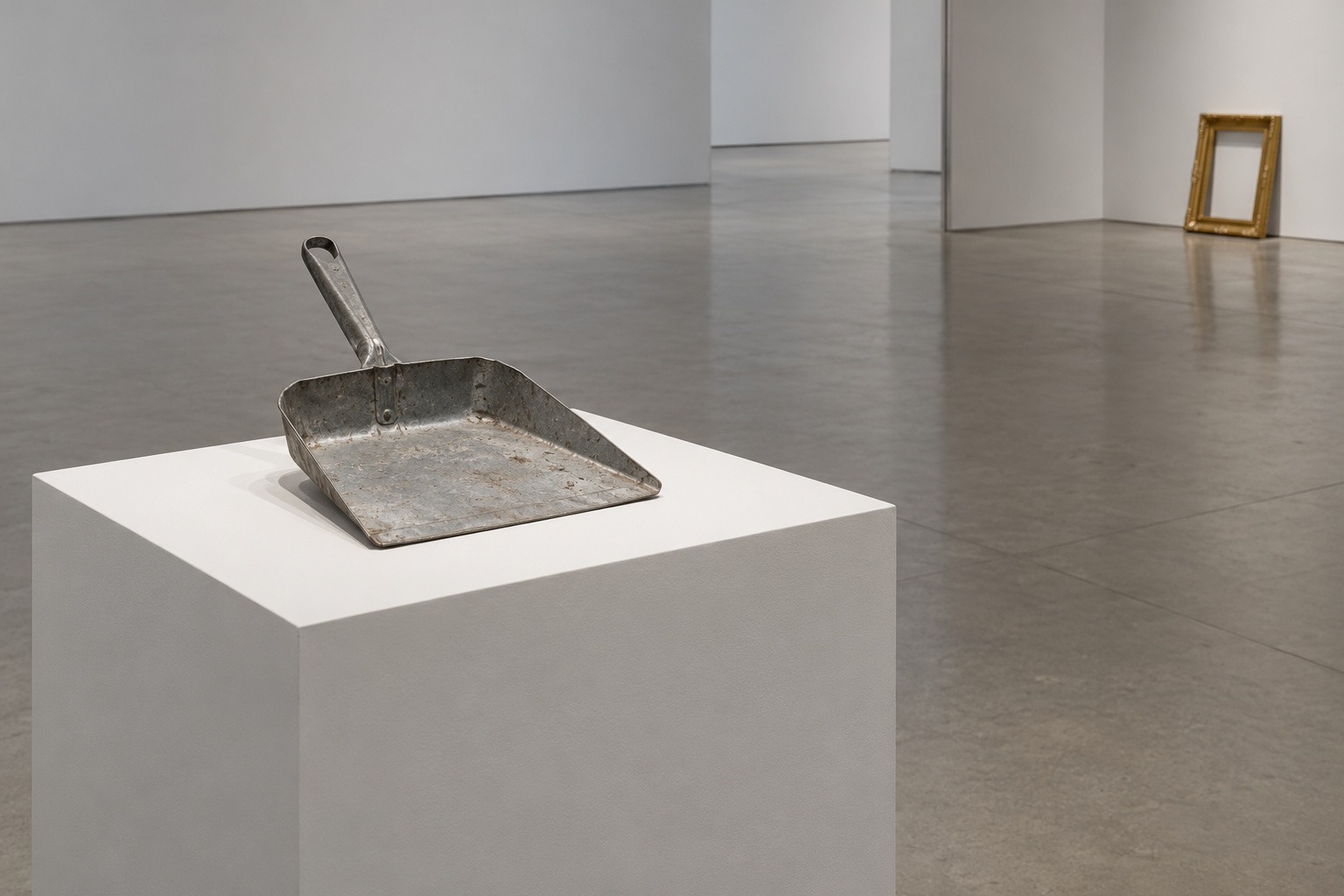
Contemporary conceptual illustration: one ordinary unbranded metal dustpan on a pristine white gallery plinth, empty wall and restrained lighting, visible everyday wear, no ornate transformation, no labels or signature. A study of presentation, not a historical Duchamp work.
Let a rule interrupt composition
Top-down illustration of torn black, blue and cream paper fragments distributed irregularly on gray paper, some overlapping and large gaps. Visible torn fibers, no readable print. Describe as a simulated chance-like arrangement, not evidence of an actual random procedure.
Question the display
Quiet conceptual gallery scene with a single empty ornate frame standing on the floor and a carefully lit bare wall behind it. Precise perspective, no supernatural effect, no explanatory text. An original proposition about expectation and absence.
A smile from the studio
Jokes
The empty frame failed the exhibition’s hanging instructions. It was already standing its ground.
Sources and further exploration
MoMA: Dada — wartime context, international activity and experimental media
MoMA: Duchamp and the readymade — selection, presentation and ideas
MoMA: Marcel Duchamp — Fountain and the challenge to art’s boundaries
MoMA: Jean Arp chance-collage activity — the role of procedure