
Artist and Pop Art
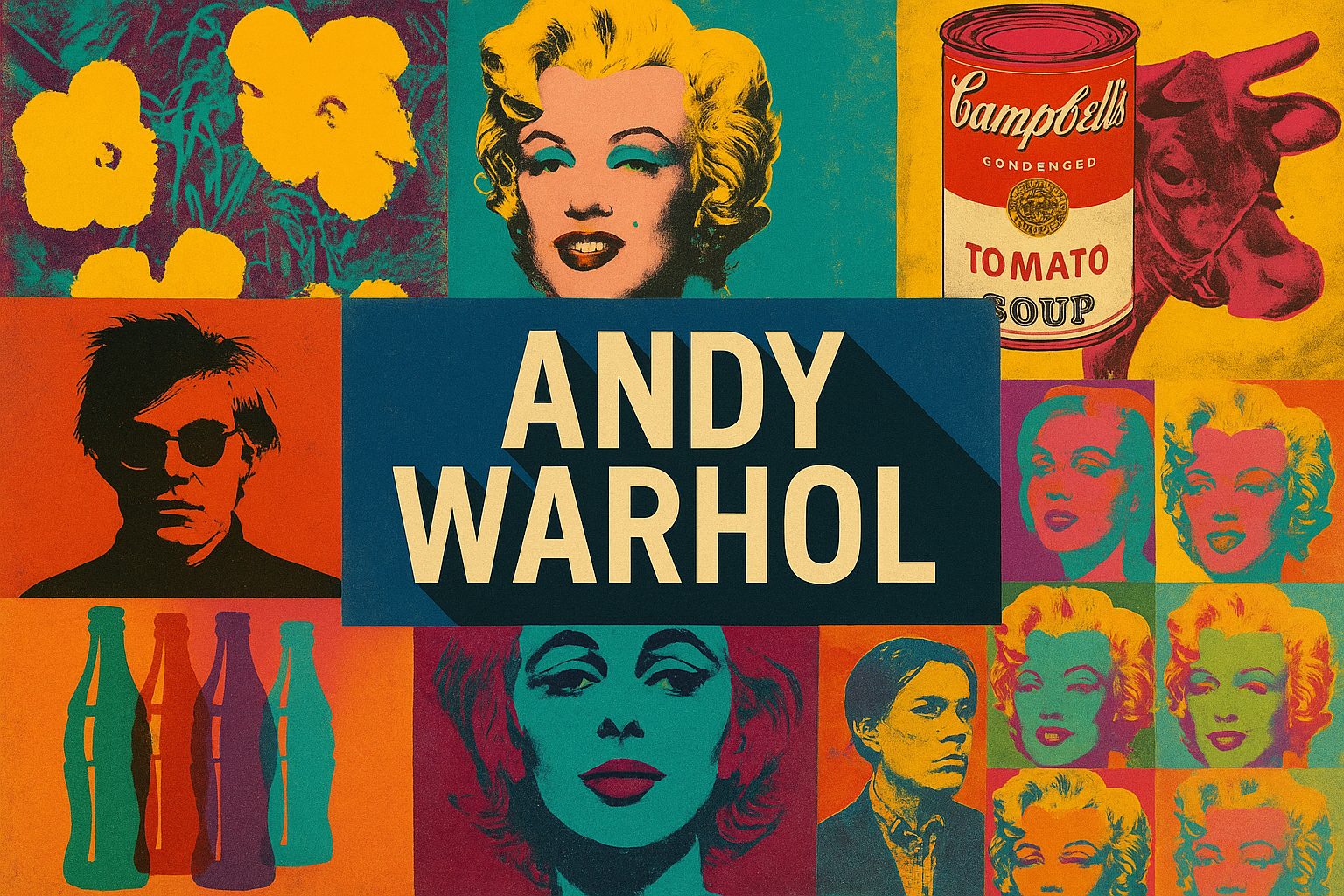
Andy Warhol made the repeated public image a subject of art. His paintings, prints, films and other projects ask what happens when a face or everyday object becomes endlessly recognizable.
A visual introduction
Select an image for a closer look. Use the thumbnails, arrow keys or a swipe to compare examples. Zoom in to inspect details, or share the image that inspires you.
Creative toolbox · take this style further
Choose an input and a destination. Search sends your words to the chosen site; Copy & open puts them on your clipboard to paste there.
Create with AI
Turn your chosen input into an image prompt or a new creative direction.
ChatGPT
Copy your input and paste it into a ChatGPT conversation or image request.
Copy & open ChatGPT (new tab)Claude · Anthropic
Develop an image prompt or explore the style in a new Claude conversation.
Copy & open Claude · Anthropic (new tab)Midjourney
Paste your input into the Imagine bar on the Create page.
Copy & open Midjourney (new tab)Adobe Firefly
Copy your input, open Firefly, and paste it into the prompt field.
Copy & open Adobe Firefly (new tab)Leonardo.Ai
Copy your input, open Leonardo, and paste it into the generation field.
Copy & open Leonardo.Ai (new tab)Image search
Find visual references. Short, concrete keywords usually work best.
Lexica
Search AI images and prompts using your selected input.
Search with this input Lexica (new tab)Pexels
Search the photo and video library. Short keywords often work best.
Search with this input Pexels (new tab)Pixabay
Search photos, illustrations and other images.
Search with this input Pixabay (new tab)Unsplash
Search photographs using the style name or your own keywords.
Search with this input Unsplash (new tab)Wikimedia Commons
Search photographs, artworks and historical images. Check each file for its source and reuse terms.
Search with this input Wikimedia Commons (new tab)Art & research
Explore artists, collections and the ideas behind a style.
Wikipedia
Search for background reading. A style may not have its own article.
Search with this input Wikipedia (new tab)WikiArt
Copy your input into WikiArt’s search to explore artists and artworks.
Copy & open WikiArt (new tab)Europeana
Paste your keywords into the search to explore European museum, library and archive collections.
Copy & open Europeana (new tab)Inspiration
Discover portfolios and visual ideas from creative communities.
Instagram hashtags
Search a hashtag made from your input: spaces and punctuation are removed. Instagram may require sign-in.
Search with this input Instagram hashtags (new tab)ArtStation
Paste your input into artwork search for concept art, environments, characters and visual development.
Copy & open ArtStation (new tab)Behance
Paste your input into project search for illustration, design and visual storytelling.
Copy & open Behance (new tab)A closer look
Photographic contrast, repeated units, flat underpainting and variations in printed density can make a familiar image feel both immediate and strangely distant.
Begin with the image in circulation
Warhol belongs to the history of Pop Art, but his work is broader than a grid of brightly colored portraits. The Andy Warhol Museum traces a career that includes commercial illustration, painting, photographic screenprinting, film and the collection of everyday material. This range matters: advertising, celebrity and ordinary consumption are subjects and systems through which pictures acquire meaning.
Ask what the selected image already does in public life. A product promises consistency; a celebrity photograph offers a recognizable persona; a news photograph may repeat an event until its emotional effect changes. Repetition is therefore a decision about attention, not simply an efficient way to fill a canvas.
How the surface is constructed
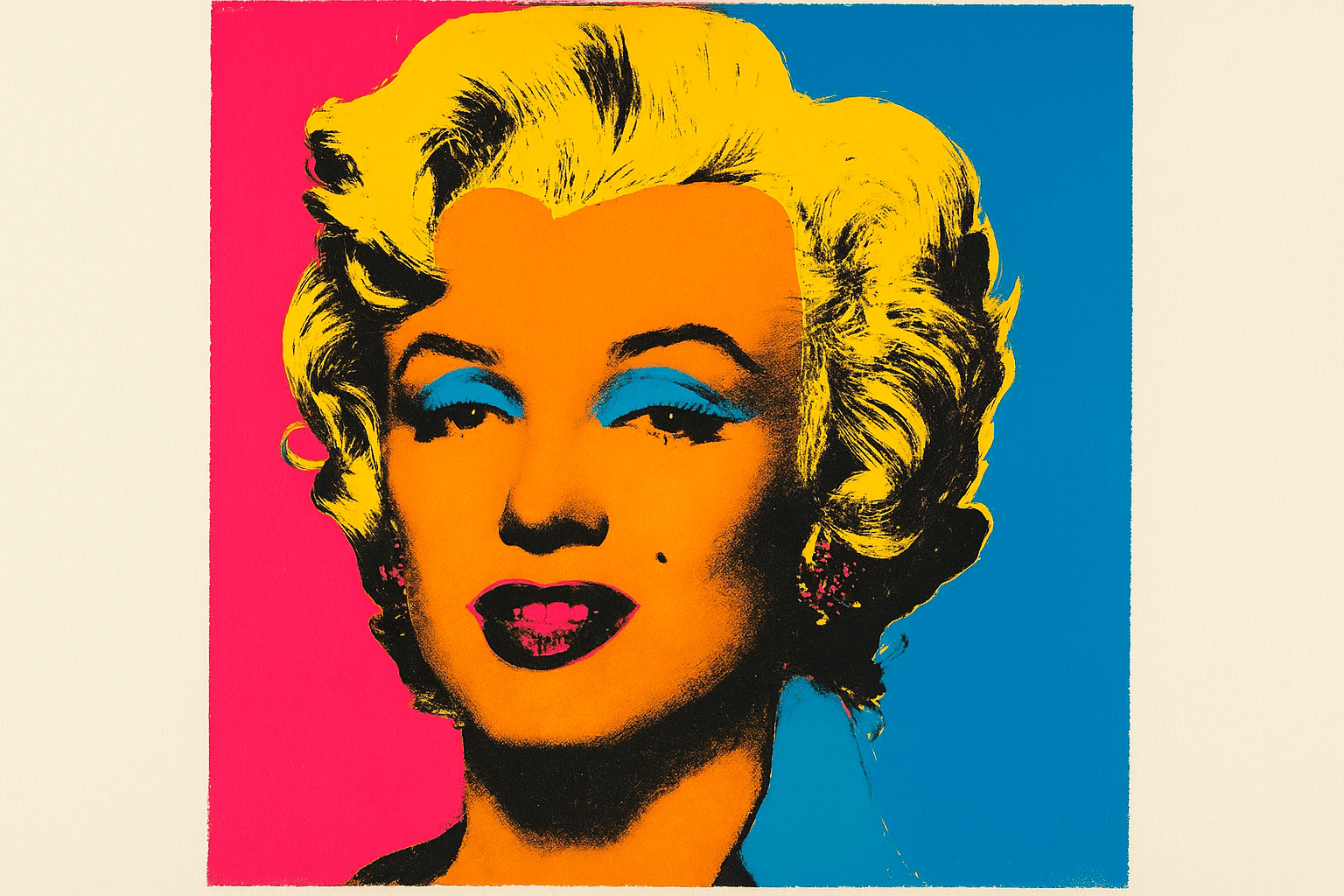
The Warhol Museum's printing lesson explains the relationship between hand-painted color areas and a photographic silkscreen layer. Cropping and increased contrast simplify the source; the printed information sits against or over the painted field. Registration describes how those layers align. This material relationship is more informative than describing every picture as a digital posterization effect.
For an original study, choose a photograph you can use and reduce it to a few clearly separated values. Preserve the feature that makes the subject recognizable. Then compare closely aligned color with a small, deliberate displacement. Let that displacement change the reading of the form instead of scattering random errors everywhere.
Repetition creates a rhythm
A regular grid makes variations easy to notice. One faint impression, a changed background or a blank interval can disturb the expectation established by its neighbors. Keep enough consistency for the difference to matter. If every panel changes subject, scale and treatment, the viewer loses the underlying rhythm.
Try a second version with fewer, larger units. The difference between a row of products and a monumental single object can be as significant as a palette change. Saturation is optional; stark monochrome can also concentrate attention on repetition and loss of detail.
Study a method without misattributing the result
AOI's retained illustrations and new prompt exercises are interpretations, not works by Warhol. Build original subjects rather than treating a famous artwork as a reusable template. Compare the exercise with a documented work and describe the actual differences in source, surface and arrangement.
The prompt workshop
Original creative exercises. These prompts create new illustrations, not documentary evidence.
One ordinary object
An original Pop Art study of a plain unbranded thermos, strong photographic contrast over two flat painted color areas, spare background, visible printed texture, no artist signature.
Repetition and interruption
Arrange the same original photograph of a worn kettle in six equal panels, consistent crop and scale, alternate restrained blue and orange fields, one deliberately faint impression; make the repeated structure clear.
A quieter serial image
Create a monochrome serial print study of a folded glove, four repeated impressions becoming gradually lighter, generous paper margins, subtle ink irregularity, no text or imitation signature.