
Historical overview · the Indian subcontinent
Ancient Indian art belongs to many places, communities, materials and religious contexts. Early Buddhist sculpture offers one documented route into the field, without standing for the whole history of the subcontinent.
A visual introduction
Select an image for a closer look. Use the thumbnails, arrow keys or a swipe to compare examples. Zoom in to inspect details, or share the image that inspires you.
Creative toolbox · take this style further
Choose an input and a destination. Search sends your words to the chosen site; Copy & open puts them on your clipboard to paste there.
Create with AI
Turn your chosen input into an image prompt or a new creative direction.
ChatGPT
Copy your input and paste it into a ChatGPT conversation or image request.
Copy & open ChatGPT (new tab)Claude · Anthropic
Develop an image prompt or explore the style in a new Claude conversation.
Copy & open Claude · Anthropic (new tab)Midjourney
Paste your input into the Imagine bar on the Create page.
Copy & open Midjourney (new tab)Adobe Firefly
Copy your input, open Firefly, and paste it into the prompt field.
Copy & open Adobe Firefly (new tab)Leonardo.Ai
Copy your input, open Leonardo, and paste it into the generation field.
Copy & open Leonardo.Ai (new tab)Image search
Find visual references. Short, concrete keywords usually work best.
Lexica
Search AI images and prompts using your selected input.
Search with this input Lexica (new tab)Pexels
Search the photo and video library. Short keywords often work best.
Search with this input Pexels (new tab)Pixabay
Search photos, illustrations and other images.
Search with this input Pixabay (new tab)Unsplash
Search photographs using the style name or your own keywords.
Search with this input Unsplash (new tab)Wikimedia Commons
Search photographs, artworks and historical images. Check each file for its source and reuse terms.
Search with this input Wikimedia Commons (new tab)Art & research
Explore artists, collections and the ideas behind a style.
Wikipedia
Search for background reading. A style may not have its own article.
Search with this input Wikipedia (new tab)WikiArt
Copy your input into WikiArt’s search to explore artists and artworks.
Copy & open WikiArt (new tab)Europeana
Paste your keywords into the search to explore European museum, library and archive collections.
Copy & open Europeana (new tab)Inspiration
Discover portfolios and visual ideas from creative communities.
Instagram hashtags
Search a hashtag made from your input: spaces and punctuation are removed. Instagram may require sign-in.
Search with this input Instagram hashtags (new tab)ArtStation
Paste your input into artwork search for concept art, environments, characters and visual development.
Copy & open ArtStation (new tab)Behance
Paste your input into project search for illustration, design and visual storytelling.
Copy & open Behance (new tab)A closer look
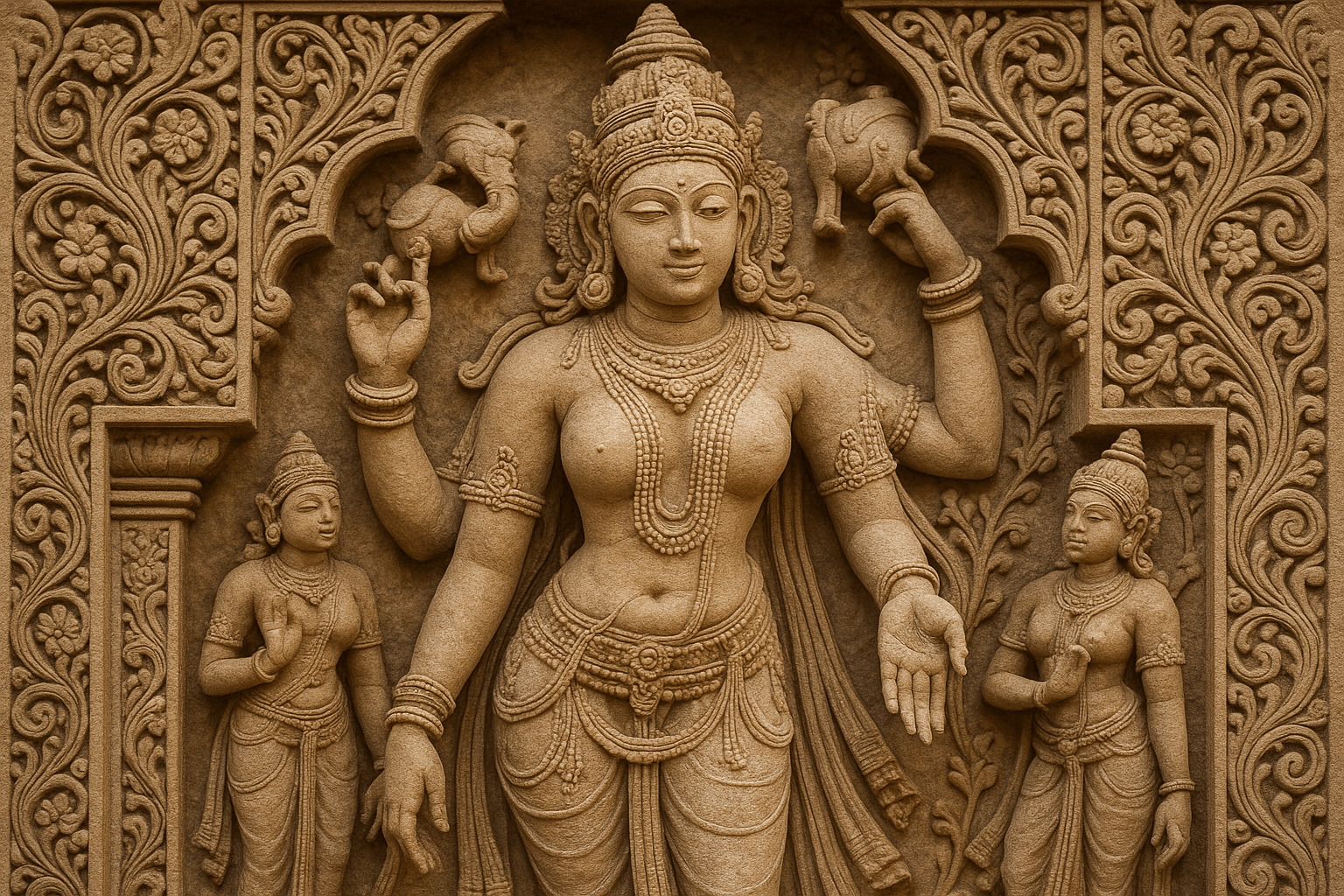
Read the relationship between relief, architecture, gesture and repeated forms; choose a specific place and period rather than a generalized ornamental vocabulary.
A broad field needs a defined starting point
Ancient India is a historical and geographical frame, not a single style. This introductory guide focuses on selected early Buddhist examples to show how context changes the reading of an object. That focus is a route into the subject, not a claim that all ancient art in the subcontinent was Buddhist.
The Met’s Tree & Serpent exhibition examined works dating from 200 BCE to 400 CE, with particular attention to southern India. Its account connects relics, stupas, symbolic imagery and narrative sculpture. It also considers objects in limestone, metal, rock crystal and ivory, reminding us that one stone-carving appearance cannot represent the whole field.
An architectural setting gives images a role
A relief attached to a monument is more than an isolated picture. Its placement, repeated divisions and relationship to neighboring imagery help organize a viewer’s encounter. When looking at a fragment in a museum, ask what is known about its original setting and what has been lost.
The LACMA record for Buddha Shakyamuni Sheltered by the Serpent King Muchalinda identifies a limestone sculpture from Goli Village in Andhra Pradesh, dated about 300–350. Its account explains the protective serpent canopy and the scene’s religious narrative. This is a specific interpretation supported by an object record, not a universal meaning to assign to every serpent motif.
Observe before borrowing
Trace the principal masses, the depth of the carving and the intervals around the figures. Notice how repeated forms can frame a central action without making every part equally prominent. Describe these visible relationships before making claims about symbolism.
If developing a contemporary image, choose an ordinary invented narrative and explore shallow relief, rhythmic divisions and legible gesture. Do not fabricate inscriptions or present an invented deity, ritual or site as historical evidence. An attractive combination of motifs can still misrepresent the objects from which it borrows.
Use a documented comparison
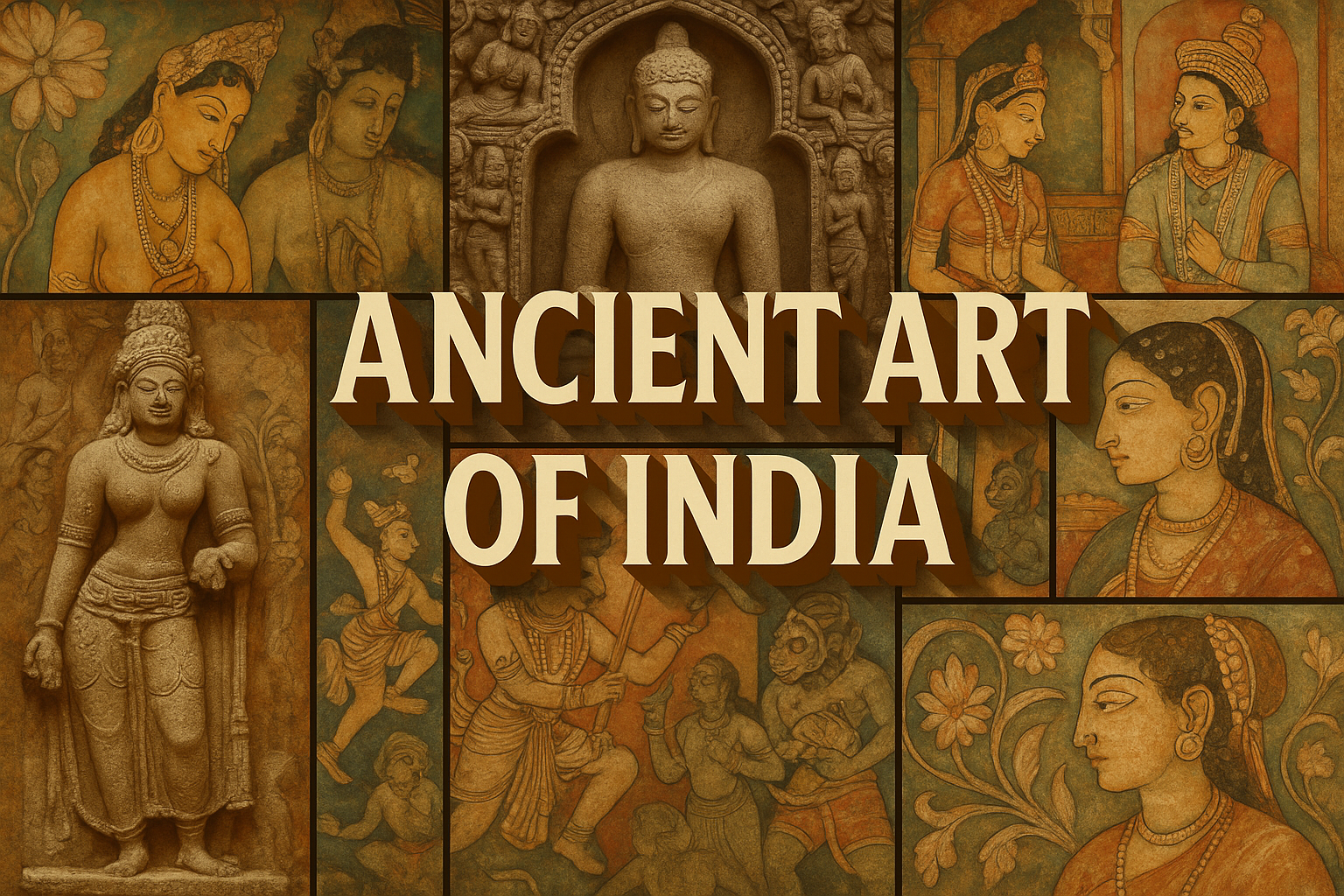
Compare two recorded objects from a defined place or period. Note their material, function, scale and degree of preservation before comparing their appearance. Where scholars or collection records express uncertainty, retain it. The AOI images on this page are interpretations; the linked sources are the starting points for claims about actual ancient works.
The prompt workshop
Original creative exercises. These prompts create new illustrations, not documentary evidence.
Narrative relief
Design an original shallow-relief study of people tending a garden, with rhythmic framing, legible gestures and a clearly defined central action; contemporary work, no invented sacred iconography or inscription.
Read the surface
Create an educational material study of an invented carved limestone panel under raking and frontal light, same geometry in both views, showing how relief depth affects readability.
Arrange a sequence
Compose three related original relief panels showing arrival, meeting and departure, with consistent scale and repeated borders; keep each action distinct and avoid claims of archaeological authenticity.
Sources and further exploration
The Met: Tree & Serpent, scope, materials and early Buddhist imagery