
Cultural overview · artists, archives and media
Albanian art is best approached through particular artists, archives and works rather than a supposed national colour scheme. This guide connects the photographic and painterly activity of Kolë Idromeno and the Marubi circle in Shkodër with Adrian Paci’s contemporary work across moving images and other media. The accompanying studies are new interpretations, not historical evidence.
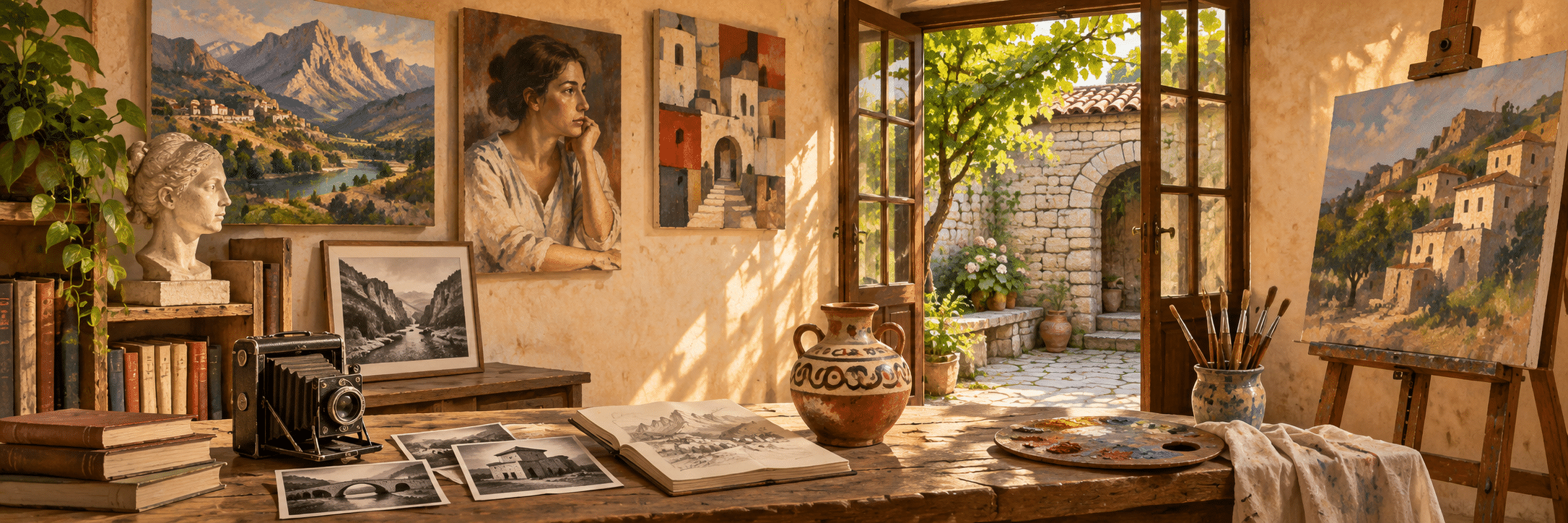
A visual introduction
Select an image for a closer look. Use the thumbnails, arrow keys or a swipe to compare examples. Zoom in to inspect details, or share the image that inspires you.
Creative toolbox · take this style further
Choose an input and a destination. Search sends your words to the chosen site; Copy & open puts them on your clipboard to paste there.
Create with AI
Turn your chosen input into an image prompt or a new creative direction.
ChatGPT
Copy your input and paste it into a ChatGPT conversation or image request.
Copy & open ChatGPT (new tab)Claude · Anthropic
Develop an image prompt or explore the style in a new Claude conversation.
Copy & open Claude · Anthropic (new tab)Midjourney
Paste your input into the Imagine bar on the Create page.
Copy & open Midjourney (new tab)Adobe Firefly
Copy your input, open Firefly, and paste it into the prompt field.
Copy & open Adobe Firefly (new tab)Leonardo.Ai
Copy your input, open Leonardo, and paste it into the generation field.
Copy & open Leonardo.Ai (new tab)Image search
Find visual references. Short, concrete keywords usually work best.
Lexica
Search AI images and prompts using your selected input.
Search with this input Lexica (new tab)Pexels
Search the photo and video library. Short keywords often work best.
Search with this input Pexels (new tab)Pixabay
Search photos, illustrations and other images.
Search with this input Pixabay (new tab)Unsplash
Search photographs using the style name or your own keywords.
Search with this input Unsplash (new tab)Wikimedia Commons
Search photographs, artworks and historical images. Check each file for its source and reuse terms.
Search with this input Wikimedia Commons (new tab)Art & research
Explore artists, collections and the ideas behind a style.
Wikipedia
Search for background reading. A style may not have its own article.
Search with this input Wikipedia (new tab)WikiArt
Copy your input into WikiArt’s search to explore artists and artworks.
Copy & open WikiArt (new tab)Europeana
Paste your keywords into the search to explore European museum, library and archive collections.
Copy & open Europeana (new tab)Inspiration
Discover portfolios and visual ideas from creative communities.
Instagram hashtags
Search a hashtag made from your input: spaces and punctuation are removed. Instagram may require sign-in.
Search with this input Instagram hashtags (new tab)ArtStation
Paste your input into artwork search for concept art, environments, characters and visual development.
Copy & open ArtStation (new tab)Behance
Paste your input into project search for illustration, design and visual storytelling.
Copy & open Behance (new tab)A closer look
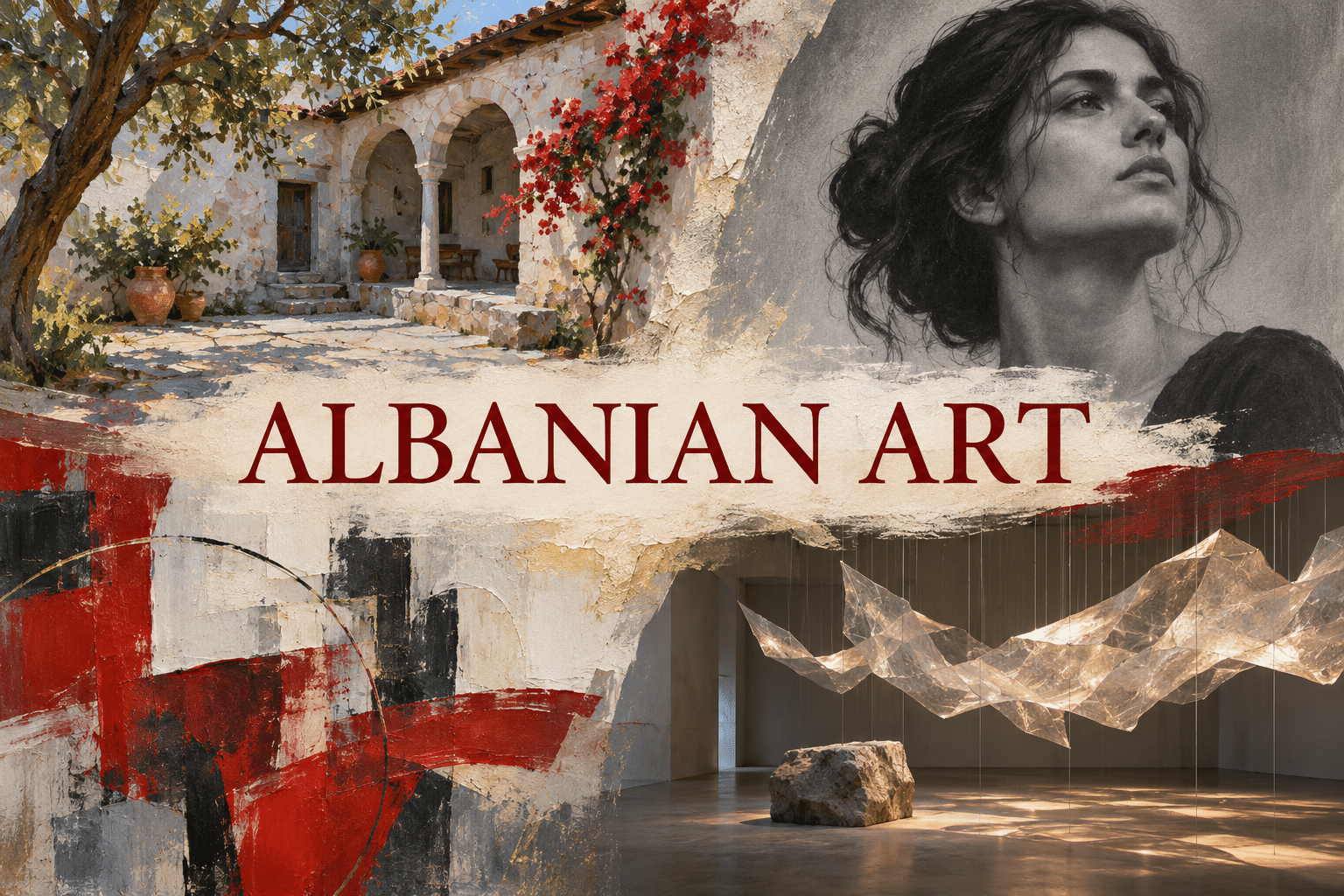
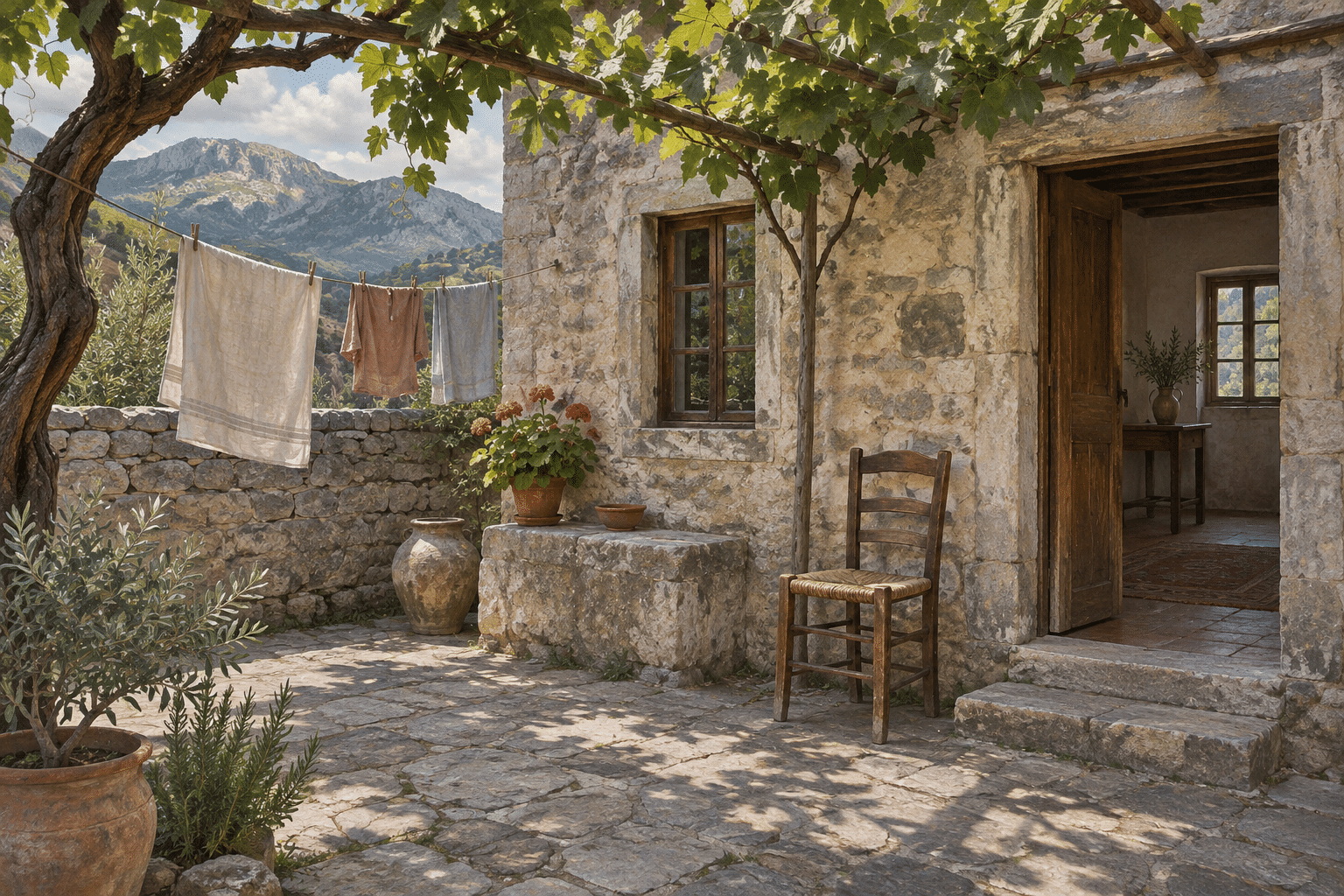
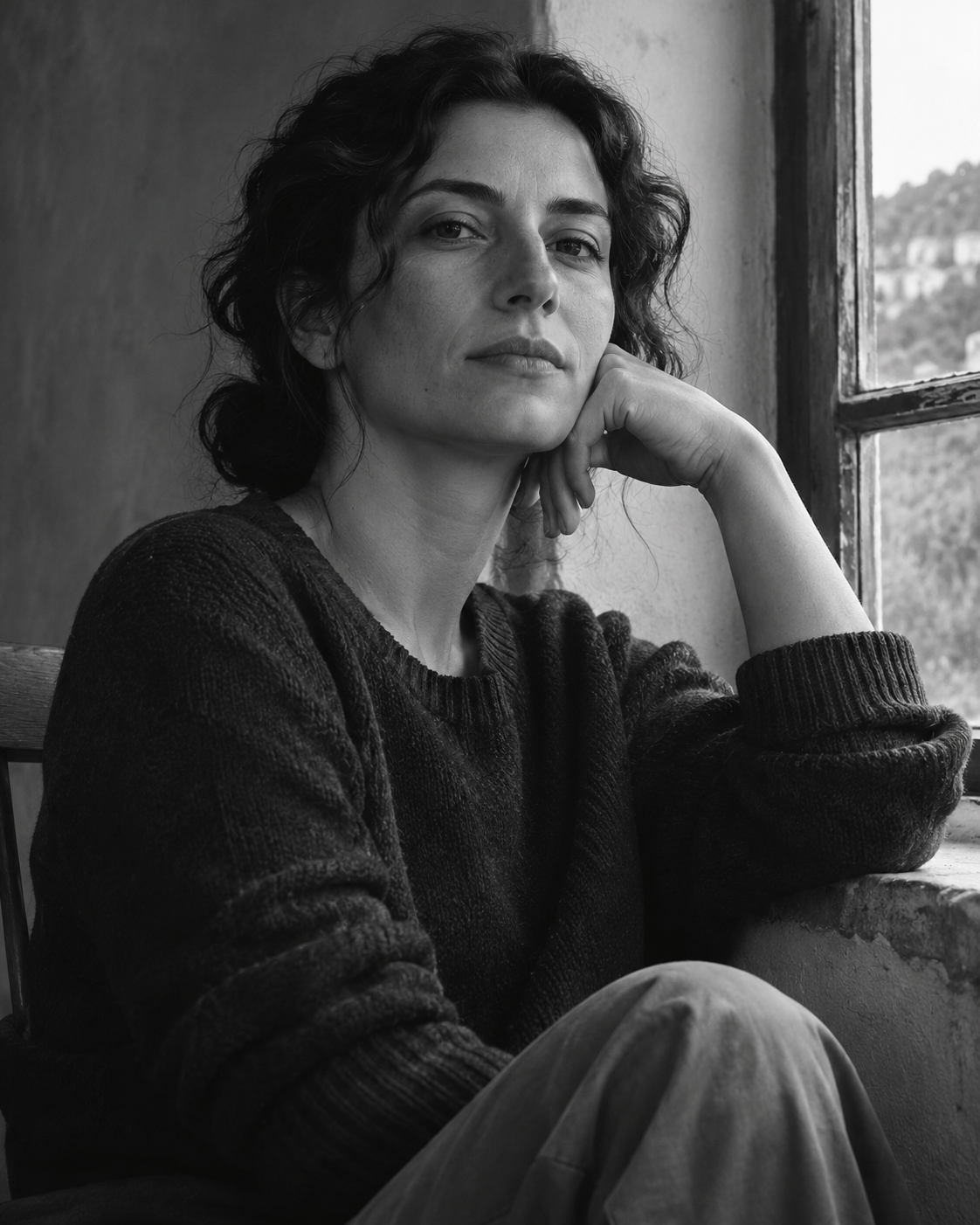
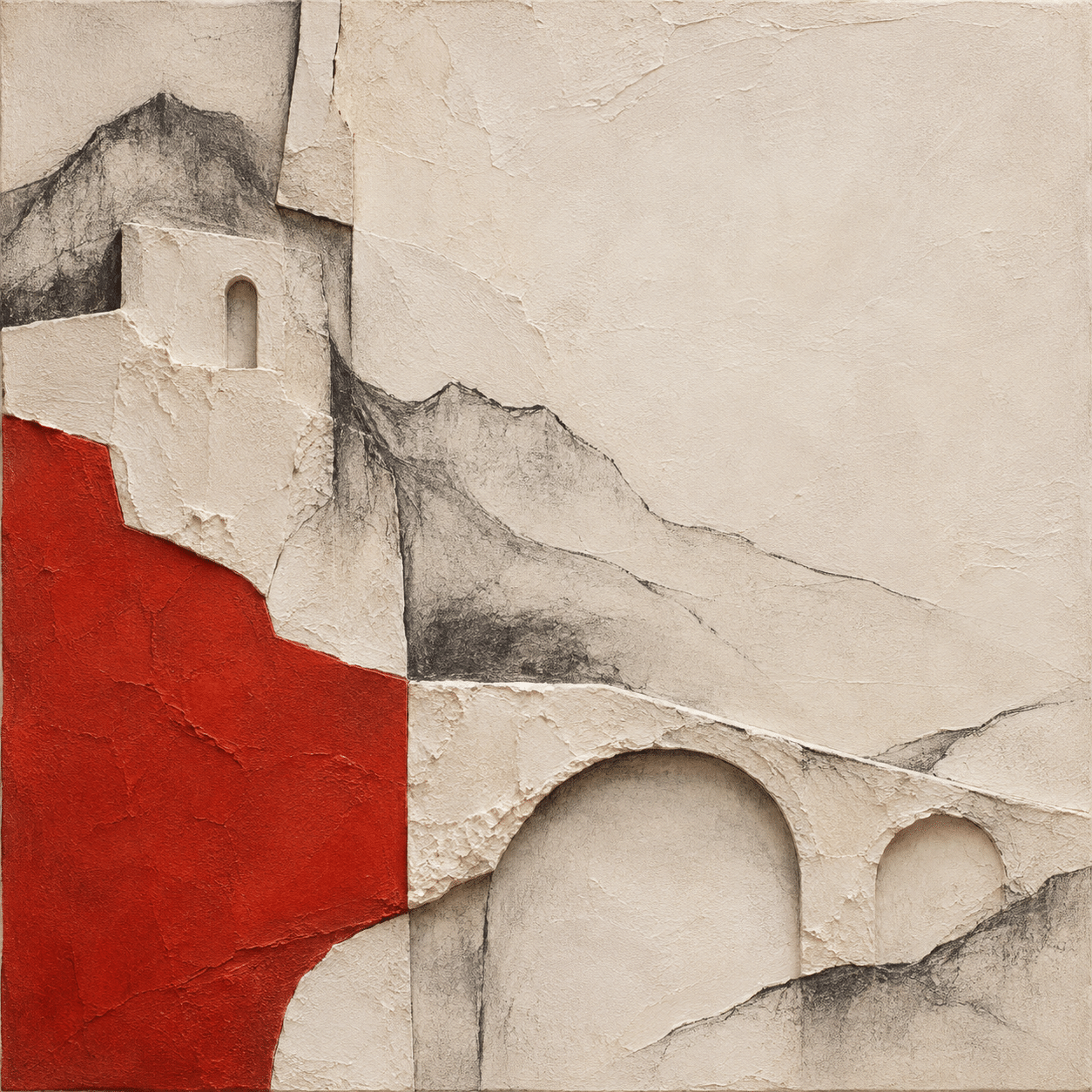
A sunlit stone courtyard, a fictional monochrome portrait and a red-and-cream architectural abstraction explore place, presence and memory through different visual means. The studio banner brings painting and photographic references together without presenting any invented object as a museum work.
Start in an archive
The Marubi Museum’s exhibition on the Kodheli brothers and Kolë Idromeno places their activity within the Albanian National Awakening. It describes Idromeno’s painting studies in Venice and the photographic training of the Kodheli brothers in Trieste. Idromeno opened his own photography studio in 1883. These connections show artists learning, travelling and working across media rather than expressing one isolated national formula. [1]
An archive also changes how we look. A photograph may be a commissioned portrait, a record of an event, a reproduction of another image or part of an artist’s working process. Those functions should be investigated before assigning a picture a symbolic meaning based only on clothing, architecture or an assumed ethnic identity.
Painting and photography can meet without becoming identical
In its 2018 Idromeno exhibition, Marubi presented photographs whose exact dates remain uncertain, probably around 1892–1894. The museum suggests that they may have served as preparation for paintings. Keep both qualifications: a plausible date is not an exact one, and a suggested use is not proof of how every photograph was made. [2]
A useful exercise is to compare the framing, gesture and distribution of light in an identified photograph with an identified painting. Ask what each medium preserves, omits or reorganises. Avoid treating photographic detail as neutral truth or painting as merely a less accurate camera; both involve choices.
A contemporary practice across borders
PAC Milan’s 2013–2014 retrospective of Adrian Paci included drawing, photography, painting, installation, video and sculpture. Paci, born in Shkodër in 1969, moved to Milan in 1997. Its account of The Column describes marble extracted in China and worked into a classical column aboard a ship, connecting labour, movement and the transformation of traditions. [3]
This example broadens the discussion beyond a collection of national landscapes. A work can address memory, travel and social relationships through duration and the movement of materials. Its connection with Albania does not require every frame to contain a recognisable local landmark. Nor should one artist’s experience be made to stand for every Albanian or diaspora experience.
Three new studies, three different questions
The courtyard illustration studies a sequence of thresholds: wall, doorway, chair, laundry line and distant mountain. Its architecture is imagined, so it cannot document a named historic house. The monochrome portrait concentrates on a fictional sitter’s gaze, hand and window light; it is not a Marubi archive photograph.
The red-and-cream abstraction breaks mountain contours and architectural arches into fragments. Rather than assigning the colours a fixed national meaning, notice how a dense red plane anchors the paler texture. The studio banner and collage bring these approaches together without attributing any generated object to Idromeno or Paci.
A grounded creative approach
Begin with a specific place, object or personal memory that you can describe accurately. Decide whether your work is observational, interpretive or entirely imagined. That choice should shape both the brief and the caption. Use contemporary clothing and everyday environments where they serve the subject; cultural reference does not require ceremonial costume.
For a small series, keep one motif constant while changing the means of depiction: a doorway photographed, drawn as a contour and translated into a relief. Compare what happens to space and mood. Add sources for historical claims, retain uncertainty where the archive does, and let the new work be judged as a new work rather than an invented historical discovery.
A small poetic detour
Original words from the AOI studio.
Poetry
The shutter keeps a moment still;
the painted edge begins to move.
A courtyard holds an empty chair,
a window gives the face its room.
We turn the image, read the name,
and ask what lies beyond the frame.
A place grows clearer when we see
its many ways of making memory.
The prompt workshop
Original creative exercises. These prompts create new illustrations, not documentary evidence.
The Open Courtyard
Create an original study: An imagined stone house and courtyard contain hanging laundry, a wooden chair, potted plants and mountain views. Make the main form and lighting coherent. Develop a deliberate focal point and avoid decorative clutter. This is a new imaginative work, not a reconstruction, archive photograph or work by a historical artist. No signature or extra lettering.
A Quiet Window Portrait
Create an original study: A fictional woman in a dark knit sweater rests her chin on one hand beside a window in a monochrome photographic study. Make the main form and lighting coherent. Develop a deliberate focal point and avoid decorative clutter. This is a new imaginative work, not a reconstruction, archive photograph or work by a historical artist. No signature or extra lettering.
Fragments of a Place
Create an original study: Cream textured planes, a strong red shape, drawn mountain contours and architectural arches form an abstract relief-like composition. Make the main form and lighting coherent. Develop a deliberate focal point and avoid decorative clutter. This is a new imaginative work, not a reconstruction, archive photograph or work by a historical artist. No signature or extra lettering.
A smile from the studio
Jokes
The camera and the paintbrush compared their portraits. Both agreed that the window had done excellent lighting work.
Sources and further exploration
[1] Marubi Museum — Kodheli Brothers and Kolë Idromeno; training, studios and the National Awakening
[2] Marubi Museum — Kolë Idromeno at PhEST; qualified dates and possible painting studies
[3] PAC Milan — Adrian Paci, Vite in Transito; contemporary media and The Column