
Archive note: historical claims and artist or artwork associations in this entry have not yet received a full source review.
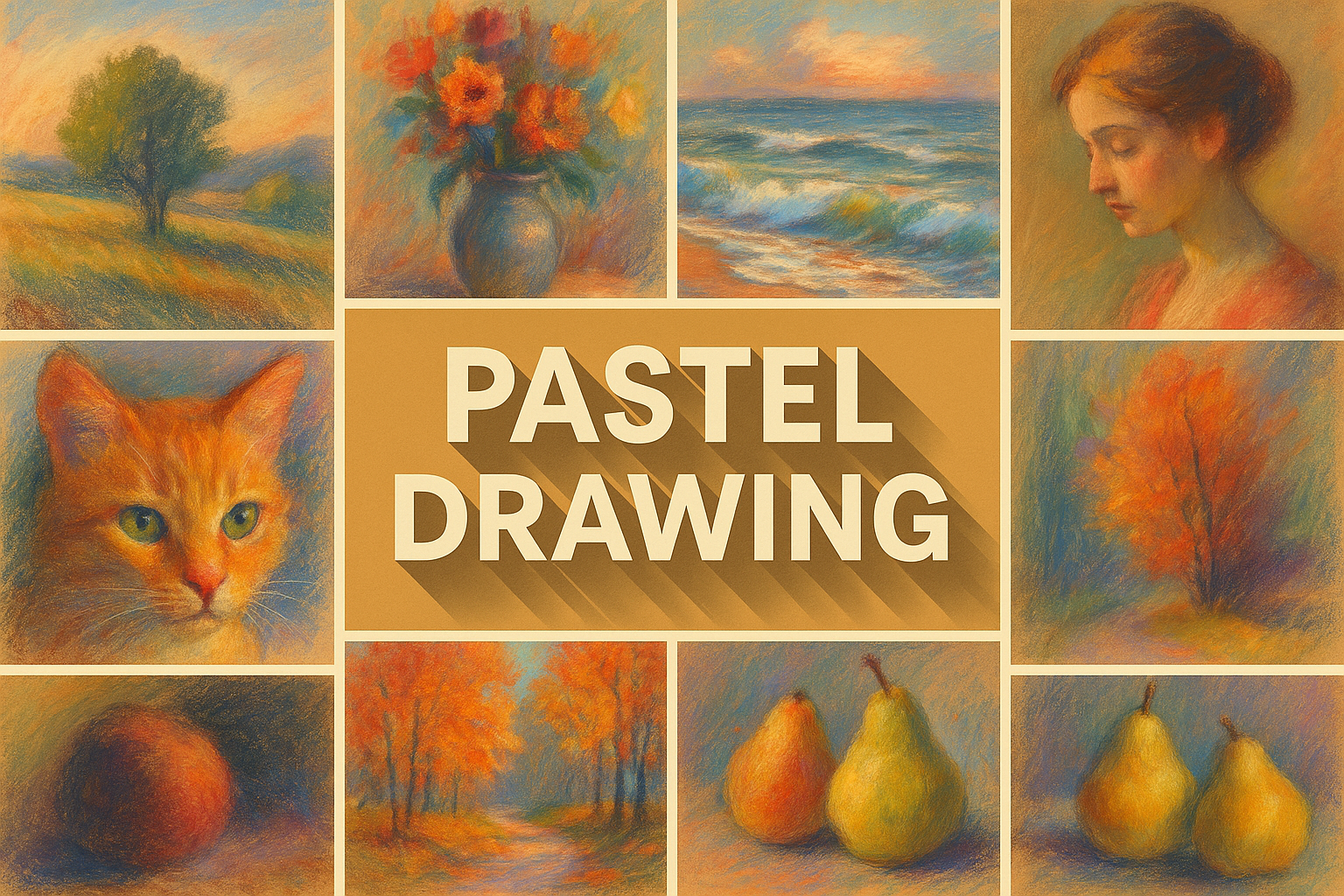
Pastel Drawing
The art style of Pastel Drawing is soft and dreamy, with muted colors and gentle lines. The overall effect is one of calm and serenity.
AOI thinking about Pastel Drawing [+_~]-/
Overview and quick facts
Pastel drawing is a type of art where artists use pastels to create their work. Pastels are a type of chalk that come in a variety of colors. Artists can use them to create both dry and wet media art. Pastel drawings can be either monochromatic or multicolored.
Can understand it also, as:
Sketch, doodle, charcoal drawing.
Categorize it as:
Impressionism, Modernism
Detailed description
Pastel drawing is a type of art where artists use pastels to create their work. Pastels are a type of pigment that comes in a stick form. They are made from a variety of different materials, including chalk, charcoal, and even crayons. Pastels are known for their vibrant colors and smooth texture. Pastel drawing has been around for centuries. Some of the most famous pastel artists include Leonardo da Vinci, Rembrandt, and Edgar Degas. Pastel paintings are often very beautiful and detailed. They can be found in many different museums and art galleries around the world.
Archive notes — claims to verify
1. Pastel drawing is a type of art where dry pastels are used to create a picture.
2. Pastels come in a wide variety of colors, including both traditional and neon colors.
3. Pastel drawings can be created on a variety of surfaces, including paper, cardboard, and even glass.
4. Pastel drawings are usually not as detailed as other types of drawings, such as pencil or charcoal drawings.
5. Pastel drawings can be created using a variety of techniques, including hatching, cross hatching, and stippling.
6. Pastels can be blended together to create new colors, or layered to create a more three-dimensional effect.
7. Pastel drawings can be erased, but they are more difficult to erase than other types of drawings.
8. Pastel drawings can be fixed, or set, by spraying them with a fixative.
9. Pastel drawings should be protected from smudging or damage by framing them under glass or plastic.
10. Pastel drawings can be created by both amateur and professional artists.
11. Many famous artists have created pastel drawings, including Edgar Degas, Mary Cassatt, and Vincent van Gogh.
12. Pastel drawings can be sold, exhibited, and collected.
13. Pastel drawings can be created as commissions or for personal enjoyment.
14. Pastel drawings make great gifts for friends and family.
15. Pastel drawings can be hung on walls or displayed on shelves.
16. Pastel drawings can be scanned and printed on paper or canvas.
17. Pastel drawings can be photographed and used as digital images.
18. Pastel drawings can be posted online for others to view.
19. Pastel drawings can be used as teaching aids in art classes.
20. Pastel drawings can be entered into art competitions.
Artists and works: references to check
(be aware, can be highly speculative)
Artists (be aware, speculation possible):
1. Mary Cassatt (1844-1926) 2. Edgar Degas (1834-1917) 3. Paul Cézanne (1839-1906) 4. Vincent van Gogh (1853-1890) 5. Henri Matisse (1869-1954) 6. Pierre-Auguste Renoir (1841-1919) 7. Johan Barthold Jongkind (1819-1891) 8. Camille Pissarro (1830-1903) 9. Georges Seurat (1859-1891) 10. Paul Gauguin (1848-1903) 11. Gustave Moreau (1826-1898) 12. Odilon Redon (1840-1916) 13. Henri de Toulouse-Lautrec (1864-1901) 14. Georges Braque (1882-1963) 15. Amedeo Modigliani (1884-1920) 16. Pablo Picasso (1881-1973) 17. André Derain (1880-1954) 18. Maurice Utrillo (1883-1955) 19. Pierre Bonnard (1867-1947) 20. Kees van Dongen (1877-1968) 21. Félix Vallotton (1865-1925) 22. Édouard Vuillard (1868-1940) 23. Jean-Émile Laboureur (1877-1943) 24. Charles Angrand (1854-1926) 25. Maximilien Luce (1858-1941) 26. Alphonse Mucha (1860-1939) 27. Théophile-Alexandre Steinlen (1859-1923) 28. Henri Lebasque (1865-1937) 29. Georges Valmier (1885-1937) 30. Jean-Louis Forain (1852-1931)
Artworks (be aware, speculation possible)
1. The Hay Wagon, by American painter Andrew Wyeth, 1942 2. Christina’s World, by American painter Andrew Wyeth, 1948 3. The Charnel House, by American painter Andrew Wyeth, 1945 4. Winterthur, by American painter Andrew Wyeth, 1963 5. The Island, by American painter Andrew Wyeth, 1947 6. Door to the Sea, by American painter Andrew Wyeth, 1960 7. Wind from the Sea, by American painter Andrew Wyeth, 1947 8. The Open Door, by American painter Andrew Wyeth, 1959 9. The Weathervane, by American painter Andrew Wyeth, 1963 10. The Mill, by American painter Andrew Wyeth, 1965 11. The Road to the Coast, by American painter Andrew Wyeth, 1966 12. The Swimming Hole, by American painter Andrew Wyeth, 1968 13. The Carry, by American painter Andrew Wyeth, 1970 14. The Big Room, by American painter Andrew Wyeth, 1971 15. The Room in the Attic, by American painter Andrew Wyeth, 1972 16. The Bedroom, by American painter Andrew Wyeth, 1973 17. The Study, by American painter Andrew Wyeth, 1974 18. The Drowning Pool, by American painter Andrew Wyeth, 1975 19. The Pool, by American painter Andrew Wyeth, 1976 20. The Sea, by American painter Andrew Wyeth, 1977 21. The Shore, by American painter Andrew Wyeth, 1978 22. The Door, by American painter Andrew Wyeth, 1979 23. The Window, by American painter Andrew Wyeth, 1980 24. The Doorway, by American painter Andrew Wyeth, 1981 25. The Path, by American painter Andrew Wyeth, 1982 26. The Chair, by American painter Andrew Wyeth, 1983 27. The Table, by American painter Andrew Wyeth, 1984 28. The Wall, by American painter Andrew Wyeth, 1985 29. The Ceiling, by American painter Andrew Wyeth, 1986 30. The Floor, by American painter Andrew Wyeth, 1987
Epoch
The time period of the art style Pastel Drawing is typically the 18th and 19th centuries.
Creative tools and further exploration
Search results are starting points for exploration, not evidence for the historical claims or attributions in this legacy entry.
- Practical AI tools and critical guidance
- Build a repeatable image workflow
- Search Wikipedia for this subject
- Search Lexica for visual interpretations
- Browse the Art Style Database
Creative studies to try
Explore these collected prompts as creative interpretations. They are starting points for image-making, not reproductions of historical artworks or evidence about a tradition.
Visual cues: visible handwork, soft edge, tactile pigment
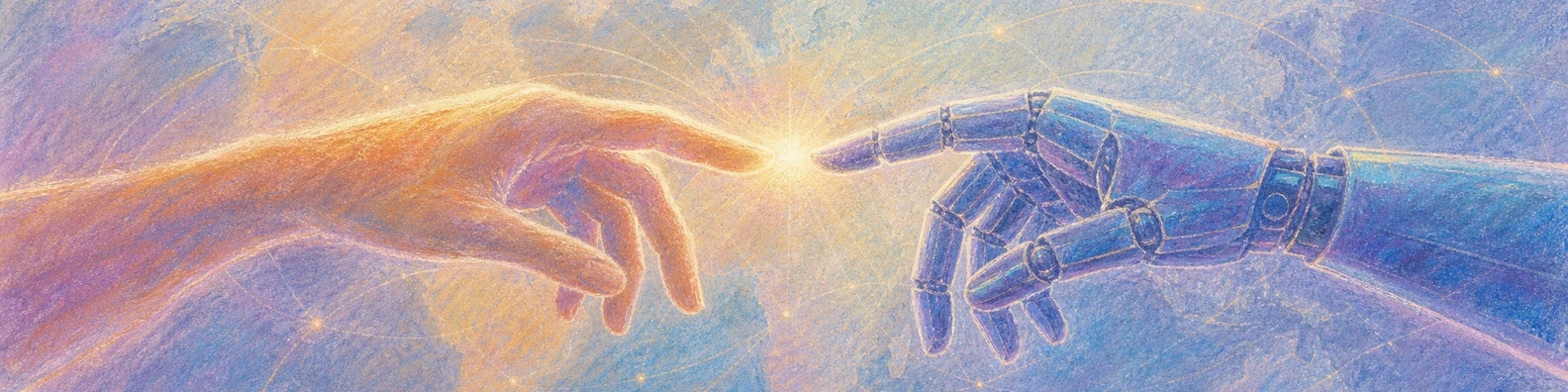
Study 1 — Pastel Drawing
Ultra-wide panoramic banner, a human hand and a sleek robotic hand reaching toward each other, fingertips almost touching, a bright luminous spark of intelligence between them, a subtle world map behind them with global data network lines, symbolizing human-AI collaboration and digital transformation, rendered in Pastel Drawing style, with soft pigment blooms, delicate gradients, visible paper texture, airy light, high quality, high detail, balanced composition, no text, no logo, no watermark, exact aspect ratio 1584:396
Prompt source: 1001 Art Styles. Select the text to copy, then adapt the subject and composition.