
Material family · Fold, cut, layer and assemble
Papercraft gives an image a visible way of being built. A fold turns a flat sheet into a roof; a cut edge becomes a shoreline; the gap between layers makes a shadow. As a visual family it includes folded models, cut-paper scenes and assembled sculptures, rather than one uniform historical art movement.
A visual introduction
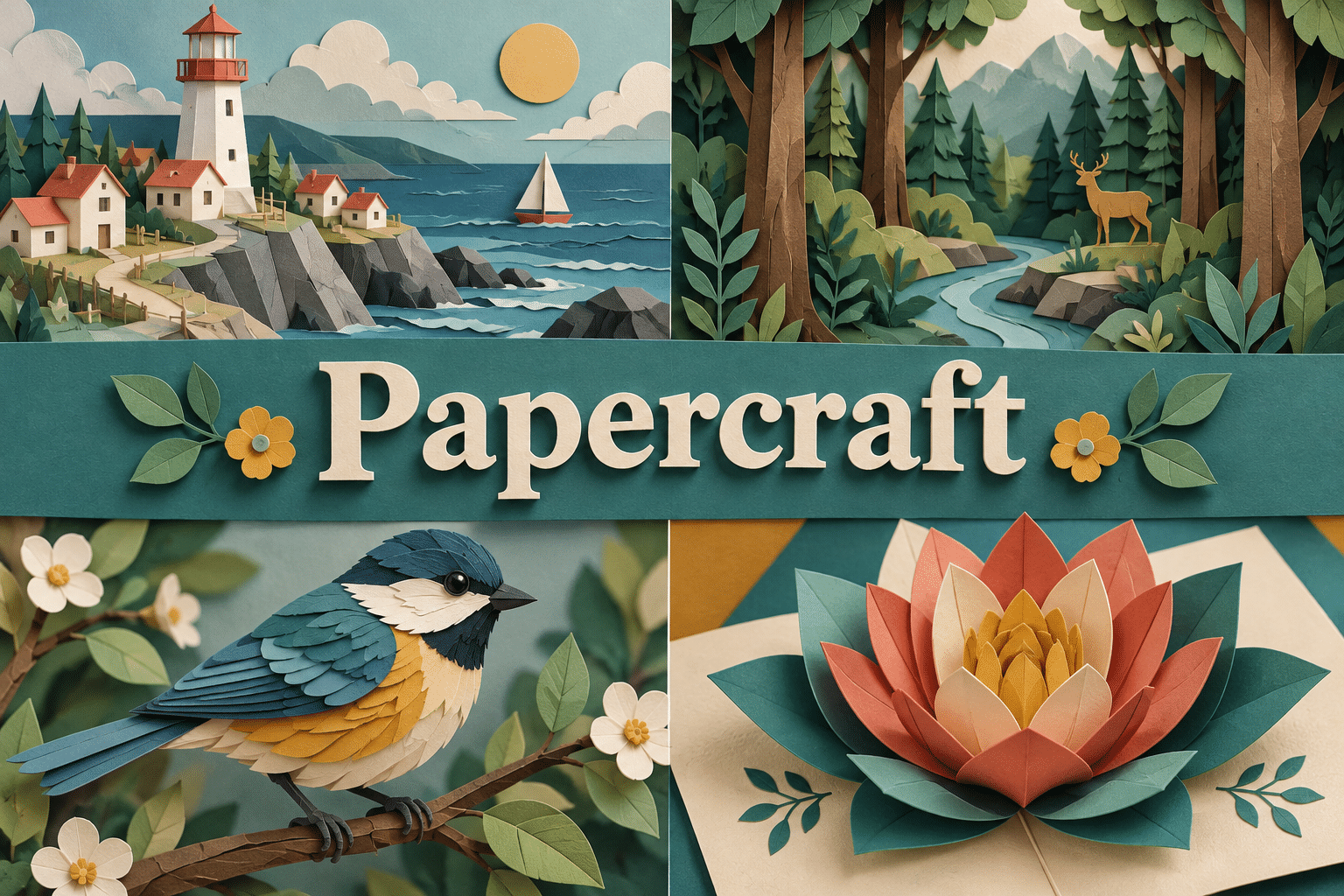
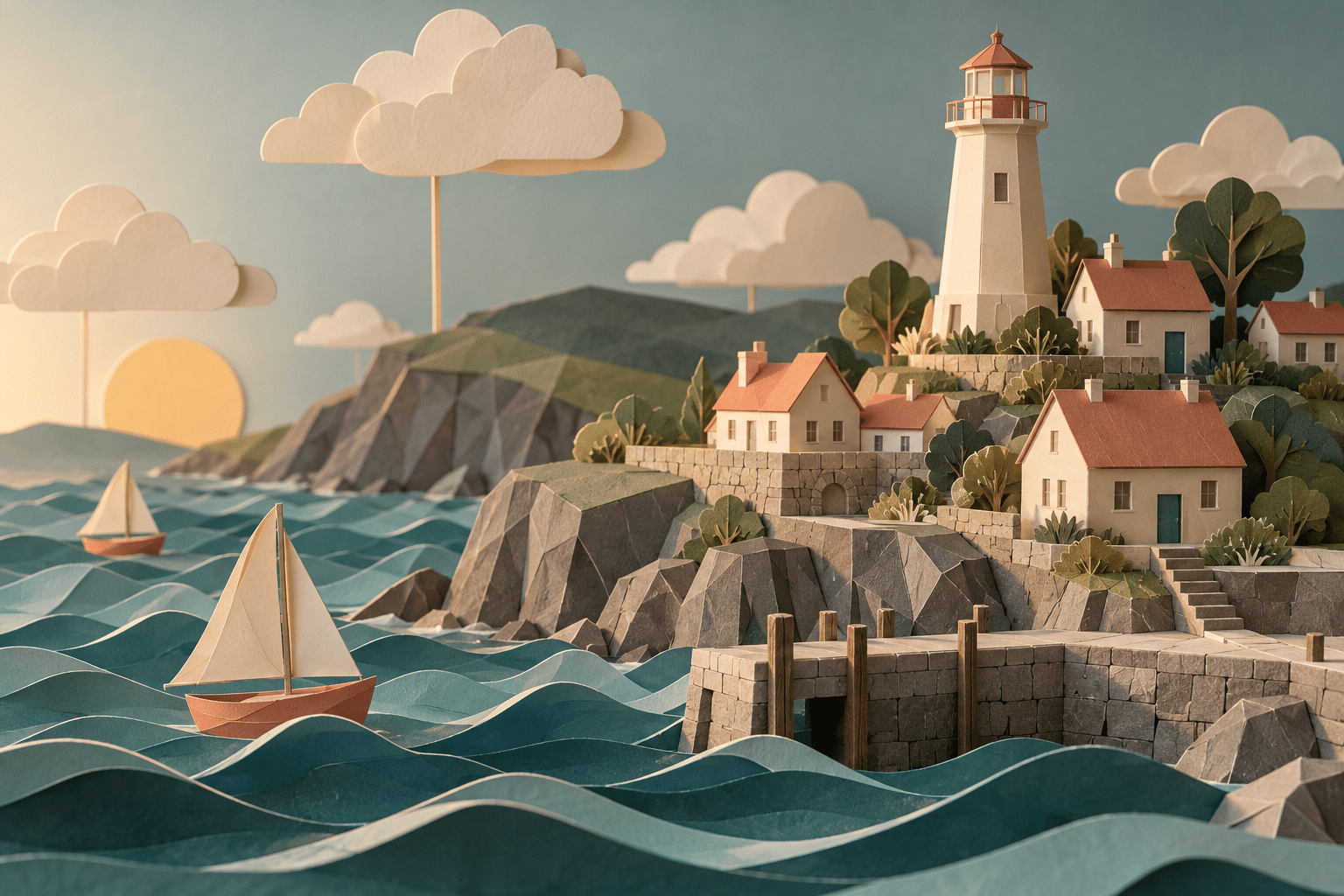
A dedicated example and a centrally titled collage introduce the visual possibilities. Both are AI-generated illustrations.
Select an image for a closer look. Use the arrow keys or gallery controls to compare the illustrations.
Creative toolbox · take this style further
Choose an input and a destination. Search sends your words to the chosen site; Copy & open puts them on your clipboard to paste there.
Create with AI
Turn your chosen input into an image prompt or a new creative direction.
ChatGPT
Copy your input and paste it into a ChatGPT conversation or image request.
Copy & open ChatGPT (new tab)Claude · Anthropic
Develop an image prompt or explore the style in a new Claude conversation.
Copy & open Claude · Anthropic (new tab)Midjourney
Paste your input into the Imagine bar on the Create page.
Copy & open Midjourney (new tab)Adobe Firefly
Copy your input, open Firefly, and paste it into the prompt field.
Copy & open Adobe Firefly (new tab)Leonardo.Ai
Copy your input, open Leonardo, and paste it into the generation field.
Copy & open Leonardo.Ai (new tab)Image search
Find visual references. Short, concrete keywords usually work best.
Lexica
Search AI images and prompts using your selected input.
Search with this input Lexica (new tab)Pexels
Search the photo and video library. Short keywords often work best.
Search with this input Pexels (new tab)Pixabay
Search photos, illustrations and other images.
Search with this input Pixabay (new tab)Unsplash
Search photographs using the style name or your own keywords.
Search with this input Unsplash (new tab)Wikimedia Commons
Search photographs, artworks and historical images. Check each file for its source and reuse terms.
Search with this input Wikimedia Commons (new tab)Art & research
Explore artists, collections and the ideas behind a style.
Wikipedia
Search for background reading. A style may not have its own article.
Search with this input Wikipedia (new tab)WikiArt
Copy your input into WikiArt’s search to explore artists and artworks.
Copy & open WikiArt (new tab)Europeana
Paste your keywords into the search to explore European museum, library and archive collections.
Copy & open Europeana (new tab)Inspiration
Discover portfolios and visual ideas from creative communities.
Instagram hashtags
Search a hashtag made from your input: spaces and punctuation are removed. Instagram may require sign-in.
Search with this input Instagram hashtags (new tab)ArtStation
Paste your input into artwork search for concept art, environments, characters and visual development.
Copy & open ArtStation (new tab)Behance
Paste your input into project search for illustration, design and visual storytelling.
Copy & open Behance (new tab)A closer look
Matte paper surfaces, visible edges and thickness, purposeful folds, layered silhouettes and soft cast shadows; a limited palette lets construction remain legible.
A material family, not one technique
Paper cutting, folding and assembling solve different problems. A flat cut silhouette depends on positive and negative shapes; a folded model gains volume from creases; a layered diorama gains depth through separated planes. Origami is related, but it should not be used as a blanket label for every glued or cut-paper construction.
The V&A’s Caroline Rees workshop describes cutting and finishing a design from a template. Canon’s paper-craft guide presents printed templates followed by assembly. These are concrete routes into making; neither establishes a single origin story for all paper arts.
Make the construction visible
Start with one dominant silhouette and a small number of supporting shapes. Let the thickness of a wave, leaf or roof edge catch side light. A restrained palette helps the viewer notice where one sheet ends and another begins. If the surfaces become glossy, seamless or heavily rounded, they may read as plastic or clay instead.
Use shadows as evidence of separation. A tree in front of a hill should cast a shadow consistent with their spacing and the light direction. Folds should explain changes in plane. Not every edge needs texture: selective fibers and a few imperfect cuts feel more convincing than evenly applied noise.
Try a miniature coastal scene
Build a composition from three stages: foreground waves, a middle village and a distant sky. Keep the lighthouse simple enough to recognize from across the room. Add one contrast, such as coral roofs against teal water, and compare frontal lighting with gentle side lighting.
A digital or AI image can suggest this material language without being a buildable model. The illustrations here are imagined, not photographs of finished handmade objects or tested assembly instructions. To make a physical version, develop and test actual pieces, supports and joints separately; do not assume that a beautiful generated fold pattern will fit together.
Technique notes
Begin with one clear focal relationship.
Compare the example with the collage before varying the subject.
Label generated illustrations and distinguish visual references from tested technical assets.
A small poetic detour
Original words from the AOI studio.
Poetry
A little fold becomes a hill,
A paper tide lies never still.
The light slips through a cut-out tree;
A sheet remembers how to be.
The prompt workshop
Original creative exercises. These prompts create new illustrations, not documentary evidence.
Begin with a village
An original Papercraft miniature coastal village, ivory folded lighthouse, coral cardstock roofs and layered teal paper waves, clearly visible cut edges and plausible folds, soft warm side light, quiet cream background. Tactile matte paper, no plastic gloss or text. Imagined craft illustration, not an assembly plan.
Explore layered space
A refined cut-paper forest diorama: five separated planes of green and teal trees, a winding pale river, one small ochre deer silhouette, believable paper thickness and consistent soft shadows. Original composition with quiet sky and crisp cut contours, no lettering.
Change the scale
Close view of an imagined sculpted paper bird on a folded branch, layered matte cardstock feathers, cream and deep teal with a small mustard accent, visible edges and carefully bent paper, soft studio side lighting. Elegant paper construction, not clay, no text or logos.
A smile from the studio
Jokes
The paper lighthouse is very reliable, except in a heavy edit.
My sculpture has depth. Mostly because I forgot to flatten the tabs.