
Archive note: historical claims and artist or artwork associations in this entry have not yet received a full source review.
Funk art
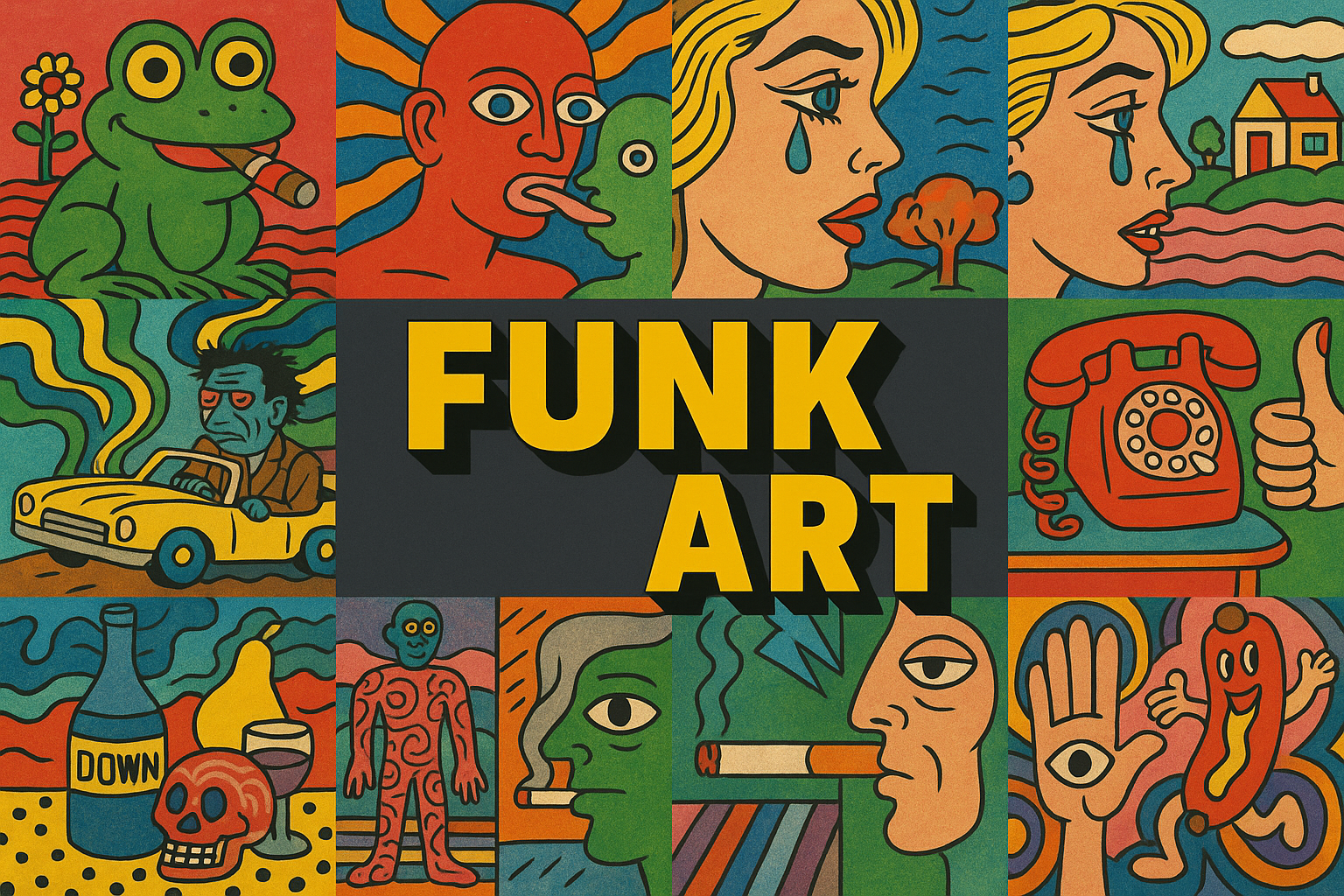
Funk art is characterized by its use of bright colors and bold patterns. The art style is often playful and whimsical, and often features images of popular culture.
AOI thinking about Funk art [+_~]-/
Overview and quick facts
Funk art is a style of painting that emerged in the late 1960s and early 1970s. It is characterized by its use of bright colors, bold patterns, and often humorous or irreverent imagery. Funk art is often associated with the countercultural movement of the 1960s and 1970s, and its practitioners were often inspired by the work of pop artists like Andy Warhol and Roy Lichtenstein.
Can understand it also, as:
Funk art is a type of art that is associated with the funk music genre. It is often characterized by its use of bright colors and bold patterns.
Categorize it as:
Impressionism, Modernism
Detailed description
In the late 1960s, a new art movement was born in the United States: Funk art. This style of art is characterized by its use of bright colors, bold patterns, and often humorous or irreverent subject matter. Funk artists sought to break away from the traditional, serious art world and create something that was more fun and accessible to everyone. Some of the most famous funk artists include Peter Max, Jimi Hendrix, and Andy Warhol. Funk art is often associated with the psychedelic art of the 1960s, but it also has its own unique style. Funk paintings often feature bright, bold colors and patterns. The subjects of these paintings can be anything from everyday objects to famous people. Funk art is about having fun with art. Its about breaking away from the traditional art world and creating something that is more accessible to everyone. If youre looking for a fun and unique art style, then funk art is the perfect choice for you.
Archive notes — claims to verify
1. Funk art is a type of art that emerged in the mid-1960s in the United States.
2. It is characterized by its use of bright colors, bold patterns, and often humorous or irreverent subjects.
3. Funk artists sought to break down the barriers between high art and popular culture.
4. Funk art is often associated with the counterculture of the 1960s.
5. Many funk artists were part of the Bay Area Figurative Movement.
6. Funk art is sometimes seen as a precursor to the later movements of pop art and post-modernism.
7. Some notable funk artists include Peter Saul, Robert Arneson, and Roy Lichtenstein.
8. Funk art often makes use of found objects and everyday materials.
9. It is sometimes considered to be a type of outsider art.
10. Funk art is sometimes seen as a reaction against the more serious and formal styles of abstract expressionism and minimalism.
11. The term "funk" is often used interchangeably with "funky," meaning unconventional or eccentric.
12. Funk art is sometimes criticized for its lack of seriousness or its perceived lowbrow nature.
13. However, many funk artists have been taken seriously by the art world and have achieved commercial success.
14. Funk art is still being made today, although it is not as prevalent as it was in the 1960s and 1970s.
15. There is currently a resurgence of interest in funk art, with a number of exhibitions and books being devoted to the subject.
16. Funk art is a truly American phenomenon, with few parallels in other countries.
17. Funk artists often use humor and irony in their work.
18. Funk art is sometimes seen as a form of social commentary.
19. Funk artists often seek to challenge conventional ideas about art and aesthetics.
20. Funk art is an important part of American pop culture and has had a significant impact on the development of contemporary art.
Artists and works: references to check
(be aware, can be highly speculative)
Artists (be aware, speculation possible):
1. Peter Max (1937-present) 2. Andy Warhol (1928-1987) 3. Roy Lichtenstein (1923-1997) 4. James Rizzi (1950-2011) 5. Keith Haring (1958-1990) 6. Robert Indiana (1928-present) 7. Tom Wesselmann (1931-2004) 8. Mel Ramos (1935-2018) 9. Kenny Scharf (1958-present) 10. Jean-Michel Basquiat (1960-1988) 11. Richard Hamilton (1922-2011) 12. David Hockney (1937-present) 13. Rene Magritte (1898-1967) 14. Yoko Ono (1933-present) 15. John Lennon (1940-1980) 16. Paul McCartney (1942-present) 17. Ringo Starr (1940-present) 18. George Harrison (1943-2001) 19. Jimi Hendrix (1942-1970) 20. Janis Joplin (1943-1970) 21. Jim Morrison (1943-1971) 22. Jerry Garcia (1942-1995) 23. Bob Dylan (1941-present) 24. Bruce Springsteen (1949-present) 25. Madonna (1958-present) 26. Michael Jackson (1958-2009) 27. Prince (1958-2016) 28. Beyonce (1981-present) 29. Kendrick Lamar (1987-present) 30. Chance the Rapper (1993-present)
Artworks (be aware, speculation possible)
1. The Persistence of Memory, Salvador Dali (1931) 2. Nighthawks, Edward Hopper (1942) 3. The Scream, Edvard Munch (1893) 4. The Starry Night, Vincent van Gogh (1889) 5. The Kiss, Gustav Klimt (1908) 6. The Great Wave off Kanagawa, Katsushika Hokusai (1829-1833) 7. The Hay Wagon, Andrew Wyeth (1953) 8. American Gothic, Grant Wood (1930) 9. Dancers in the Street, Henri Matisse (1917) 10. The Dance, Henri Matisse (1909) 11. The Yellow Christ, Paul Gauguin (1889) 12. The Third of May 1808, Francisco Goya (1814) 13. The Sistine Chapel Ceiling, Michelangelo (1512) 14. The Last Supper, Leonardo da Vinci (1498) 15. The Mona Lisa, Leonardo da Vinci (1503-1506) 16. The Birth of Venus, Sandro Botticelli (1486) 17. Primavera, Sandro Botticelli (1482) 18. The Arnolfini Portrait, Jan van Eyck (1434) 19. The Ghent Altarpiece, Jan van Eyck (1432) 20. The Madonna and Child, Michelangelo (1497) 21. The Pietà, Michelangelo (1499) 22. David, Michelangelo (1501-1504) 23. The Creation of Adam, Michelangelo (1512) 24. The Vitruvian Man, Leonardo da Vinci (1490) 25. The Last Judgment, Michelangelo (1541) 26. The Sistine Chapel Frescoes, Michelangelo (1512-1541) 27. The ceiling of the Sistine Chapel, Michelangelo (1512) 28. The Sistine Madonna, Raphael (1513) 29. The School of Athens, Raphael (1510) 30. The Transfiguration, Raphael (1520)
Epoch
The Funk art style emerged in the late 1960s and early 1970s.
Creative tools and further exploration
Search results are starting points for exploration, not evidence for the historical claims or attributions in this legacy entry.