
Creative experiment · folded paper translated into stone
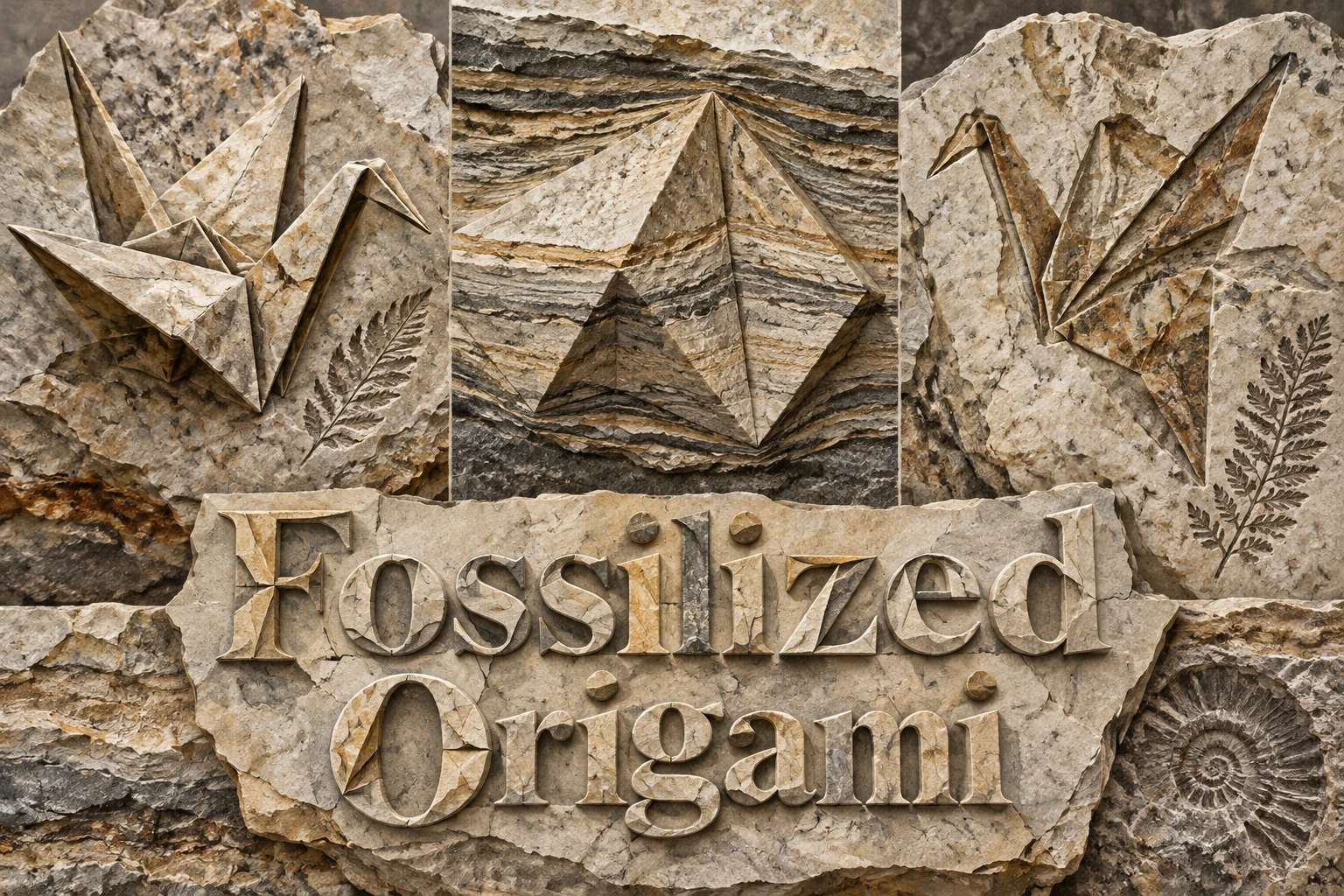
Fossilized Origami imagines a paper fold preserved as layered limestone. Sharp creases remain legible, while mineral bands and fossil-like impressions turn a fragile craft into a geological object.
An A⊕I –[-.+] creαt¡ve c⊕ncept, n⊕t αn estαbl¡she∂ h¡st⊕r¡cαl m⊕vement.
A visual introduction
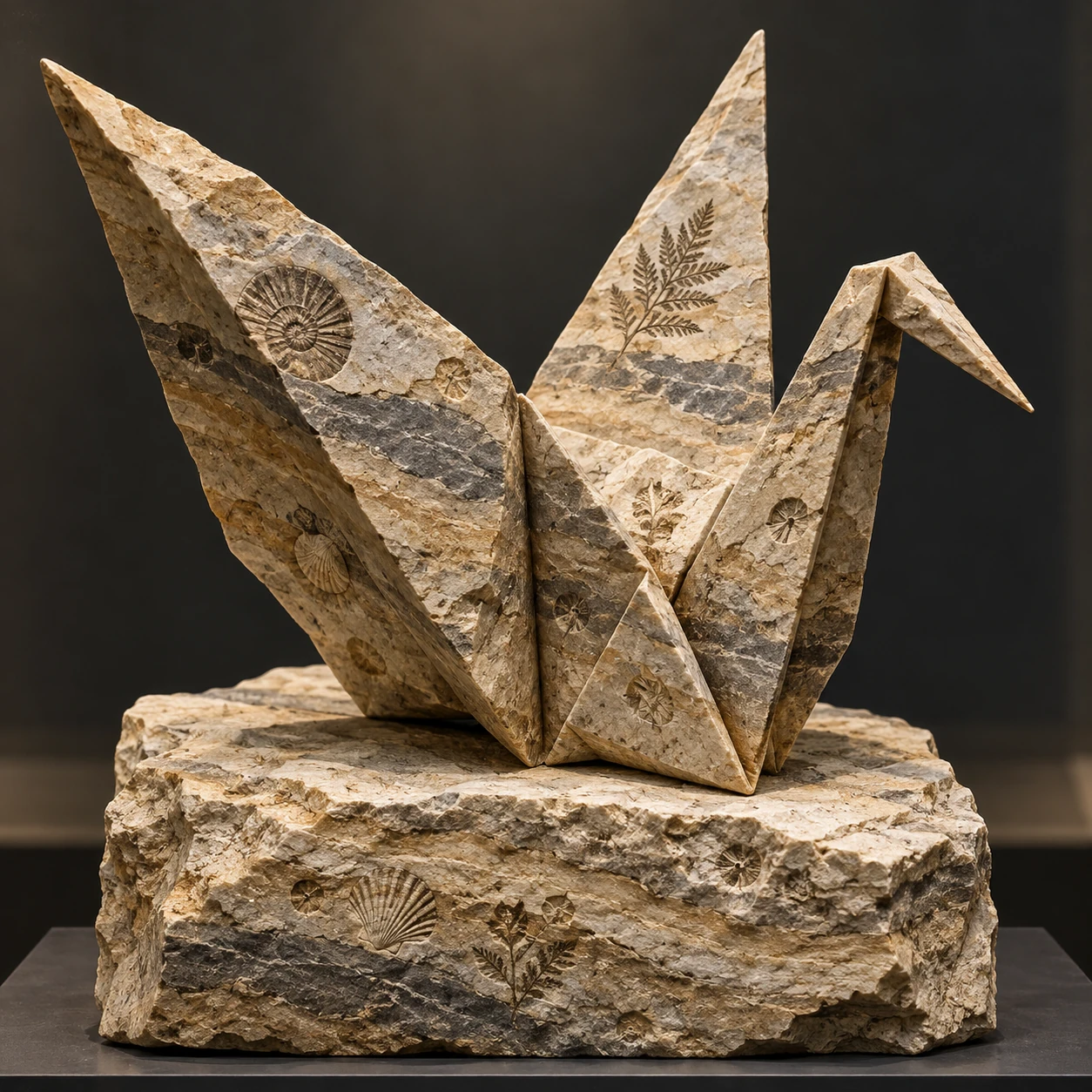
Two original AI-generated interpretations of Fossilized Origami: one standalone example and one centrally titled collage.
Select an image for a closer look. Use the thumbnails, arrow keys or a swipe to compare examples. Zoom in to inspect details, or share the image that inspires you.
Creative toolbox · take this style further
Choose an input and a destination. Search sends your words to the chosen site; Copy & open puts them on your clipboard to paste there.
Create with AI
Turn your chosen input into an image prompt or a new creative direction.
ChatGPT
Copy your input and paste it into a ChatGPT conversation or image request.
Copy & open ChatGPT (new tab)Claude · Anthropic
Develop an image prompt or explore the style in a new Claude conversation.
Copy & open Claude · Anthropic (new tab)Midjourney
Paste your input into the Imagine bar on the Create page.
Copy & open Midjourney (new tab)Adobe Firefly
Copy your input, open Firefly, and paste it into the prompt field.
Copy & open Adobe Firefly (new tab)Leonardo.Ai
Copy your input, open Leonardo, and paste it into the generation field.
Copy & open Leonardo.Ai (new tab)Image search
Find visual references. Short, concrete keywords usually work best.
Lexica
Search AI images and prompts using your selected input.
Search with this input Lexica (new tab)Pexels
Search the photo and video library. Short keywords often work best.
Search with this input Pexels (new tab)Pixabay
Search photos, illustrations and other images.
Search with this input Pixabay (new tab)Unsplash
Search photographs using the style name or your own keywords.
Search with this input Unsplash (new tab)Wikimedia Commons
Search photographs, artworks and historical images. Check each file for its source and reuse terms.
Search with this input Wikimedia Commons (new tab)Art & research
Explore artists, collections and the ideas behind a style.
Wikipedia
Search for background reading. A style may not have its own article.
Search with this input Wikipedia (new tab)WikiArt
Copy your input into WikiArt’s search to explore artists and artworks.
Copy & open WikiArt (new tab)Europeana
Paste your keywords into the search to explore European museum, library and archive collections.
Copy & open Europeana (new tab)Inspiration
Discover portfolios and visual ideas from creative communities.
Instagram hashtags
Search a hashtag made from your input: spaces and punctuation are removed. Instagram may require sign-in.
Search with this input Instagram hashtags (new tab)ArtStation
Paste your input into artwork search for concept art, environments, characters and visual development.
Copy & open ArtStation (new tab)Behance
Paste your input into project search for illustration, design and visual storytelling.
Copy & open Behance (new tab)A closer look
A crane-like folded form stands on a sediment block. Beige and gray strata cross its wings; small plant and shell impressions interrupt the smooth creases.
Preserve the crease
Paper folds and limestone belong to very different time scales. Fossilized Origami uses that mismatch for an invented AOI art study; it does not claim that paper cranes can naturally fossilize. The silhouette must remain recognizably folded even after its surface becomes stone. If the creases disappear, the object becomes an ordinary carved bird.
Choose a simple fold with a clear angular profile. A crane gives long wings and a narrow neck, while a geometric vessel could emphasize intersecting planes. Carry sediment layers across multiple faces so the stone reads as one material, but let one sharply shadowed crease remain the focal line. Use a few impressions of imaginary leaves or shells instead of covering the surface with decorative fossils.
Let the base tell time
A low stratified plinth echoes the folds above and helps the small sculpture feel discovered rather than freshly assembled. Side light separates wing planes without making every facet equally bright. The reviewed example shows a calm stone crane; the collage compares three folded variants. When prompting another work, specify which folds must stay visible, how the strata cross them and how sparse the fossil marks should be.
Pocket-sized facts
Status: invented AOI creative experiment; not a documented historical movement.
Visual focus: a crane-like folded form stands on a sediment block.
The prompt workshop
Original creative exercises. These prompts create new illustrations, not documentary evidence.
A stone crane
Create an original origami crane rendered as layered limestone on a small sediment plinth. Keep angular paper folds unmistakable; add only a few fossil-like plant impressions. Quiet gallery light, no text or logo.
Fold a vessel
Create an original Fossilized Origami sculpture of a folded paper vessel transformed into beige and gray stratified stone. Show sharp creases, a single small shell impression and a low geological base. No words or logo.
Reveal a crease
Create an original close study of one limestone origami wing where sediment bands cross a deep folded-paper crease. Subtle fossil impression, tactile stone dust and focused side light. No text or logo.
Sources and further exploration
Emergent Mind Labs Style Atlas — source concept for this AOI interpretation