
Creative experiment · fragile architecture and burnt pattern
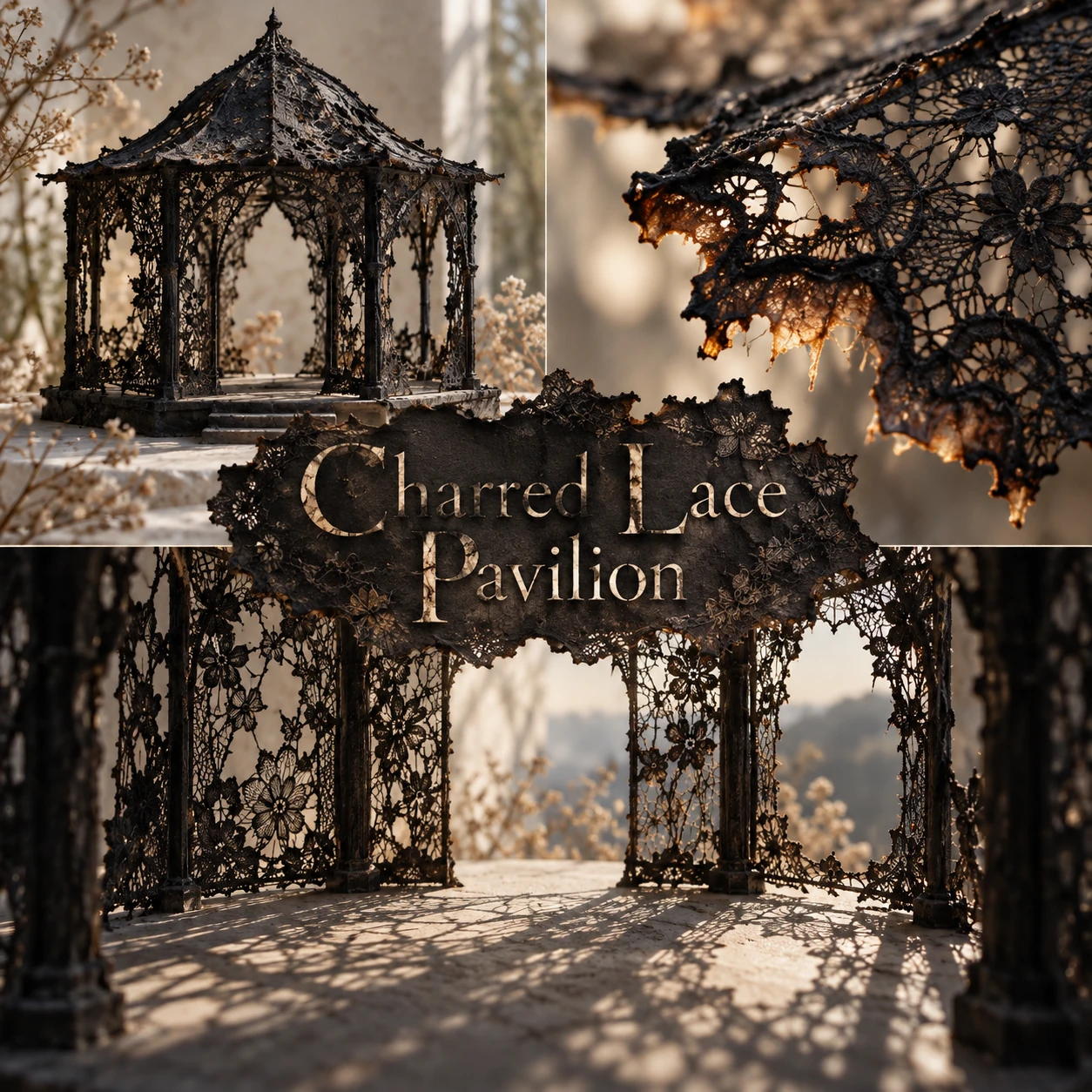
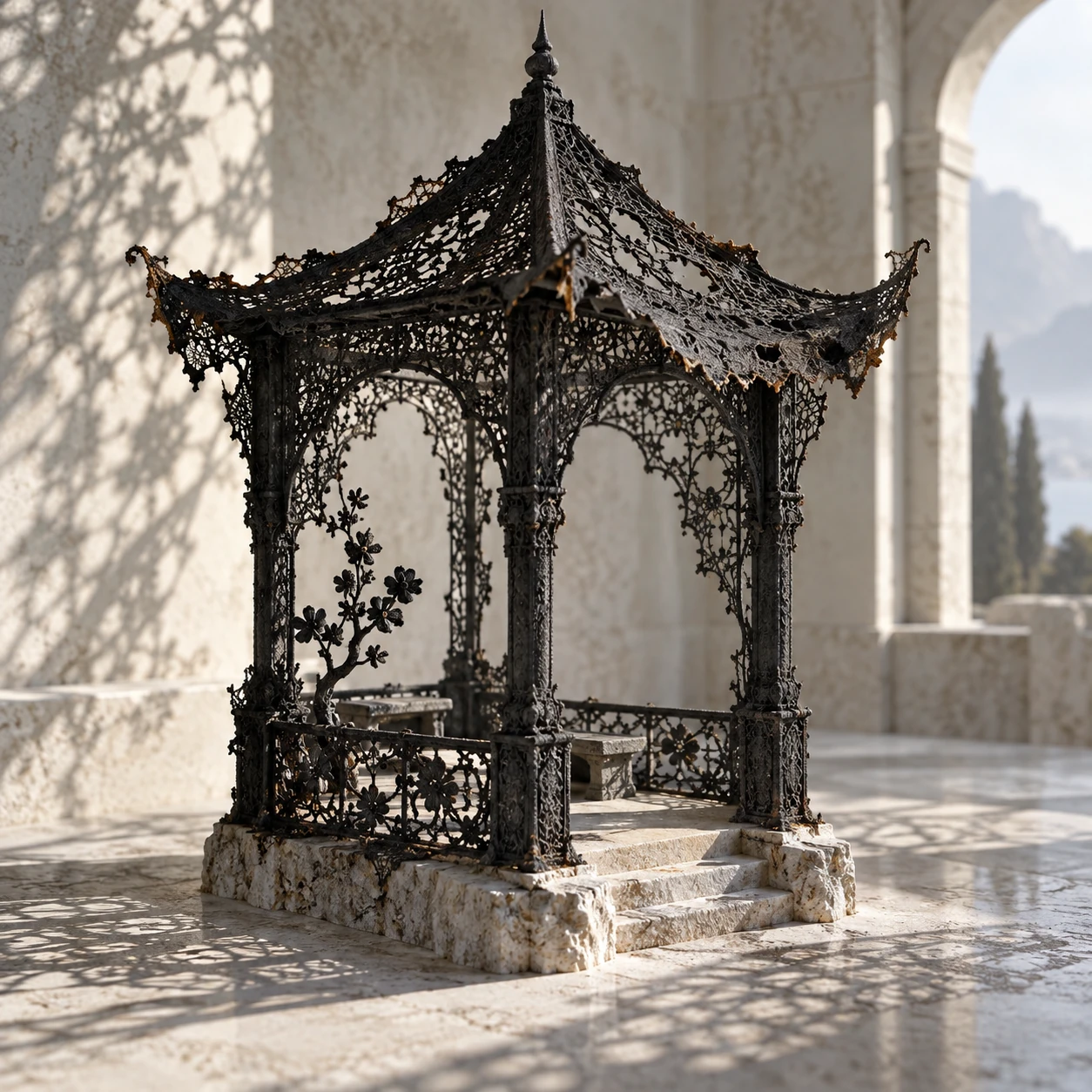
Charred Lace Pavilion imagines a tiny shelter made from blackened ornamental lace. Its delicate walls let daylight print complicated shadows on pale stone, creating an architectural study of fragility.
An A⊕I –[-.+] creαt¡ve c⊕ncept, n⊕t αn estαbl¡she∂ h¡st⊕r¡cαl m⊕vement.
A visual introduction
Two original AI-generated interpretations of Charred Lace Pavilion: one standalone example and one centrally titled collage.
Select an image for a closer look. Use the thumbnails, arrow keys or a swipe to compare examples. Zoom in to inspect details, or share the image that inspires you.
Creative toolbox · take this style further
Choose an input and a destination. Search sends your words to the chosen site; Copy & open puts them on your clipboard to paste there.
Create with AI
Turn your chosen input into an image prompt or a new creative direction.
ChatGPT
Copy your input and paste it into a ChatGPT conversation or image request.
Copy & open ChatGPT (new tab)Claude · Anthropic
Develop an image prompt or explore the style in a new Claude conversation.
Copy & open Claude · Anthropic (new tab)Midjourney
Paste your input into the Imagine bar on the Create page.
Copy & open Midjourney (new tab)Adobe Firefly
Copy your input, open Firefly, and paste it into the prompt field.
Copy & open Adobe Firefly (new tab)Leonardo.Ai
Copy your input, open Leonardo, and paste it into the generation field.
Copy & open Leonardo.Ai (new tab)Image search
Find visual references. Short, concrete keywords usually work best.
Lexica
Search AI images and prompts using your selected input.
Search with this input Lexica (new tab)Pexels
Search the photo and video library. Short keywords often work best.
Search with this input Pexels (new tab)Pixabay
Search photos, illustrations and other images.
Search with this input Pixabay (new tab)Unsplash
Search photographs using the style name or your own keywords.
Search with this input Unsplash (new tab)Wikimedia Commons
Search photographs, artworks and historical images. Check each file for its source and reuse terms.
Search with this input Wikimedia Commons (new tab)Art & research
Explore artists, collections and the ideas behind a style.
Wikipedia
Search for background reading. A style may not have its own article.
Search with this input Wikipedia (new tab)WikiArt
Copy your input into WikiArt’s search to explore artists and artworks.
Copy & open WikiArt (new tab)Europeana
Paste your keywords into the search to explore European museum, library and archive collections.
Copy & open Europeana (new tab)Inspiration
Discover portfolios and visual ideas from creative communities.
Instagram hashtags
Search a hashtag made from your input: spaces and punctuation are removed. Instagram may require sign-in.
Search with this input Instagram hashtags (new tab)ArtStation
Paste your input into artwork search for concept art, environments, characters and visual development.
Copy & open ArtStation (new tab)Behance
Paste your input into project search for illustration, design and visual storytelling.
Copy & open Behance (new tab)A closer look
A miniature pavilion has four slim posts, a perforated roof and lace-like wall panels. Burnt edges interrupt the repeating pattern. Strong daylight passes through the openings and casts precise floral shadows around its base.
Make a shelter from a fragile edge
A pavilion suggests protection and a roof, while charred lace suggests a material close to falling apart. Charred Lace Pavilion joins those opposed ideas as an invented AOI visual experiment. The image does not document a durable building or a historical craft practice. Its drama comes from the fact that the shelter remains recognizable even as its surface looks precarious.
Begin with a simple frame and a clear opening. Let the lace pattern hang from that structure rather than asking the pattern to explain the whole building. Vary the degree of burning: a few darkened scallops and torn corners are more expressive than uniformly ragged edges. Keep enough intact repetition for the viewer to see what was lost. Pale stone provides contrast without adding another busy texture.
Use the shadows as a second pavilion
Place the sun low enough that the pierced roof and sides cast long motifs onto the ground. These shadows can extend beyond the miniature, making it feel larger than it is. In an image prompt, specify the pavilion's scale, number of posts, one intact section, one visibly charred section and the direction of daylight. Check that the lace openings remain visible and that the silhouette reads as architecture, not a black fabric heap.
Pocket-sized facts
Status: invented AOI creative experiment; not a documented historical movement.
Visual focus: a miniature pavilion has four slim posts, a perforated roof and lace-like wall panels.
The prompt workshop
Original creative exercises. These prompts create new illustrations, not documentary evidence.
A small shelter
Create an original miniature pavilion with four thin supports and delicate black lace walls on pale stone. Scorch only selected edges, leaving the floral openings readable. Strong side light casts intricate patterned shadows. No text or logo.
Follow the shadow
Create an original Charred Lace Pavilion artwork with a lightly burnt ornamental roof and open sides. Frame the little shelter and its much larger shadow together, making the perforated pattern visible in both. No words or logo.
Study one damaged corner
Create an original close view of a lace pavilion corner where a crisp floral weave gives way to charred, fraying edges. Let warm daylight shine through onto a pale floor; retain a clear architectural post and roof line. No text or logo.
Sources and further exploration
Emergent Mind Labs Style Atlas — source concept for this AOI interpretation