
Creative experiment · sculpted clay and luminous glaze
Aurora Ceramic Relief translates the drifting color of a night sky into raised clay and pooled glaze. Its visual interest comes from the meeting of a slow, heavy material with light that seems to move across it.
An A⊕I –[-.+] creαt¡ve c⊕ncept, n⊕t αn estαbl¡she∂ h¡st⊕r¡cαl m⊕vement.
A visual introduction
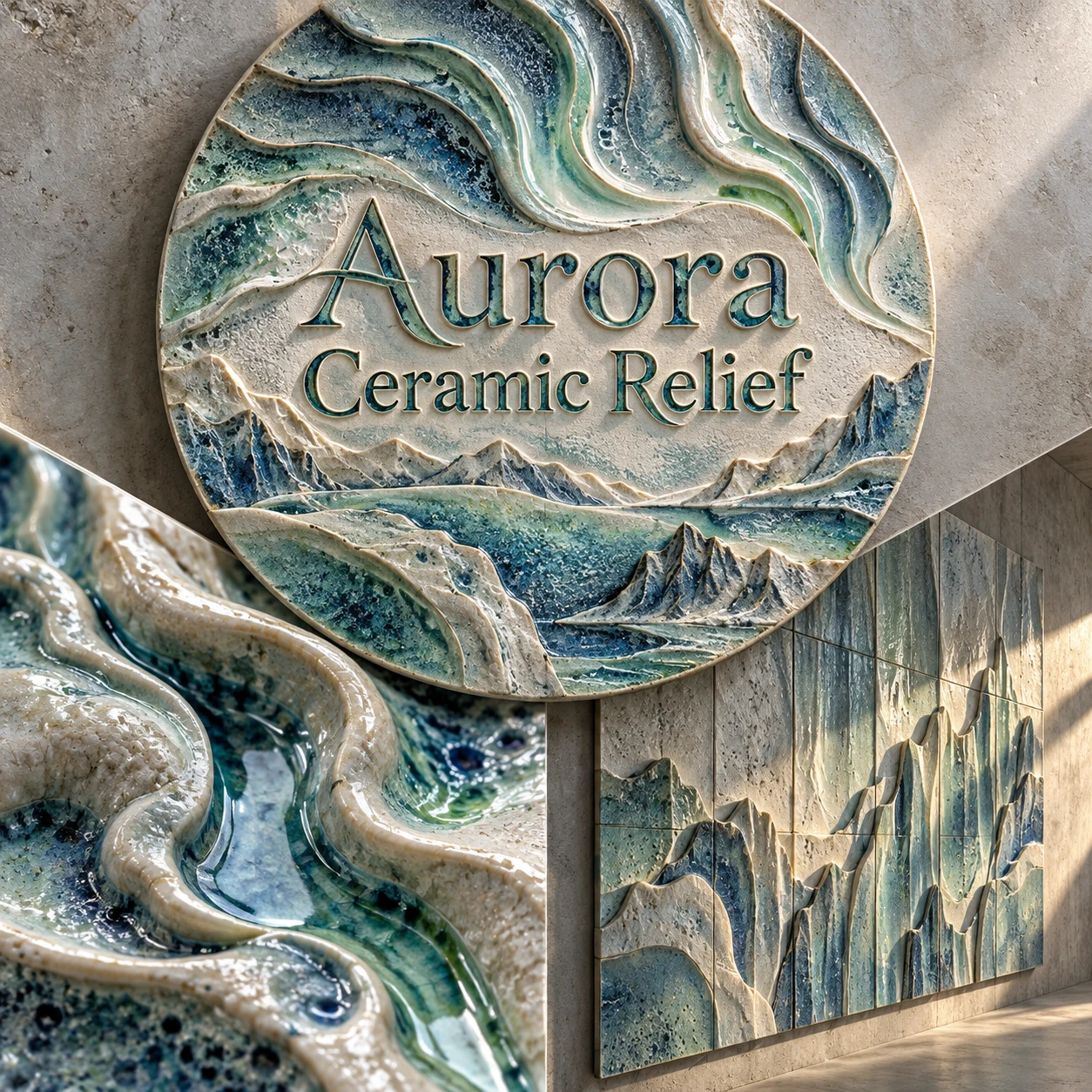
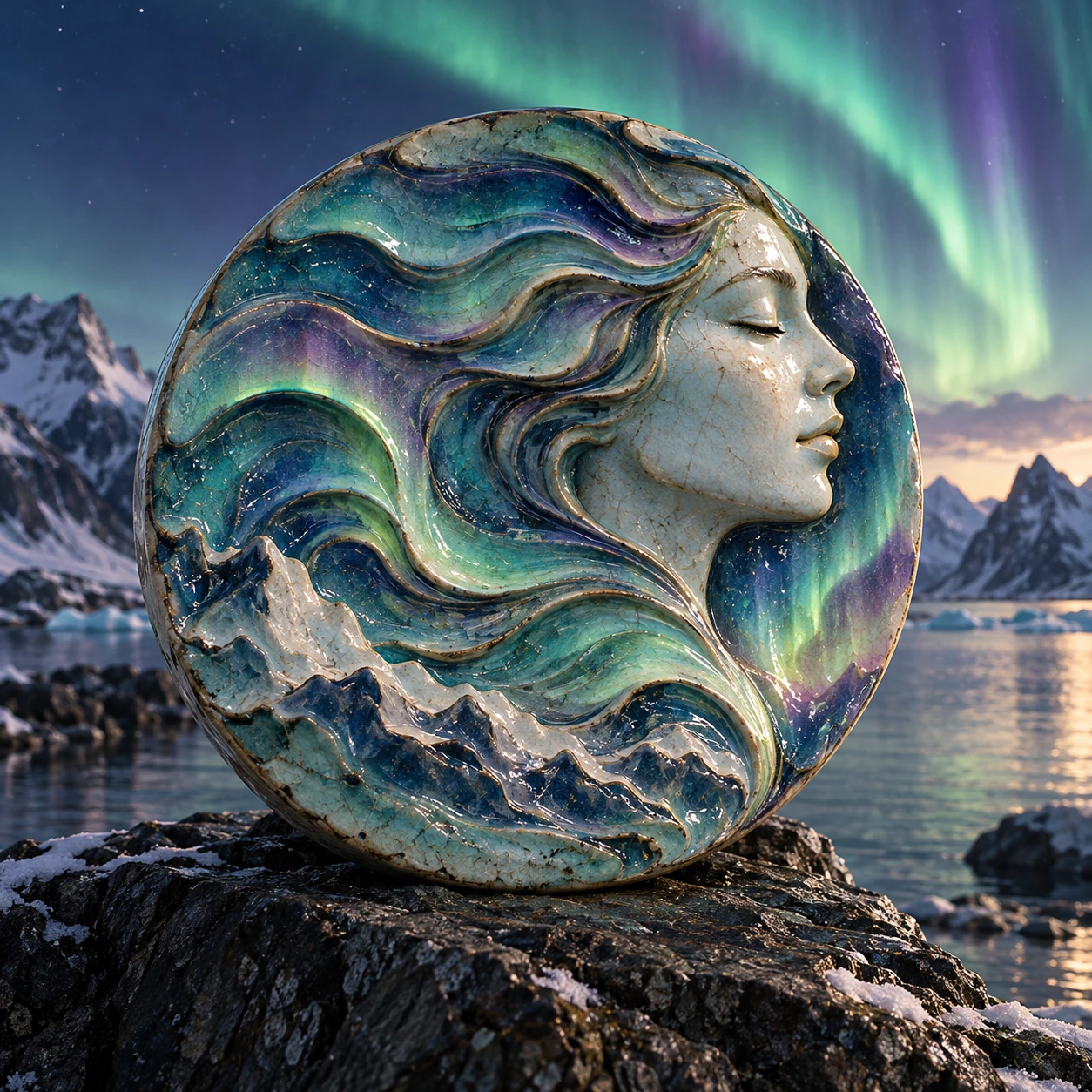
Two original AI-generated interpretations of Aurora Ceramic Relief: one standalone example and one centrally titled collage.
Select an image for a closer look. Use the thumbnails, arrow keys or a swipe to compare examples. Zoom in to inspect details, or share the image that inspires you.
Creative toolbox · take this style further
Choose an input and a destination. Search sends your words to the chosen site; Copy & open puts them on your clipboard to paste there.
Create with AI
Turn your chosen input into an image prompt or a new creative direction.
ChatGPT
Copy your input and paste it into a ChatGPT conversation or image request.
Copy & open ChatGPT (new tab)Claude · Anthropic
Develop an image prompt or explore the style in a new Claude conversation.
Copy & open Claude · Anthropic (new tab)Midjourney
Paste your input into the Imagine bar on the Create page.
Copy & open Midjourney (new tab)Adobe Firefly
Copy your input, open Firefly, and paste it into the prompt field.
Copy & open Adobe Firefly (new tab)Leonardo.Ai
Copy your input, open Leonardo, and paste it into the generation field.
Copy & open Leonardo.Ai (new tab)Image search
Find visual references. Short, concrete keywords usually work best.
Lexica
Search AI images and prompts using your selected input.
Search with this input Lexica (new tab)Pexels
Search the photo and video library. Short keywords often work best.
Search with this input Pexels (new tab)Pixabay
Search photos, illustrations and other images.
Search with this input Pixabay (new tab)Unsplash
Search photographs using the style name or your own keywords.
Search with this input Unsplash (new tab)Wikimedia Commons
Search photographs, artworks and historical images. Check each file for its source and reuse terms.
Search with this input Wikimedia Commons (new tab)Art & research
Explore artists, collections and the ideas behind a style.
Wikipedia
Search for background reading. A style may not have its own article.
Search with this input Wikipedia (new tab)WikiArt
Copy your input into WikiArt’s search to explore artists and artworks.
Copy & open WikiArt (new tab)Europeana
Paste your keywords into the search to explore European museum, library and archive collections.
Copy & open Europeana (new tab)Inspiration
Discover portfolios and visual ideas from creative communities.
Instagram hashtags
Search a hashtag made from your input: spaces and punctuation are removed. Instagram may require sign-in.
Search with this input Instagram hashtags (new tab)ArtStation
Paste your input into artwork search for concept art, environments, characters and visual development.
Copy & open ArtStation (new tab)Behance
Paste your input into project search for illustration, design and visual storytelling.
Copy & open Behance (new tab)A closer look
Curving ridges catch raking light. Teal, indigo, and a restrained violet settle into the carved hollows; pale clay stays visible on the high points. The relief may form a portrait or landscape, but the surface structure remains more important than literal sky effects.
Give moving light a fixed edge
An aurora looks weightless, while ceramic relief has thickness and resistance. Aurora Ceramic Relief uses that mismatch as a design rule: each sweeping band of color follows a raised or recessed contour, so light appears to move over a surface that does not. This is an invented AOI visual experiment, not a named ceramic tradition or a claim that a real aurora has been reproduced in clay.
Plan the piece in shallow layers. One broad ridge should carry the main current; smaller ridges can echo it without filling every gap. Let unglazed or pale clay hold the composition together. A small pool of deep blue in a hollow will feel more luminous beside matte cream than beside another equally bright color. Use the relief's cast shadow to show its physical depth even when the colored glaze is subtle.
Choose what the surface depicts
A circular medallion can contain a face and make its hair flow into abstract aurora bands. A larger wall panel can leave the human figure out and make the carved landscape itself the subject. In either version, choose one focal contour and avoid adding a painted sky that overwhelms the ceramic. For image generation, ask for visible fired-clay texture, controlled glaze pooling, and raking light. Review whether the final image still looks sculpted when the color is mentally removed; if it does not, strengthen the relief before adding more glow.
Pocket-sized facts
Status: invented AOI creative experiment; not a documented historical movement.
Visual focus: curving ridges catch raking light.
The prompt workshop
Original creative exercises. These prompts create new illustrations, not documentary evidence.
Start with a clay current
Create an original hand-built circular ceramic relief with one broad wave of raised clay and three smaller echoing ridges. Pool teal and deep blue glaze in the recesses while leaving pale matte clay on the highest edges. Show raking gallery light and convincing fired texture. No text or logo.
A portrait in the glaze
Create an original Aurora Ceramic Relief artwork: a round ceramic medallion with a quiet profile emerging from raised clay, its hair turning into flowing aurora-like ridges. Use restrained teal, indigo and violet glaze, crackled fired surface, and crisp relief shadows. No words or logo.
Turn it into architecture
Create an original large ceramic wall relief whose carved bands climb across a quiet interior like a frozen aurora. Make the glazed valleys luminous but preserve matte pale high points, believable tile joints and a clear main current. Avoid a painted flat sky. No text or logo.
Sources and further exploration
Emergent Mind Labs Style Atlas — source concept for this AOI interpretation