Moving-image medium · Designed change over time
Animation creates movement through a designed sequence of changing images. It can be drawn, modeled, photographed frame by frame or generated computationally. Its essential artistic material is change over time: a pause, a shift of weight or a delayed reaction can say as much as an elaborate drawing.
A visual introduction
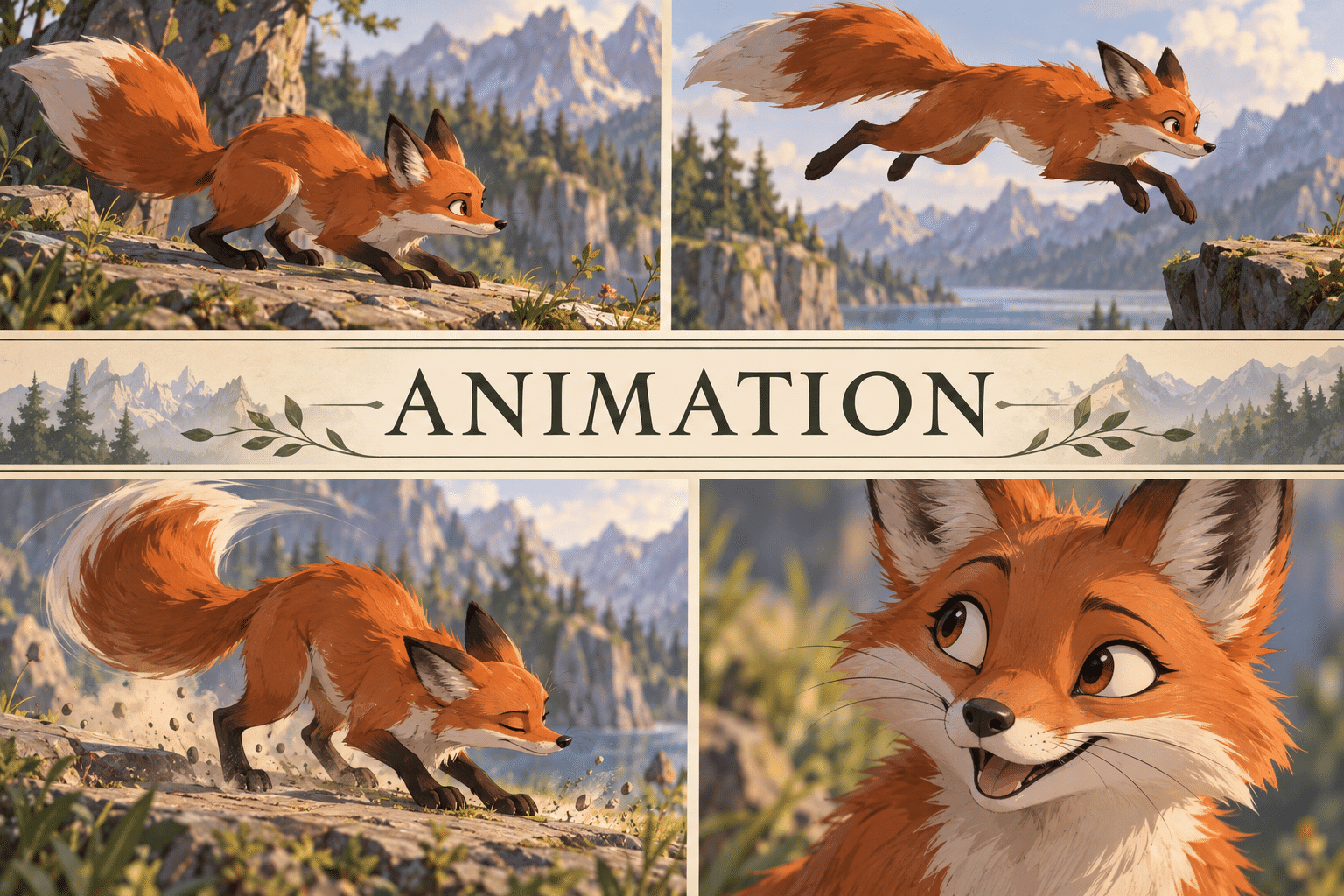
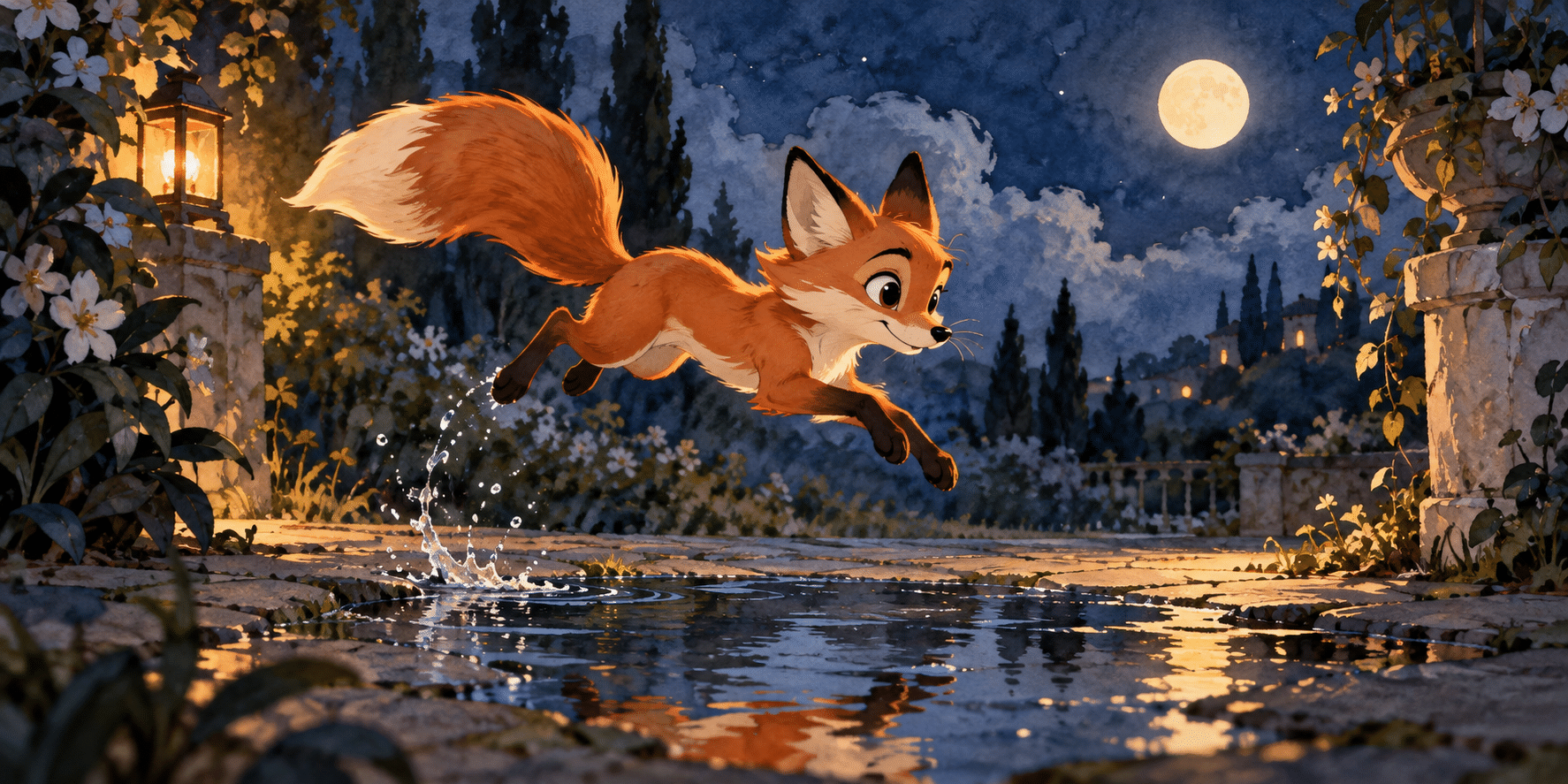
An original illustrative example and a centrally titled four-study collage. These AI-generated images explain visual possibilities; they do not document historical works or certify a physical construction.
Select an image for a closer look. Use the thumbnails, arrow keys or a swipe to compare examples. Zoom in to inspect details, or share the image that inspires you.
Creative toolbox · take this style further
Choose an input and a destination. Search sends your words to the chosen site; Copy & open puts them on your clipboard to paste there.
Create with AI
Turn your chosen input into an image prompt or a new creative direction.
ChatGPT
Copy your input and paste it into a ChatGPT conversation or image request.
Copy & open ChatGPT (new tab)Claude · Anthropic
Develop an image prompt or explore the style in a new Claude conversation.
Copy & open Claude · Anthropic (new tab)Midjourney
Paste your input into the Imagine bar on the Create page.
Copy & open Midjourney (new tab)Adobe Firefly
Copy your input, open Firefly, and paste it into the prompt field.
Copy & open Adobe Firefly (new tab)Leonardo.Ai
Copy your input, open Leonardo, and paste it into the generation field.
Copy & open Leonardo.Ai (new tab)Image search
Find visual references. Short, concrete keywords usually work best.
Lexica
Search AI images and prompts using your selected input.
Search with this input Lexica (new tab)Pexels
Search the photo and video library. Short keywords often work best.
Search with this input Pexels (new tab)Pixabay
Search photos, illustrations and other images.
Search with this input Pixabay (new tab)Unsplash
Search photographs using the style name or your own keywords.
Search with this input Unsplash (new tab)Wikimedia Commons
Search photographs, artworks and historical images. Check each file for its source and reuse terms.
Search with this input Wikimedia Commons (new tab)Art & research
Explore artists, collections and the ideas behind a style.
Wikipedia
Search for background reading. A style may not have its own article.
Search with this input Wikipedia (new tab)WikiArt
Copy your input into WikiArt’s search to explore artists and artworks.
Copy & open WikiArt (new tab)Europeana
Paste your keywords into the search to explore European museum, library and archive collections.
Copy & open Europeana (new tab)Inspiration
Discover portfolios and visual ideas from creative communities.
Instagram hashtags
Search a hashtag made from your input: spaces and punctuation are removed. Instagram may require sign-in.
Search with this input Instagram hashtags (new tab)ArtStation
Paste your input into artwork search for concept art, environments, characters and visual development.
Copy & open ArtStation (new tab)Behance
Paste your input into project search for illustration, design and visual storytelling.
Copy & open Behance (new tab)A closer look
Readable poses, controlled silhouettes, staging, timed transitions and coherent changes of shape. A finished animation can be flat, painterly, sculptural or nearly photographic; one cartoon appearance does not define the medium.
A medium with many visual languages
This entry covers animation broadly, rather than treating clay animation, anime or a particular studio look as interchangeable names. The Disney-hosted short The Illusion of Life demonstrates movement principles associated with Frank Thomas and Ollie Johnston’s book. It is a useful introduction to deliberate timing and action, not a rule that all animation must resemble Disney films.
A still illustration cannot demonstrate actual timing. The example and collage here are concept studies: they suggest poses and stages of an action. A moving version would require a sequence whose spacing, duration and transitions are tested in playback.
Give a simple action a clear shape
Choose one action, such as a fox crossing a puddle. Establish the initial balance, the preparation for a jump, the airborne pose and the landing. Keep the head, body and tail understandable as a silhouette. Place the puddle so its scale explains why the character moves.
Change one aspect at a time. A longer pause before the jump may suggest hesitation; a rapid preparation may suggest confidence. Those meanings emerge from performance and context, not a universal equation between a pose and an emotion.
Build and compare a short study
Sketch several key positions, then test the intervals between them. Keep the camera fixed for the first study so changes of staging do not conceal problems in motion. Compare the action with and without a small follow-through of the tail or clothing.
When prompting a still, ask for one readable moment or a clearly separated sequence sheet. Do not mistake extra limbs or accidental doubled features for useful motion. For a real sequence, check continuity, contact with the ground and the pace of the return to rest.
A small poetic detour
Original words from the AOI studio.
Poetry
A pause, a bend, a little flight;
Four drawings teach the dark to light.
The tail arrives a beat behind,
And leaves a thought inside the mind.
The prompt workshop
Original creative exercises. These prompts create new illustrations, not documentary evidence.
Start here · The airborne moment
Original animation concept illustration of a small copper fox leaping over a puddle, one clear curved line of action, readable paws and tail, quiet moonlit garden and navy–amber palette. A single still key-pose study, no motion-blur clutter, text or signature.
Sequence · From pause to landing
Four-panel original animation pose study of the same fox: quiet stance, anticipation crouch, airborne leap and stable landing. Consistent proportions, fixed side camera and ground line, clear spacing between panels. No words or numbering.
Experimental · A paper leaf wakes
Original cut-paper animation concept still: a folded leaf character stretching toward a patch of sunlight, layered paper surfaces, readable silhouette, one bent stem suggesting a gesture. Restrained warm green palette, no text or signature.
Your next inspiration
Discover another art style
Follow a visual thread to the next subject.
A smile from the studio
Jokes
The in-between frame wanted a leading role.
The fox rehearsed its pause until the director called it a still life.