
THE ART CATALOG · FIND A WAY IN
Art styles, categories & tags
A good catalog gives curiosity somewhere to go. Explore art movements, techniques, visual traditions and original AOI concepts—and learn what the labels actually tell you.
THREE WAYS TO EXPLORE
Start with a name. Or a feeling.
You do not need to know the correct art-historical term before you look. Choose the route that fits your question; each takes you towards individual guides with images, context and ideas for making art.

01 · SEARCH & COMPARE
The Style Atlas
Filter by category or tag, search for a visual idea and compare up to three entries. Best when you want to discover connections or narrow a broad interest.
Explore the Atlas →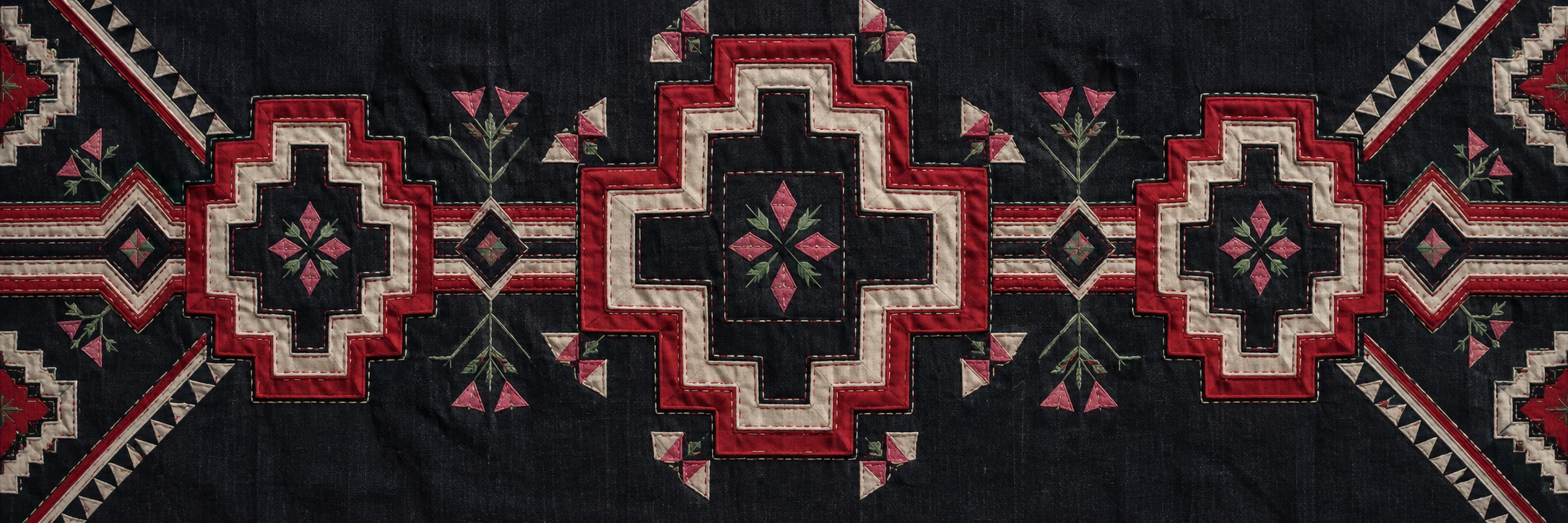
02 · FIND & READ
The Art Style Database
Browse the catalog’s main index and open a guide. Best when you have a style name in mind or want the longer explanation behind an image.
Browse the database →
03 · LOOK & WANDER
The Art Stream
Let a moving wall of catalog images suggest your next discovery. Pause, look closer and open the guide that catches your eye.
Enter the Art Stream →AI-generated catalog illustrations, from left to right: Y2K Design, Hmong Textile Pattern and Luminism. These are interpretations, not historical objects.
A label is a starting point, not a certificate
Our catalog brings established subjects and creative experiments into the same place. That is useful for exploring images, but the distinction matters when you write about art, teach it or borrow from a living tradition.
- Established subject
- An entry discusses a recognised subject, tradition, movement or technique. Read its historical context and sources; the label does not turn an AI-generated illustration into an authentic period artwork.
- AOI creative concept
- An invented or speculative visual idea developed for creative exploration. Enjoy it as an idea, without treating its name as evidence of a documented historical movement.
- Mixed
- An entry combines influences. Its guide should explain which parts refer to existing practices and which parts are creative interpretation.
- Not classified
- The entry has not yet received this distinction in the Atlas. This is a gap in classification, not a judgement of quality or a claim of historical status.
For culturally specific subjects, look beyond colour and pattern. The Hmong Textile Pattern guide, for example, is a route into context and sources—not permission to describe any generated geometric fabric as authentic Hmong work.
Turn a promising image into a useful discovery
- Choose one question. Are you interested in a medium, a mood, a composition or a particular tradition? Begin with a broad category or a few search words.
- Open the guide behind the picture. Read its definition, visual characteristics, historical or creative status and sources. A thumbnail can suggest an atmosphere; it cannot supply the whole explanation.
- Compare with purpose. In the Atlas, place up to three entries side by side. Look for differences in light, line, surface and space rather than simply collecting impressive names.
- Take something specific into your own work. Describe what you want to explore: a restrained palette, a crowded contour, an unusually quiet horizon. Use the guide’s AI-generation discussion where available, then judge the result rather than trusting the label in your prompt.
Try Luminism for a close look at light and stillness, or Y2K Design for chrome, translucency and technological optimism. Very different company. Both benefit from looking twice.
For longer reflections and experiments, visit the Art Style Diary or continue into the Art archive below.