
AOI creative concept · Weather and water
Define a landscape by the parts apparently rubbed away by a single direction of wind.
An AOI creative concept, not an established historical movement.
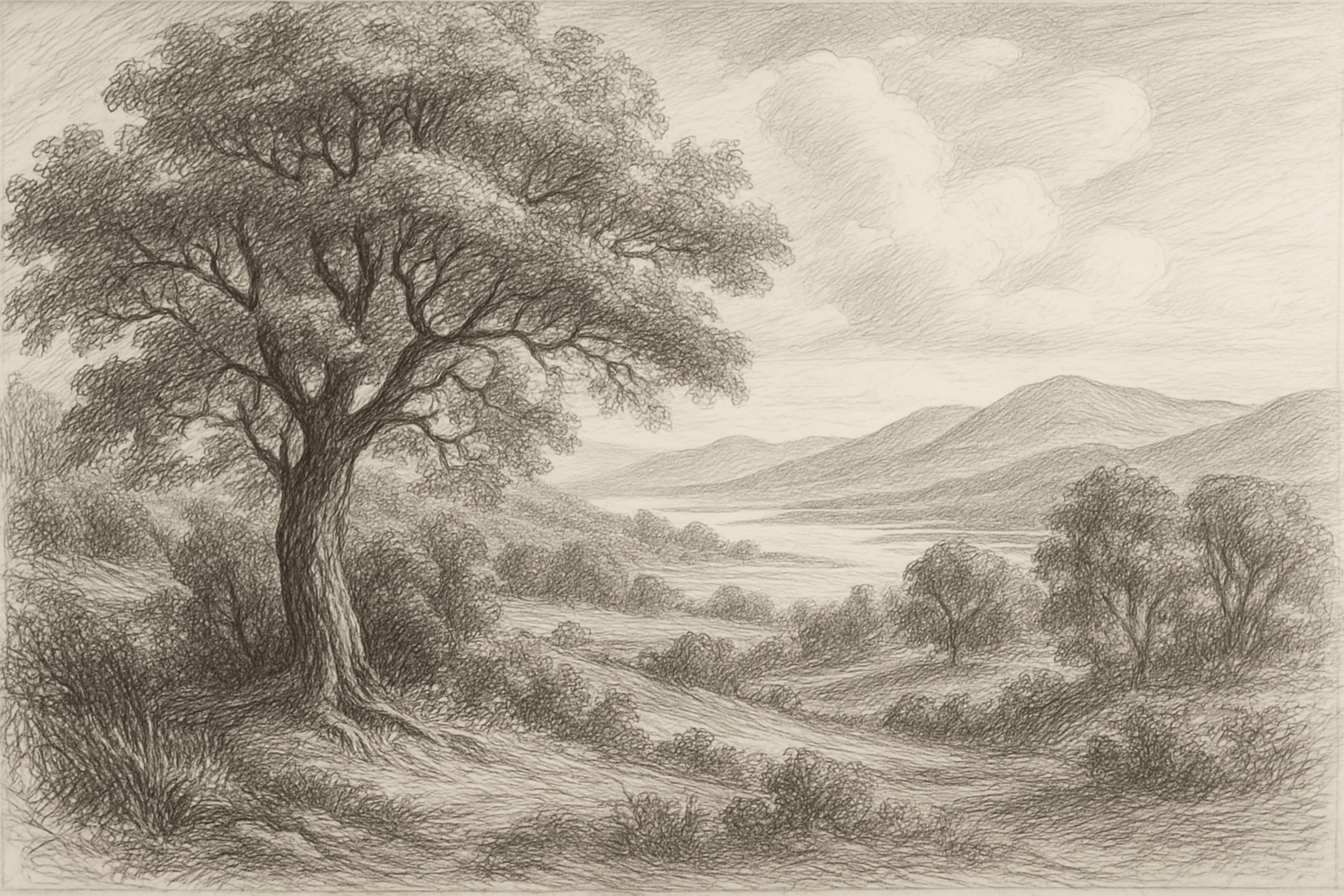
A closer look
Graphite, faded green and unpainted ivory; rubbed drawing surface. The focal scene: a low tree and fence erased from one consistent direction.
Give atmosphere a boundary
Define a landscape by the parts apparently rubbed away by a single direction of wind. Solid forms remain on the sheltered side, while exposed edges dissolve into bare support. Erasure must follow the same directional rule throughout the picture.
Stage the weather
Draw a dark low tree and a small fence across a pale field. Remove portions of their left edges with broad diagonal gaps, leaving the right edges intact. Carry a few faint residual marks into the empty sky. Keep the ground line stable enough that the scene does not simply look unfinished.
Test the spatial rule
If every object dissolves in a different direction, the shared force becomes unreadable. Resist filling the erased areas with decorative particles. The exposed paper is active material; its emptiness should describe the wind more clearly than a spray of extra marks.
Technique notes
Apply the directional erasure to a row of stacked bowls, preserving their sheltered rims while removing the same exposed quadrant from each.
When prompting an image model, spell out the rule and visible relationships. The invented style name alone is not a reliable instruction. Compare outputs against the critique above and revise the specific failed relationship.
The prompt workshop
Original creative exercises. These prompts create new illustrations, not documentary evidence.
Start with the defining rule
Create an original illustration of a low tree and fence erased from one consistent direction. Define a landscape by the parts apparently rubbed away by a single direction of wind. Solid forms remain on the sheltered side, while exposed edges dissolve into bare support. Erasure must follow the same directional rule throughout the picture. Use graphite, faded green and unpainted ivory; rubbed drawing surface. Keep the composition readable, with a clear focal area and quiet surrounding space. No lettering, signatures or watermark.
Build the fuller composition
Create an original Windward Erasure composition. Draw a dark low tree and a small fence across a pale field. Remove portions of their left edges with broad diagonal gaps, leaving the right edges intact. Carry a few faint residual marks into the empty sky. Keep the ground line stable enough that the scene does not simply look unfinished. Use graphite, faded green and unpainted ivory; rubbed drawing surface. Preserve the defining constraint: Define a landscape by the parts apparently rubbed away by a single direction of wind. Avoid decorative clutter, readable text and watermarks.
Try a deliberate variation
Create an experimental illustration based on this rule: Define a landscape by the parts apparently rubbed away by a single direction of wind. Solid forms remain on the sheltered side, while exposed edges dissolve into bare support. Erasure must follow the same directional rule throughout the picture. Variation: Apply the directional erasure to a row of stacked bowls, preserving their sheltered rims while removing the same exposed quadrant from each. Use graphite, faded green and unpainted ivory; rubbed drawing surface. Make the changed relationship unmistakable while keeping supporting details restrained. No captions, signatures or watermark.
Look closer
Explore the image gallery
Select an image to enlarge it. Browse with the arrows, and press Escape to return.
Your next inspiration
Discover another art style
Follow a visual thread to the next subject.