
AOI creative concept · Botanical structures
Treat overlapping petals as the blades of an imaginary optical aperture.
An AOI creative concept, not an established historical movement.
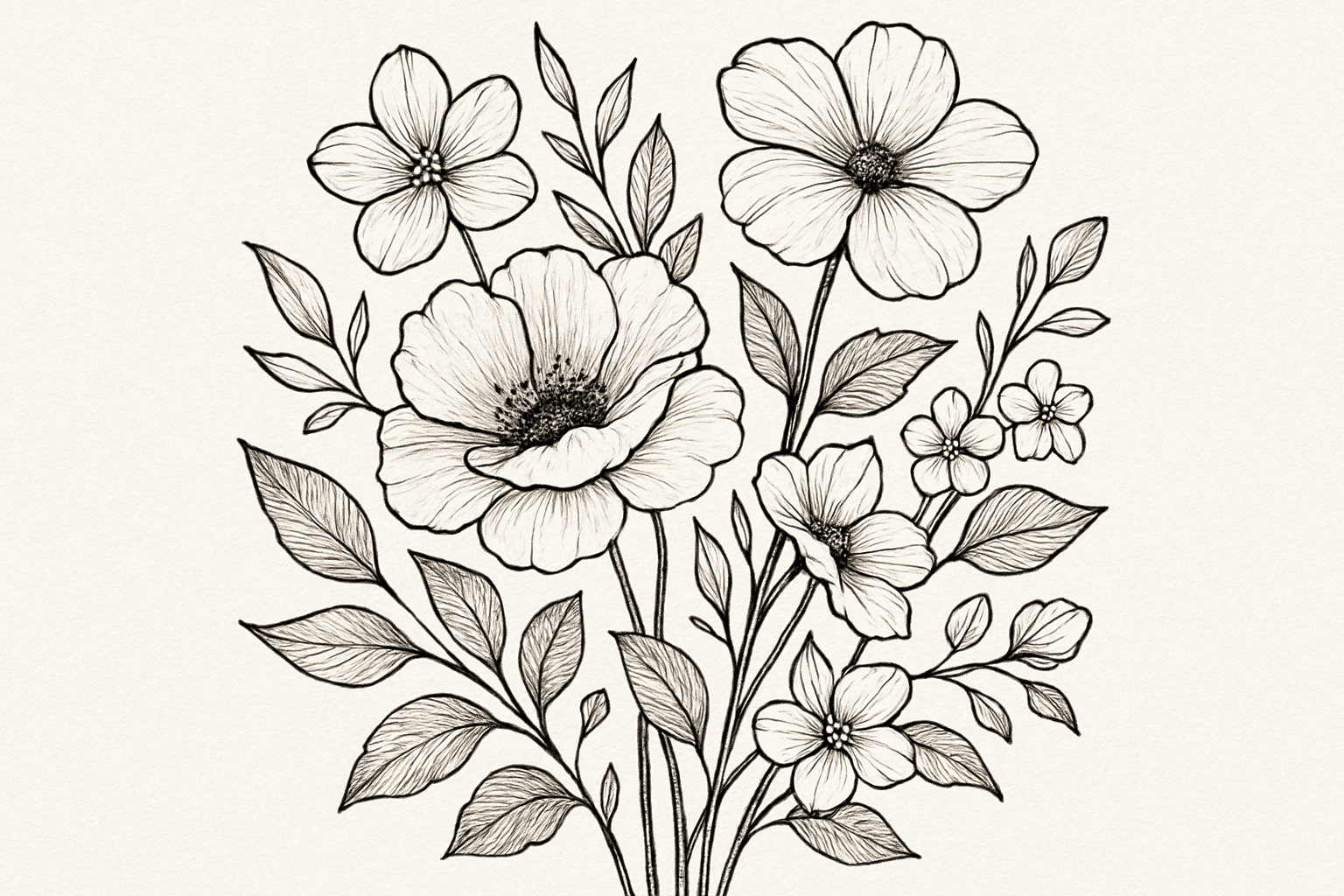
A closer look
Rose, aubergine and porcelain white; velvety petals. The focal scene: a small cup framed by an asymmetric petal aperture.
A constructed organic language
Treat overlapping petals as the blades of an imaginary optical aperture. Their opening frames a sharply defined subject while the petal surfaces remain broad and tactile. The picture depends on a shaped gap, not on a lavish bouquet.
Compose the main relationship
Arrange six unequal petals around a small ceramic cup seen from above. Let one petal overlap the rim and another pull back to reveal the handle. Use a pale center and darker outer corners to guide attention through the opening. Keep veins subtle and avoid copying the exact symmetry of a mechanical shutter.
Keep the structure legible
A perfectly even floral ring is too passive. Change one overlap until the gap has a direction and a point of tension. If the cup competes through excessive decoration, simplify it; its role is to make the opening's scale and shape understandable.
Technique notes
Replace the cup with a distant doorway, using oversized petals to make the aperture feel architectural while preserving their soft edges.
When prompting an image model, spell out the rule and visible relationships. The invented style name alone is not a reliable instruction. Compare outputs against the critique above and revise the specific failed relationship.
The prompt workshop
Original creative exercises. These prompts create new illustrations, not documentary evidence.
Start with the defining rule
Create an original illustration of a small cup framed by an asymmetric petal aperture. Treat overlapping petals as the blades of an imaginary optical aperture. Their opening frames a sharply defined subject while the petal surfaces remain broad and tactile. The picture depends on a shaped gap, not on a lavish bouquet. Use rose, aubergine and porcelain white; velvety petals. Keep the composition readable, with a clear focal area and quiet surrounding space. No lettering, signatures or watermark.
Build the fuller composition
Create an original Petal Aperture Studies composition. Arrange six unequal petals around a small ceramic cup seen from above. Let one petal overlap the rim and another pull back to reveal the handle. Use a pale center and darker outer corners to guide attention through the opening. Keep veins subtle and avoid copying the exact symmetry of a mechanical shutter. Use rose, aubergine and porcelain white; velvety petals. Preserve the defining constraint: Treat overlapping petals as the blades of an imaginary optical aperture. Avoid decorative clutter, readable text and watermarks.
Try a deliberate variation
Create an experimental illustration based on this rule: Treat overlapping petals as the blades of an imaginary optical aperture. Their opening frames a sharply defined subject while the petal surfaces remain broad and tactile. The picture depends on a shaped gap, not on a lavish bouquet. Variation: Replace the cup with a distant doorway, using oversized petals to make the aperture feel architectural while preserving their soft edges. Use rose, aubergine and porcelain white; velvety petals. Make the changed relationship unmistakable while keeping supporting details restrained. No captions, signatures or watermark.
Look closer
Explore the image gallery
Select an image to enlarge it. Browse with the arrows, and press Escape to return.

Your next inspiration
Discover another art style
Follow a visual thread to the next subject.