
AOI creative concept · Rhythm and geometric systems
Let a grid appear to breathe through changes in spacing alone.
An AOI creative concept, not an established historical movement.
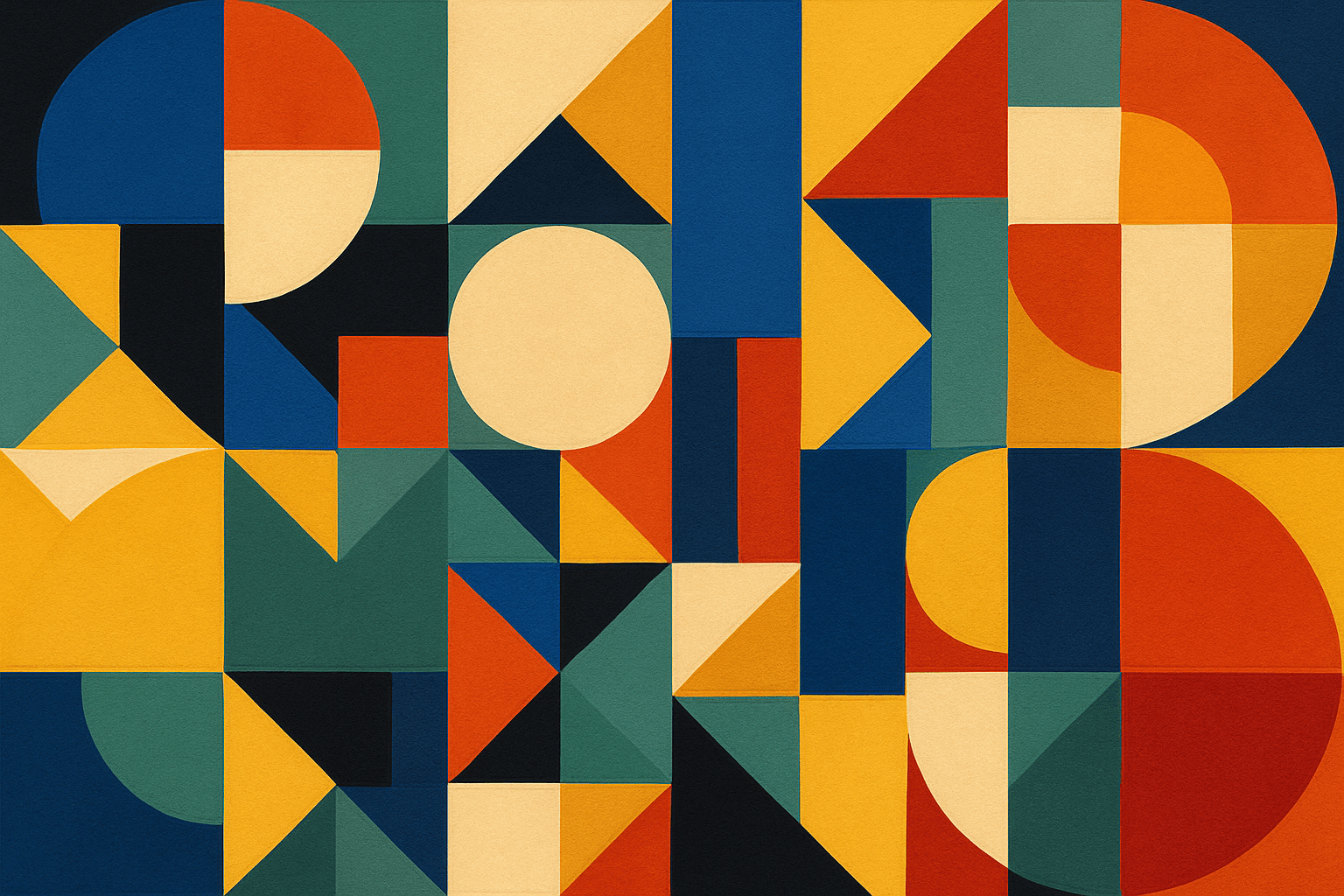
A closer look
Dark blue and warm white; continuous uniform-weight grid lines. The focal scene: a regular-boundary grid expanding in one corner and compressing in another.
Establish the system
Let a grid appear to breathe through changes in spacing alone. Lines remain the same weight and color, but one region expands while another compresses. The image should feel spatially active without requiring a color gradient or animated effect.
Place the shapes
Draw a square grid with a broad expanded region near the upper left and a tight compressed region near the lower right. Keep the outer boundary regular. Let the change in spacing occur gradually across several cells, preserving continuous lines throughout. Use a single dark ink on a pale ground.
Make the exception count
Changing line weight as well as spacing may obscure the mechanism. First make the effect work with identical strokes. Check for accidental broken lines, which can make the grid look damaged instead of deliberately redistributed around areas of expansion and compression.
Technique notes
Print the grid concept onto a hanging cloth illustration and let a small real fold oppose the drawn expansion, creating a second spatial reading.
When prompting an image model, spell out the rule and visible relationships. The invented style name alone is not a reliable instruction. Compare outputs against the critique above and revise the specific failed relationship.
The prompt workshop
Original creative exercises. These prompts create new illustrations, not documentary evidence.
Start with the defining rule
Create an original illustration of a regular-boundary grid expanding in one corner and compressing in another. Let a grid appear to breathe through changes in spacing alone. Lines remain the same weight and color, but one region expands while another compresses. The image should feel spatially active without requiring a color gradient or animated effect. Use dark blue and warm white; continuous uniform-weight grid lines. Keep the composition readable, with a clear focal area and quiet surrounding space. No lettering, signatures or watermark.
Build the fuller composition
Create an original Gridbreath Gradients composition. Draw a square grid with a broad expanded region near the upper left and a tight compressed region near the lower right. Keep the outer boundary regular. Let the change in spacing occur gradually across several cells, preserving continuous lines throughout. Use a single dark ink on a pale ground. Use dark blue and warm white; continuous uniform-weight grid lines. Preserve the defining constraint: Let a grid appear to breathe through changes in spacing alone. Avoid decorative clutter, readable text and watermarks.
Try a deliberate variation
Create an experimental illustration based on this rule: Let a grid appear to breathe through changes in spacing alone. Lines remain the same weight and color, but one region expands while another compresses. The image should feel spatially active without requiring a color gradient or animated effect. Variation: Print the grid concept onto a hanging cloth illustration and let a small real fold oppose the drawn expansion, creating a second spatial reading. Use dark blue and warm white; continuous uniform-weight grid lines. Make the changed relationship unmistakable while keeping supporting details restrained. No captions, signatures or watermark.
Look closer
Explore the image gallery
Select an image to enlarge it. Browse with the arrows, and press Escape to return.

Your next inspiration
Discover another art style
Follow a visual thread to the next subject.