
Cross-cultural subject and devotional practice
Religious painting brings painted images into relationships with belief, narrative, worship and remembrance. It is a broad field, not one historical movement or a single visual style. An altarpiece, a Tibetan thangka, a Krishna painting and a synagogue mural need different questions about their makers, communities and uses.
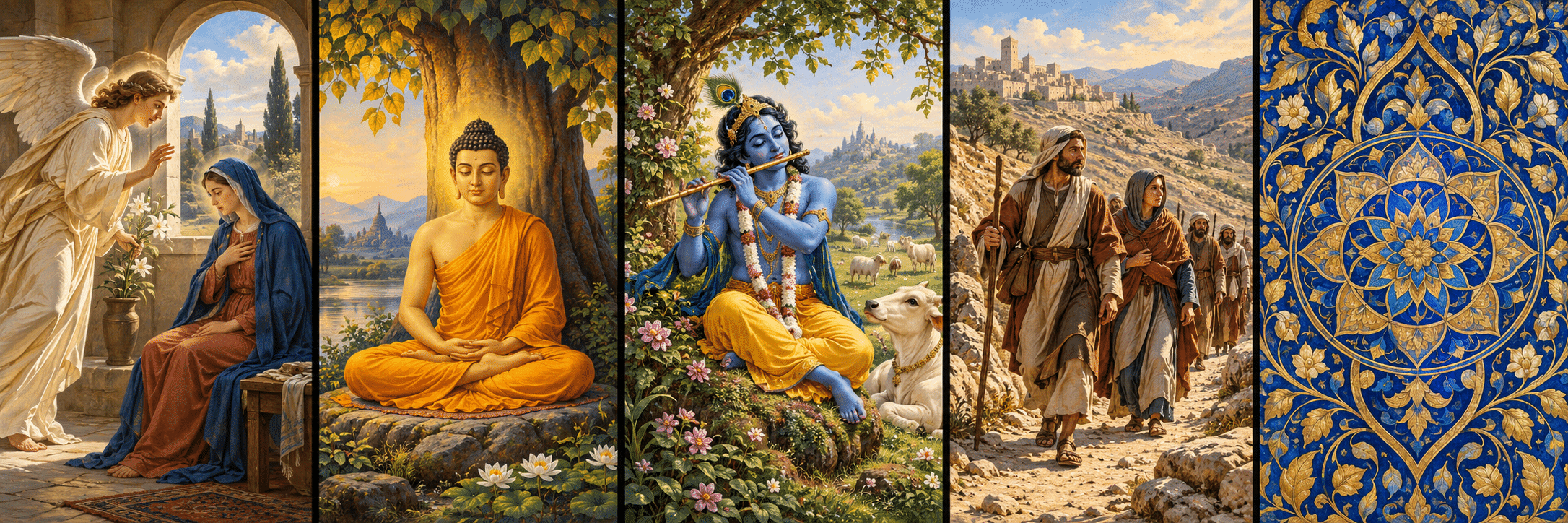
A visual introduction
Select an image for a closer look. Use the thumbnails, arrow keys or a swipe to compare examples. Zoom in to inspect details, or share the image that inspires you.
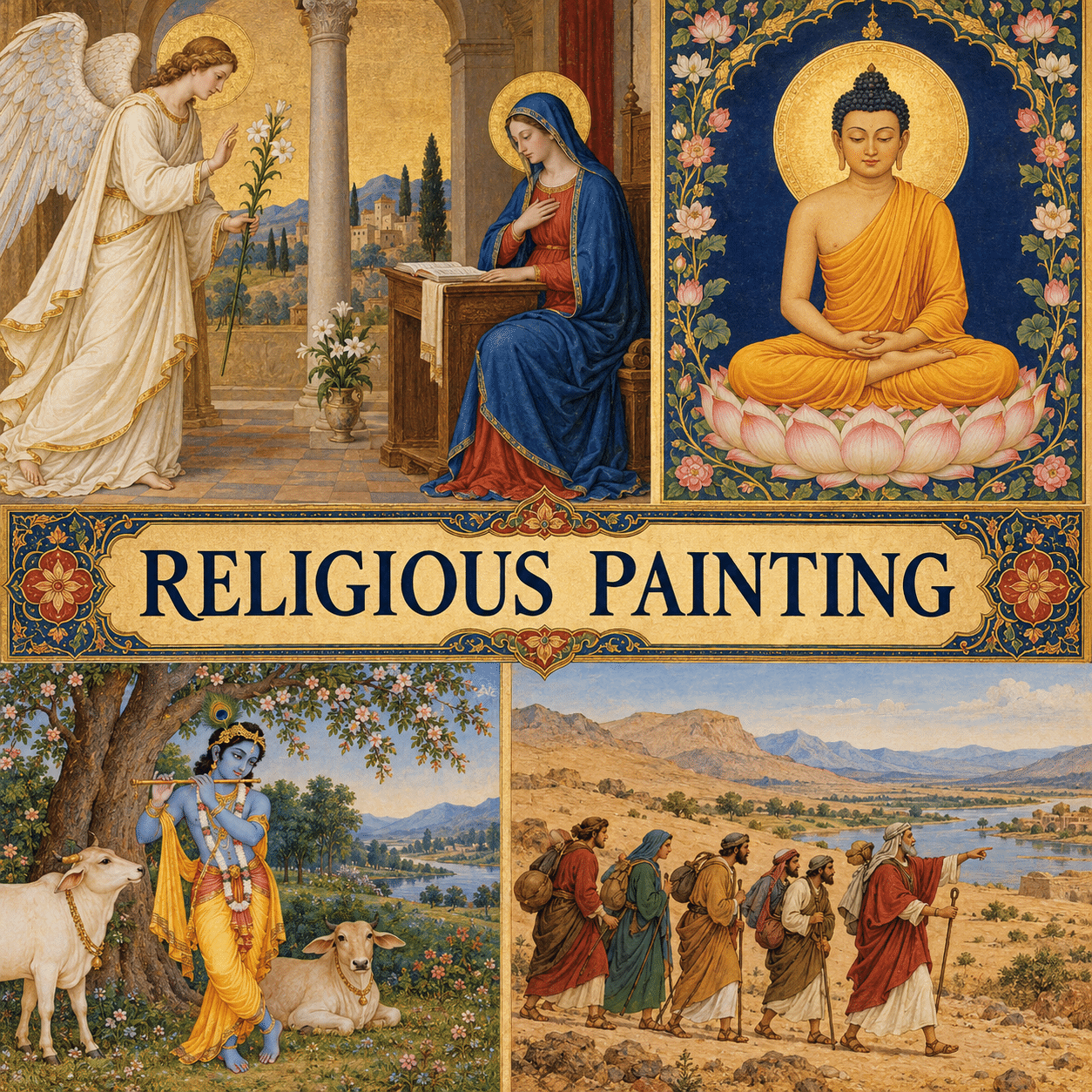
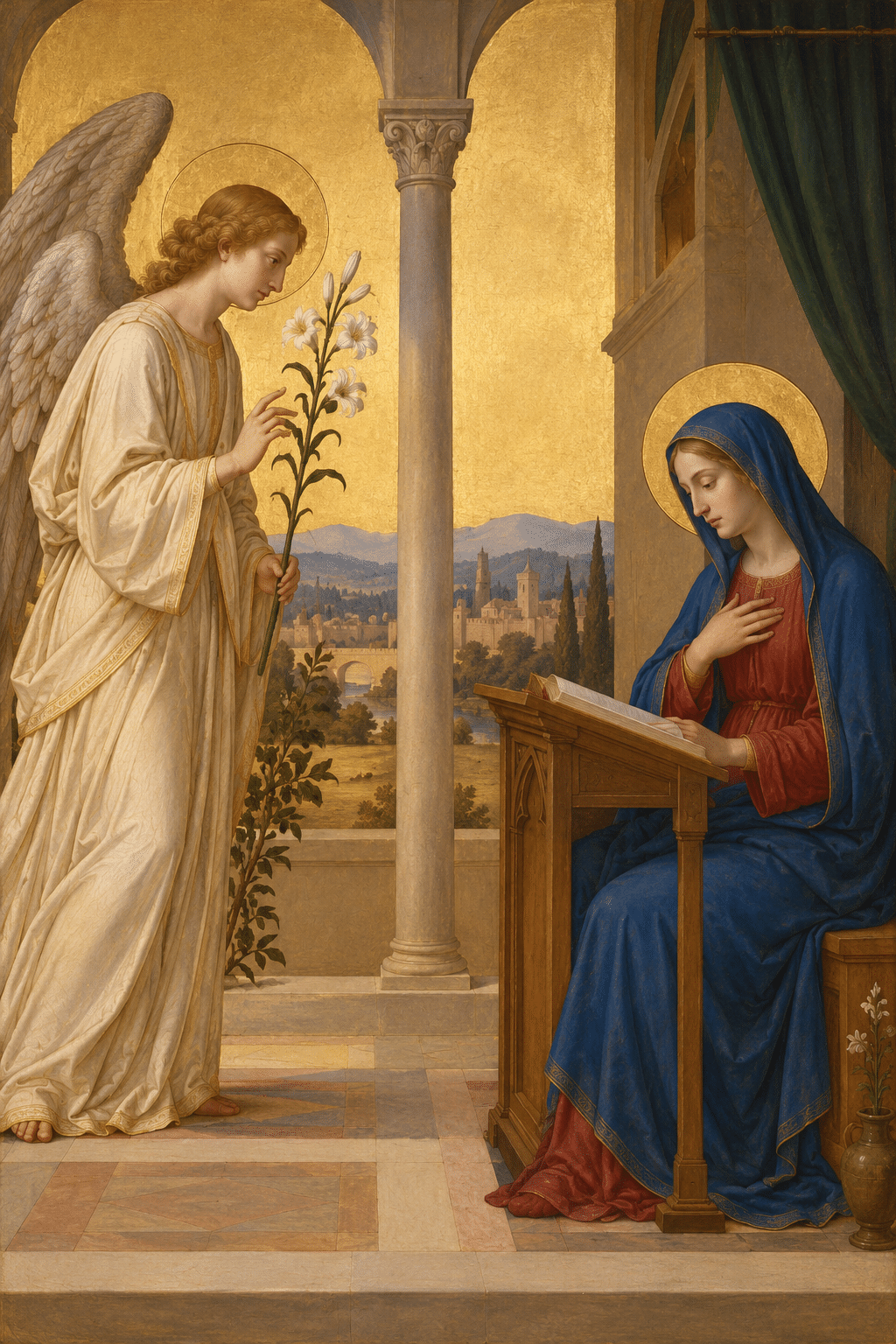
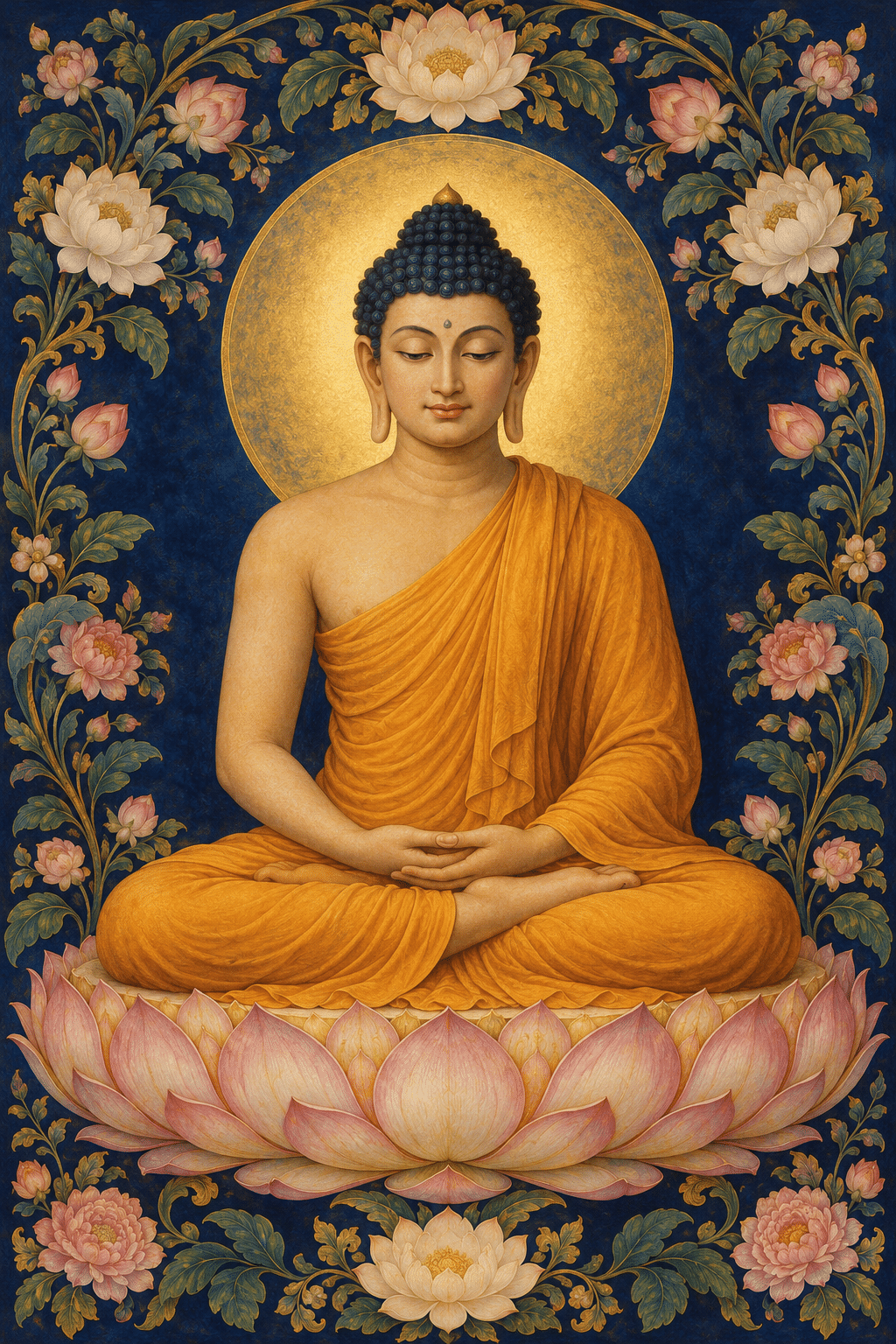

Creative toolbox · take this style further
Choose an input and a destination. Search sends your words to the chosen site; Copy & open puts them on your clipboard to paste there.
Create with AI
Turn your chosen input into an image prompt or a new creative direction.
ChatGPT
Copy your input and paste it into a ChatGPT conversation or image request.
Copy & open ChatGPT (new tab)Claude · Anthropic
Develop an image prompt or explore the style in a new Claude conversation.
Copy & open Claude · Anthropic (new tab)Midjourney
Paste your input into the Imagine bar on the Create page.
Copy & open Midjourney (new tab)Adobe Firefly
Copy your input, open Firefly, and paste it into the prompt field.
Copy & open Adobe Firefly (new tab)Leonardo.Ai
Copy your input, open Leonardo, and paste it into the generation field.
Copy & open Leonardo.Ai (new tab)Image search
Find visual references. Short, concrete keywords usually work best.
Lexica
Search AI images and prompts using your selected input.
Search with this input Lexica (new tab)Pexels
Search the photo and video library. Short keywords often work best.
Search with this input Pexels (new tab)Pixabay
Search photos, illustrations and other images.
Search with this input Pixabay (new tab)Unsplash
Search photographs using the style name or your own keywords.
Search with this input Unsplash (new tab)Wikimedia Commons
Search photographs, artworks and historical images. Check each file for its source and reuse terms.
Search with this input Wikimedia Commons (new tab)Art & research
Explore artists, collections and the ideas behind a style.
Wikipedia
Search for background reading. A style may not have its own article.
Search with this input Wikipedia (new tab)WikiArt
Copy your input into WikiArt’s search to explore artists and artworks.
Copy & open WikiArt (new tab)Europeana
Paste your keywords into the search to explore European museum, library and archive collections.
Copy & open Europeana (new tab)Inspiration
Discover portfolios and visual ideas from creative communities.
Instagram hashtags
Search a hashtag made from your input: spaces and punctuation are removed. Instagram may require sign-in.
Search with this input Instagram hashtags (new tab)ArtStation
Paste your input into artwork search for concept art, environments, characters and visual development.
Copy & open ArtStation (new tab)Behance
Paste your input into project search for illustration, design and visual storytelling.
Copy & open Behance (new tab)A closer look
Look for the relationship between image and viewer: frontal presence, narrative sequence, gestures, sacred attributes, patterned fields, framing and the space where the painting is encountered. None of these features belongs to every religion. Gold, brilliant colour and naturalism are possibilities, not compulsory ingredients.
Begin with purpose, not a universal style
A religious subject does not tell us everything about a painting’s function. An image may accompany communal worship, support private devotion, narrate a sacred story, honour a donor, or examine inherited belief. A contemporary artist may also approach the same subject critically. Ask who made the object, for whom, and where it was intended to be seen. Those questions prevent a spiritual atmosphere from becoming a substitute for history.
This introduction compares selected examples rather than surveying every tradition. Religious painting neither begins with the Renaissance nor belongs exclusively to Christianity. Nor do all communities accept the same kinds of images. Distinguish an image’s subject from the ways people handle, display, interpret or venerate the object. A museum label and a practitioner’s account may describe different aspects of the same thing.
Christian altarpieces: an image within an arrangement
The National Gallery’s Devotion by Design exhibition explains Italian altarpieces through their original sacred settings. Frames, separate panels and surrounding architecture helped shape how worshippers encountered the images. A fragment displayed at eye level in a museum can therefore give a very different impression from the ensemble for which it was made. [1]
For close looking, trace the main figure’s scale, the directions of glances and gestures, and the paths between individual scenes. Consider how a distant viewer might recognize a silhouette before seeing a small attribute. Do not treat a gilded ground as failed perspective: first ask what that surface does to the figure’s presence and to the surrounding light. This is a practical reading question, not one explanation for all Christian art.
Tibetan sacred pictures: support, patronage and practice
The Asian Art Museum distinguishes Tibetan wall paintings, portable thangkas and small ritual images. Its account describes commissions connected with meditation, thanksgiving and other religious purposes; materials and mounting could reflect a patron’s resources. Thangkas can also involve textile techniques, so the term should not be reduced to one painted format. [2]
A centred figure, ordered registers or a mandala may have specific iconographic requirements. Do not invent a ritual diagram and describe it as an authentic aid for a named practice. For an introductory visual study, keep the subject modest, identify it as an interpretation, and explain which formal relationship is being explored. Exact attributes and arrangements require more specialized sources than a general survey.
Krishna painting: narrative, protection and attention
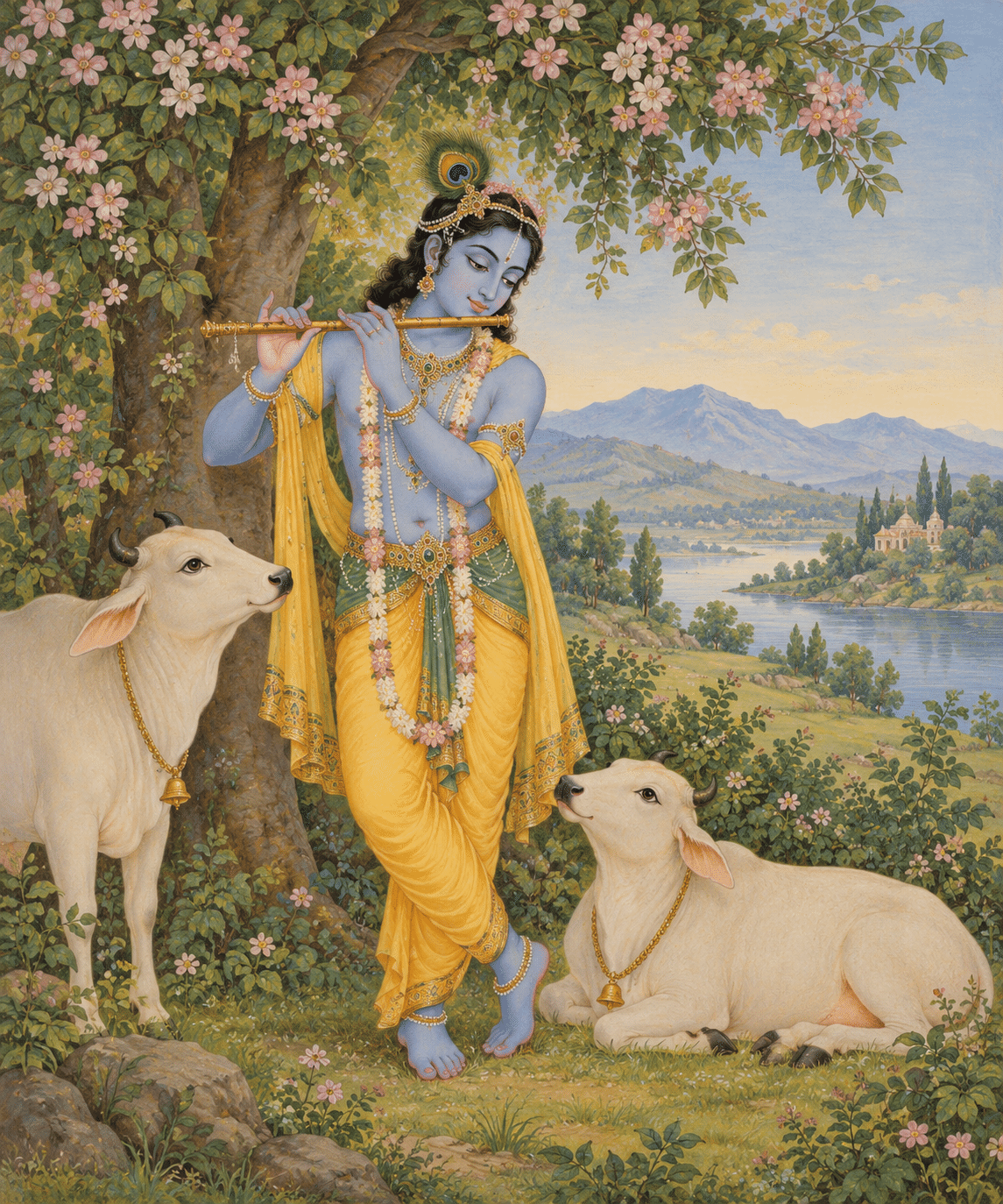
Cleveland’s Krishna Lifting Mount Govardhan, dated about 1780–90 and associated with Kangra in northern India, is made in gum tempera and gold on paper. The museum describes Krishna sheltering the herding community and cows beneath the mountain during Indra’s storm. Here a miraculous action organizes the picture’s human and animal relationships. [3]
Study how shelter creates a shared space, how the storm establishes an outside, and how a principal gesture makes the story legible. These are ways to read this subject, not a recipe for all Hindu painting. The gallery’s new pastoral Krishna image is a separate AI interpretation; it is not a reproduction of Cleveland’s object or a claim to traditional workshop authority.
Jewish and Islamic contexts: avoid blanket rules
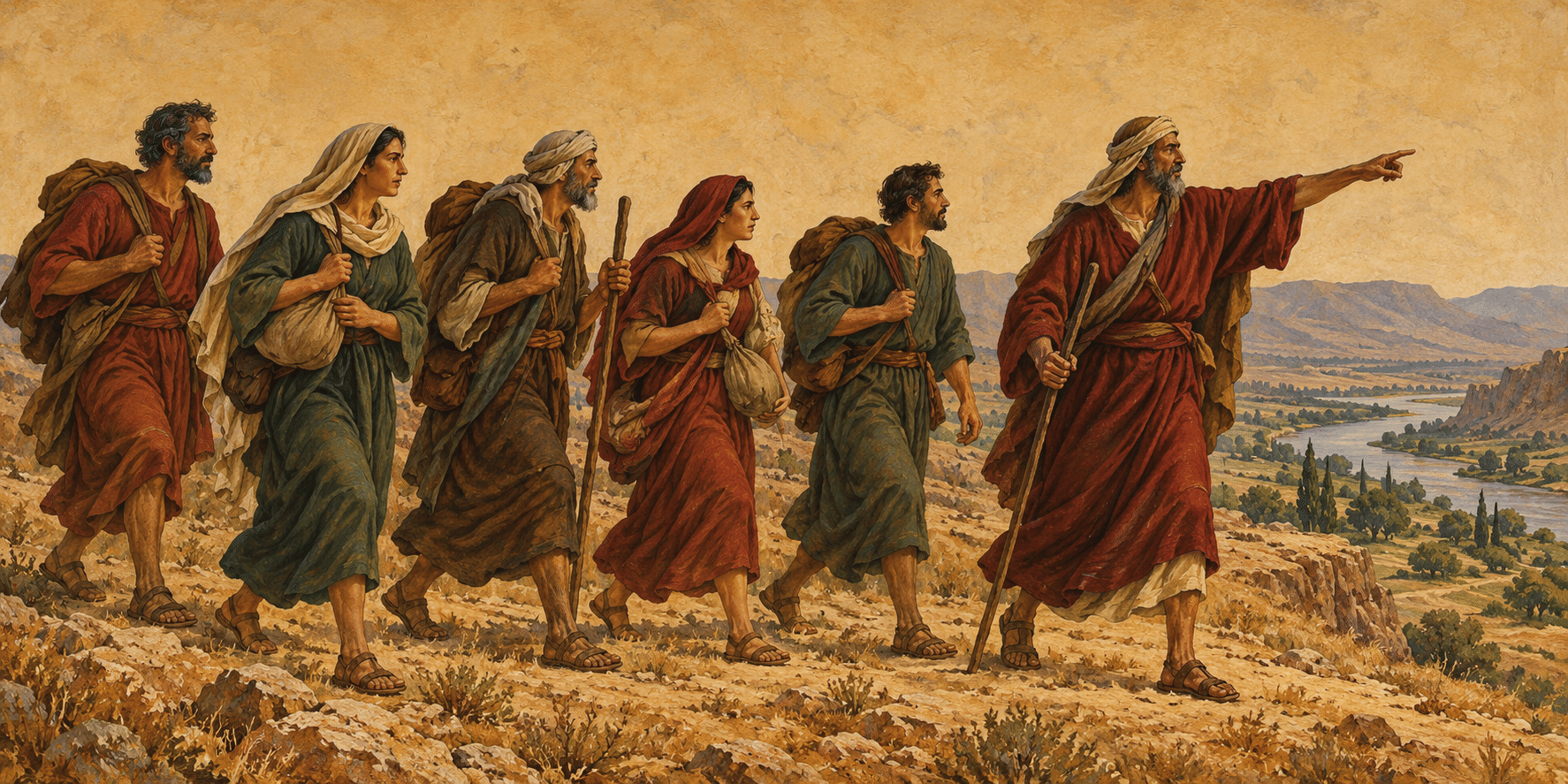
The third-century synagogue at Dura-Europos had extensive painted biblical imagery. Yale’s account describes scenes arranged in registers around a Torah shrine and distinguishes the original paintings from Herbert Gute’s later copies. This particular surviving building complicates any claim that Jewish religious settings have always excluded figures. It does not establish a universal rule for Jewish communities. [4]
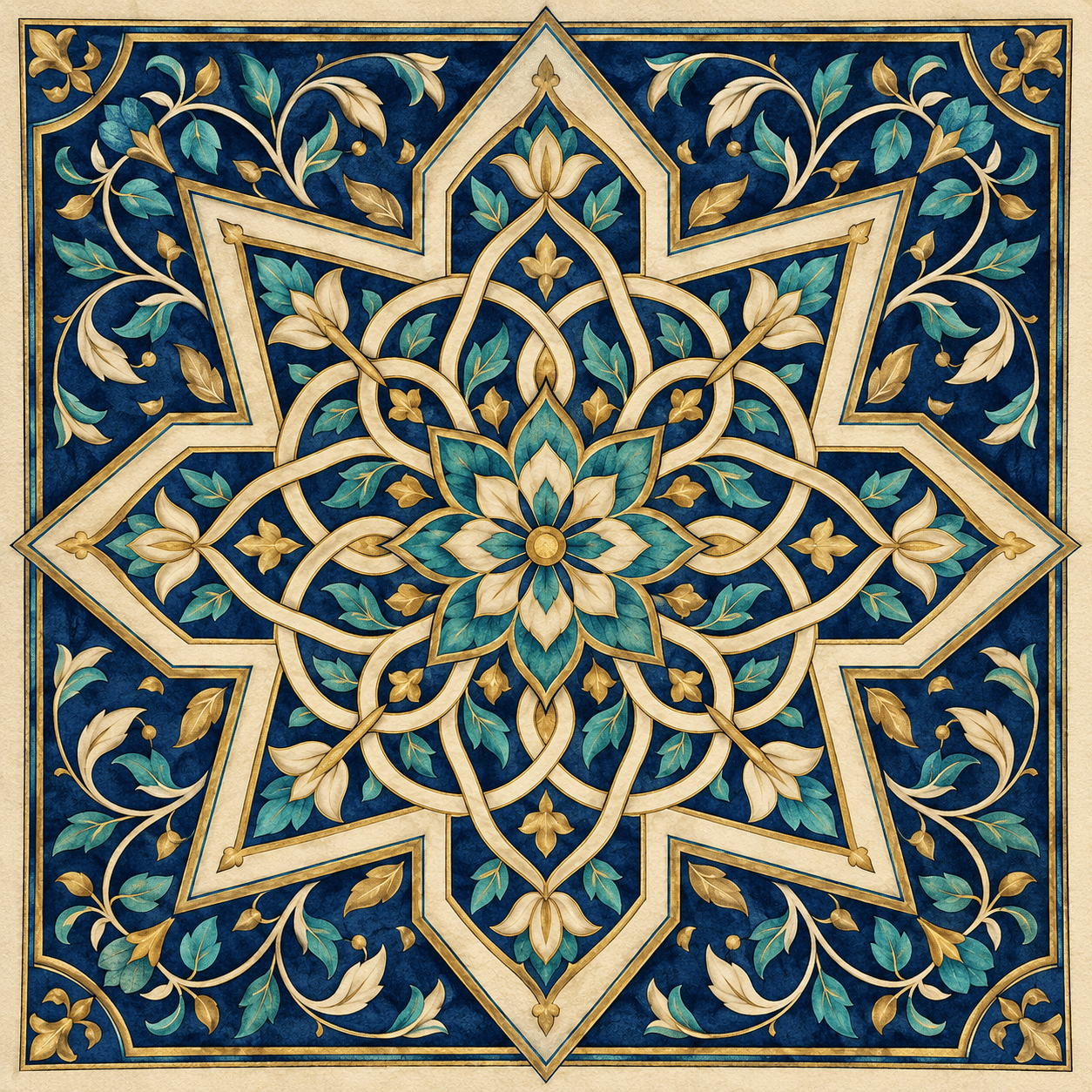
The Metropolitan Museum likewise explains that figural representation in Islamic art depends on context: religious settings and secular objects do not follow one simple pattern. Treat the broad cultural category of Islamic art separately from the narrower question of religious use. A nonfigural painted design is not automatically sacred, and a figure is not automatically evidence of a secular subject. [5]
Our nonfigural study uses interlaced geometry and foliage without invented scripture. It demonstrates a compositional possibility only. If written language is central to a proposed work, verify the wording, script, attribution and context with appropriate expertise rather than filling the image with convincing-looking nonsense.
A practical visual grammar
Choose one organizing relationship: a figure facing the viewer, a journey across successive scenes, a central image surrounded by smaller episodes, or a field of interlocking forms. Establish a focal hierarchy before adding ornament. Differences in scale may carry significance, while repetition can create rhythm or organize a sequence. Describe what you actually see before assigning a symbolic meaning.
Palette belongs to a specific object and tradition. A warm gold field, mineral blue, earth red or restrained monochrome can change the viewer’s pace, but no colour has a single meaning everywhere. Likewise, a painted panel, plaster wall, cotton support and sheet of paper invite different marks. Let the image show a deliberate surface instead of applying the same glossy finish to every example.
What the new gallery demonstrates
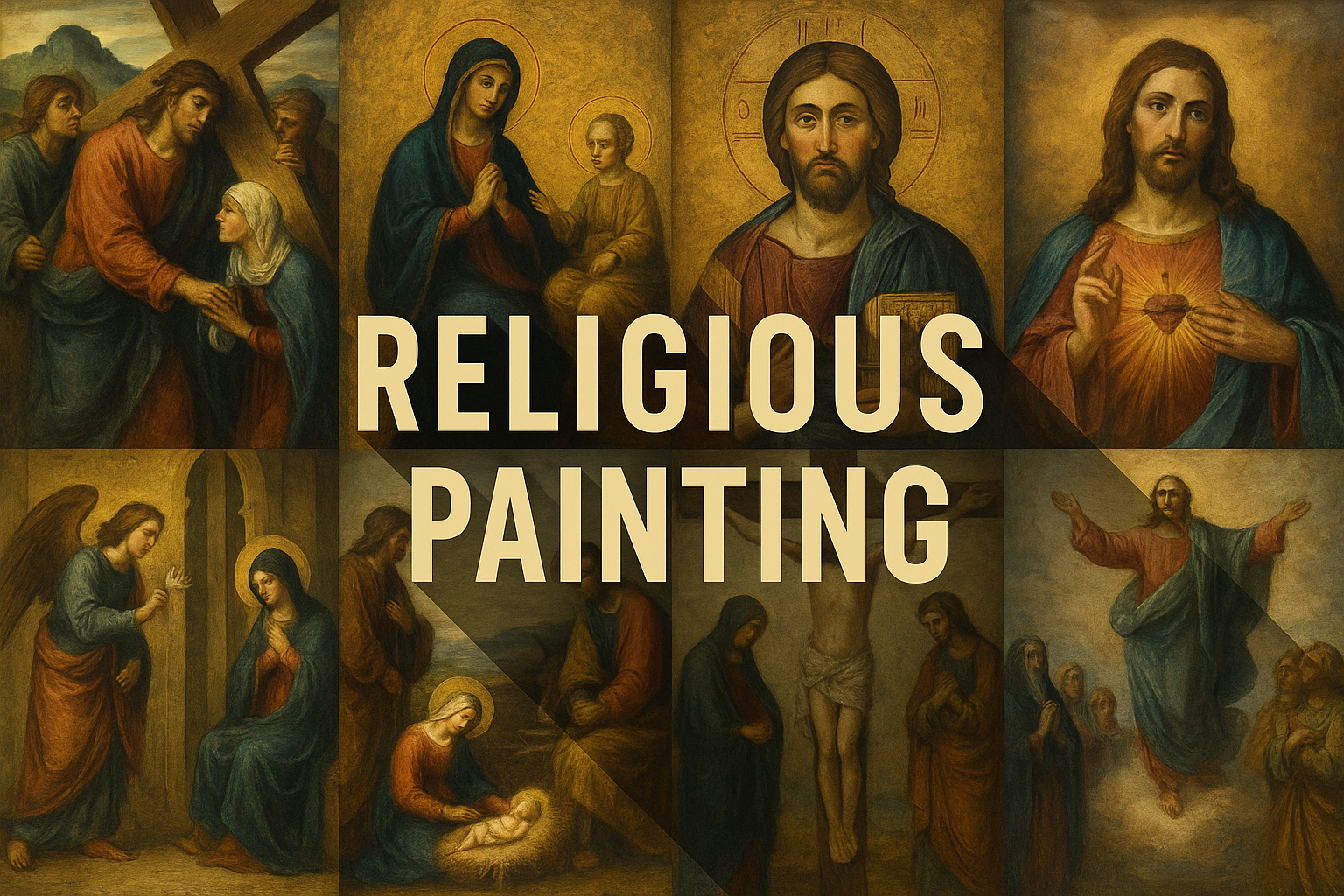
The banner presents separate painted panels as a comparative arrangement, not a unified religion. The titled collage introduces four different visual problems. Five standalone interpretations explore an Annunciation encounter, a seated Buddha, a pastoral Krishna subject, a biblical journey and a nonfigural ornamental field. They are educational AI images, not historical objects, ritual commissions or archaeological reconstructions.
Read each image through its own composition: the interval between two figures, the balance around a seated body, a flowing pastoral contour, movement across a narrative band, or the continuity of interlace. Comparison is useful when it sharpens those differences. It becomes misleading when it suggests that every sacred image says the same thing.
Making a responsible study
Start with one named subject and one documented reference context. Separate verified attributes from your own choices of lighting, framing and palette. Describe the intended use: an educational illustration needs a different caption from a commissioned devotional object. Preserve the distinction even when the result looks persuasively old.
Avoid using simulated age as evidence of authenticity. Do not claim healing effects, community endorsement or religious authority for generated work. If a picture is intended for actual communal or ritual use, consult the people who will use it. Their requirements cannot be replaced by a prompt. For personal study, a useful final test is whether the caption tells a viewer both what the picture explores and what it does not establish.
Positive editorial assessment — AI-authored
Religious painting can coordinate narrative, material and sustained attention with exceptional economy. A small gesture or interval may carry the whole encounter. Comparing specific objects reveals how different communities give visual form to memory and belief without requiring a shared pictorial formula.
Critical editorial assessment — AI-authored
A generic sacred glow easily conceals weak research. Decorative symbols, invented lettering and interchangeable figures can erase the distinctions that make an image meaningful. Improve such work by narrowing the subject, verifying attributes and allowing the intended setting to shape the composition.
Neutral editorial assessment — AI-authored
Religious painting is a broad subject spanning many periods, communities and techniques. This guide offers selected comparisons and clearly labelled contemporary exercises. It is useful for visual study and introductory prompting, but not a substitute for specialist iconography or community guidance.
A small poetic detour
Original words from the AOI studio.
Poetry
A panel holds the patient light,
a painted hand arrests the air;
the wall remembers more than sight,
the room has taught the eye its prayer.
Another cloth unfolds a place,
another story gathers rain;
we pause before a borrowed face
and learn to look, then look again.
The prompt workshop
Original creative exercises. These prompts create new illustrations, not documentary evidence.
Starting point: an encounter
Create an original painted interpretation of the Annunciation with two fully clothed adult figures, Mary at a reading desk and the angel Gabriel across a quiet architectural interval. Restrained earth red, blue and gold, clear gestures and matte panel texture. No lettering. Caption it as an AI educational interpretation, not a historical painting.
Richer composition: narrative sequence
Design an original biblical journey scene in a single horizontal painted register: a small group of fully clothed adult travellers moves from a dark doorway toward an open landscape, their gestures and repeated walking rhythm guiding the eye. Earth pigments and plaster-like texture. Do not claim this is a reconstruction of an ancient synagogue mural; no invented inscriptions.
Experiment: attention without figures
Create a nonfigural painted study using an eight-point geometric framework and carefully interlaced foliage, indigo, ivory and muted gold. Make the paths continuous and the centre legible. No scripture, pseudo-calligraphy or figures. Present it as an original educational composition, not an authenticated sacred design.
Your next inspiration
Discover another art style
Follow a visual thread to the next subject.
Early Christian Art: Images, Materials and Sacred Space
Compare a specific historical or cultural context rather than assuming one universal religious style.
Greek Painting: Ancient Images, Surviving Evidence and Visual Storytelling
Compare a specific historical or cultural context rather than assuming one universal religious style.
A smile from the studio
Jokes
The painter asked for a little more space for contemplation. The frame-maker sent a larger invoice.