
Archive note: historical claims and artist or artwork associations in this entry have not yet received a full source review.
International Typographic Style
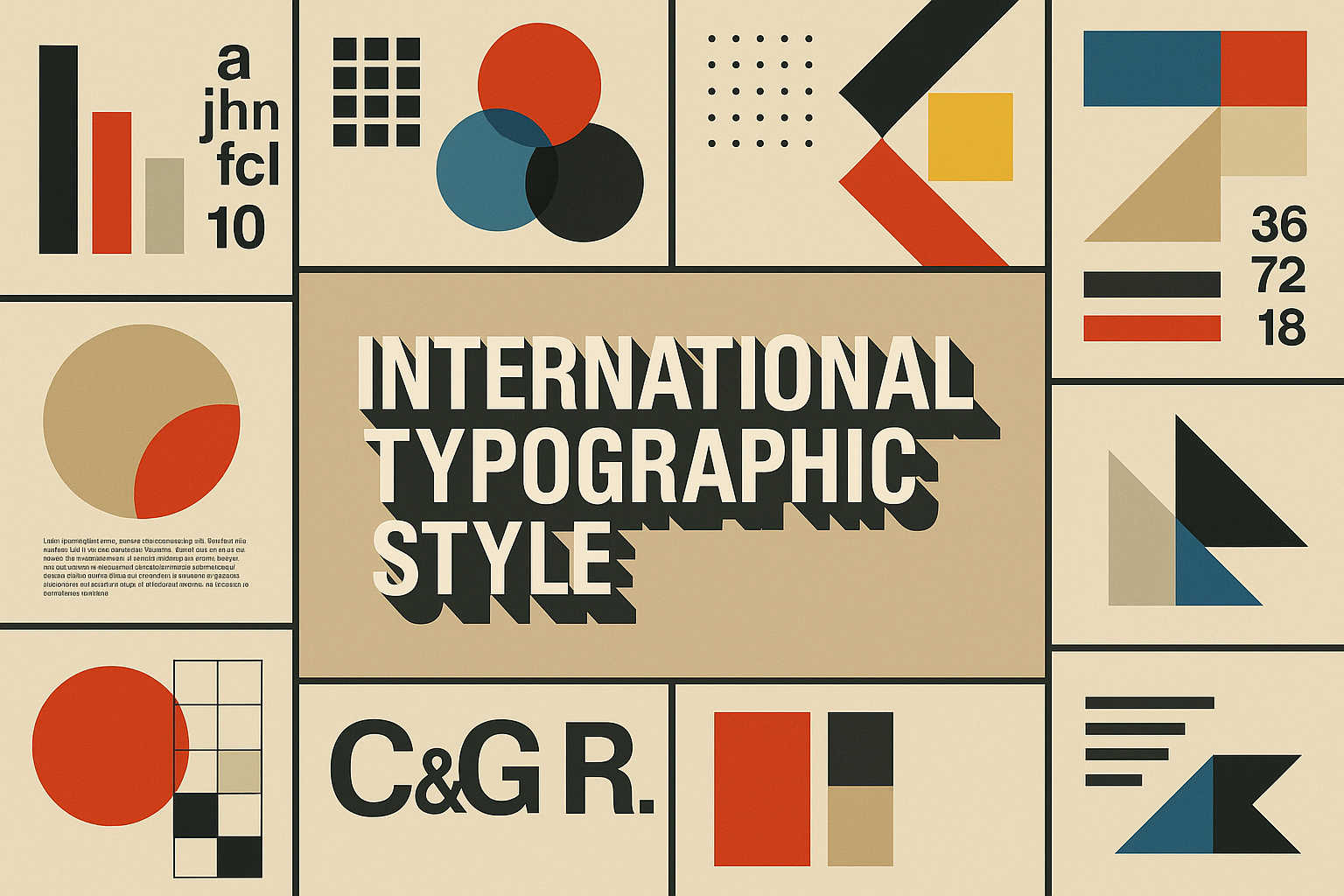
The visual appearance of the art style International Typographic Style is very clean and simple. The focus is on the message that is being conveyed, rather than on the artistic elements. The text is usually set in a sans serif font, and the overall design is very minimalistic.
AOI thinking about International Typographic Style [+_~]-/
Overview and quick facts
The International Typographic Style, also known as the Swiss Style, is a 20th-century graphic design style that emphasizes cleanliness, readability, and objectivity. Developed in Switzerland in the 1950s, the style was influenced by the modernist architectural style of the Bauhaus. It is characterized by use of a grid, sans-serif typefaces, and minimal use of color and decoration.
Can understand it also, as:
Global Typographic Style, Worldwide Typographic Style
Categorize it as:
Impressionism, Modernism
Detailed description
The International Typographic Style, also known as the Swiss Style, is a clean and modern approach to design that emphasizes simplicity and readability. This style of design was developed in Switzerland in the 1950s and has since been adopted by designers all over the world. The International Typographic Style is characterized by a grid-based layout, use of sans-serif typefaces, and a focus on typography and content. This style of design is often used for corporate identity and branding, as well as for editorial design. Some of the most famous artists associated with the International Typographic Style include Josef Muller-Brockmann, Massimo Vignelli, and Wim Crouwel.
Archive notes — claims to verify
1. International Typographic Style is a 20th-century design movement that emphasizes cleanliness, readability, and objectivity.
2. The style is also known as Swiss Style, due to its origins in Switzerland.
3. The style is characterized by a focus on grid-based layouts, typography, and photography.
4. The style first emerged in the 1950s, and reached its peak in the 1960s and 1970s.
5. International Typographic Style is influenced by Bauhaus and De Stijl movements.
6. The style is associated with designers such as Josef Muller-Brockmann, Massimo Vignelli, and Wim Crouwel.
7. The style has been used in the design of posters, books, magazines, logos, and other graphic design applications.
8. International Typographic Style is considered to be the first truly international style of graphic design.
9. The style has been criticized for its cold and impersonal nature.
10. Despite its critics, the style remains an influential force in graphic design.
Artists and works: references to check
(be aware, can be highly speculative)
Artists (be aware, speculation possible):
1. Josef Muller-Brockmann (1914-1996) 2. Max Bill (1908-1994) 3. Herbert Bayer (1900-1985) 4. Paul Rand (1914-1996) 5. A.M. Cassandre (1901-1968) 6. László Moholy-Nagy (1895-1946) 7. Oskar Schlemmer (1888-1943) 8. Walter Gropius (1883-1969) 9. Marcel Breuer (1902-1981) 10. El Lissitzky (1890-1941) 11. Alexander Rodchenko (1891-1956) 12. Vladimir Tatlin (1885-1953) 13. Lyubov Popova (1889-1924) 14. Kasimir Malevich (1878-1935) 15. Piet Zwart (1885-1977) 16. Wim Crouwel (1928-2019) 17. Erik Spiekermann (1947-present) 18. Neville Brody (1957-present) 19. David Carson (1955-present) 20. Paula Scher (1948-present) 21. April Greiman (1948-present) 22. Stefan Sagmeister (1962-present) 23. Jessica Hische (1979-present) 24. Mike Perry (1977-present) 25. Rob Janoff (1958-present) 26. Jonathan Barnbrook (1962-present) 27. Experimental Jetset (1997-present) 28. Build (2003-present) 29. Hey Studio (2007-present) 30. Büro Destruct (1999-present)
Artworks (be aware, speculation possible)
1. “The Great Wave off Kanagawa” by Katsushika Hokusai (1829-1833) 2. “The Persistence of Memory” by Salvador Dali (1931) 3. “Nighthawks” by Edward Hopper (1942) 4. “Guernica” by Pablo Picasso (1937) 5. “The Scream” by Edvard Munch (1893) 6. “The Starry Night” by Vincent van Gogh (1889) 7. “The Kiss” by Gustav Klimt (1908) 8. “The Hay Wagon” by Andrew Wyeth (1953) 9. “American Gothic” by Grant Wood (1930) 10. “Arnolfini Portrait” by Jan van Eyck (1434) 11. “The Birth of Venus” by Sandro Botticelli (1486) 12. “Mona Lisa” by Leonardo da Vinci (1503-1519) 13. “The Last Supper” by Leonardo da Vinci (1495-1498) 14. “The Night Watch” by Rembrandt (1642) 15. “The Milkmaid” by Johannes Vermeer (1658) 16. “The Haystack” by Claude Monet (1891) 17. “The Water Lilies” by Claude Monet (1914-1926) 18. “The Sistine Chapel Ceiling” by Michelangelo (1508-1512) 19. “The Sistine Chapel Frescoes” by Michelangelo (1512-1541) 20. “The Last Judgment” by Michelangelo (1534-1541) 21. “The Creation of Adam” by Michelangelo (1512) 22. “The Vitruvian Man” by Leonardo da Vinci (1487) 23. “The Mona Lisa” by Leonardo da Vinci (1503-1519) 24. “The Last Supper” by Leonardo da Vinci (1495-1498) 25. “The Sistine Chapel Ceiling” by Michelangelo (1508-1512) 26. “The Sistine Chapel Frescoes” by Michelangelo (1512-1541) 27. “The Last Judgment” by Michelangelo (1534-1541) 28. “The Creation of Adam” by Michelangelo (1512) 29. “The Vitruvian Man” by Leonardo da Vinci (1487) 30. “The School of Athens” by Raphael (1510)
Epoch
The International Typographic Style, also known as the Swiss Style, is a graphic design style that emerged in the 1950s and became prominent in the 1960s. It is characterized by clean, minimalistic design, and is based on the principles of Swiss design.
Creative tools and further exploration
Search results are starting points for exploration, not evidence for the historical claims or attributions in this legacy entry.
- Practical AI tools and critical guidance
- Build a repeatable image workflow
- Search Wikipedia for this subject
- Search Lexica for visual interpretations
- Browse the Art Style Database
Creative studies to try
Explore these collected prompts as creative interpretations. They are starting points for image-making, not reproductions of historical artworks or evidence about a tradition.
Visual cues: geometry, flat planes, disciplined negative space
Study 1 — International Typographic Style
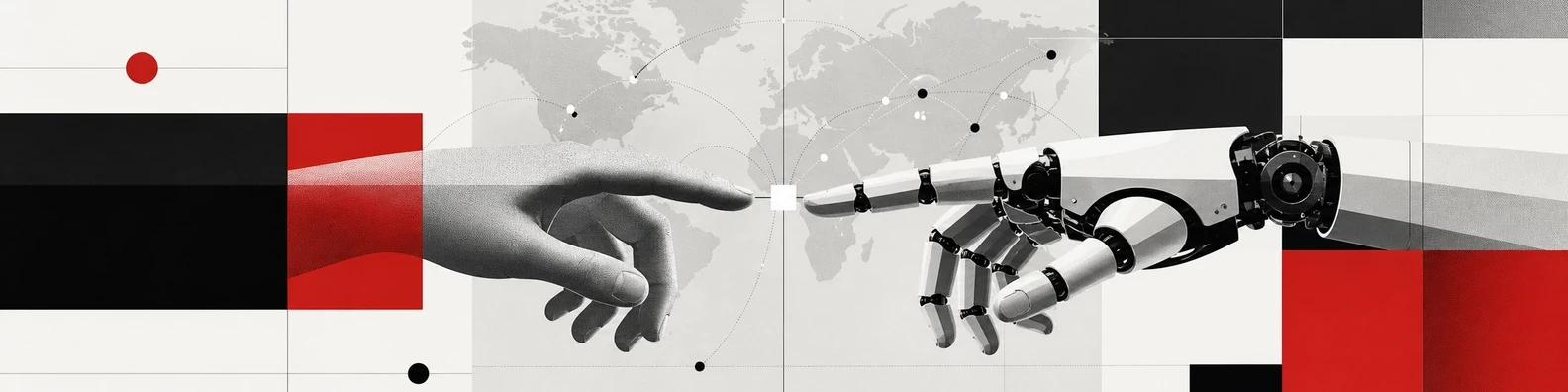
Ultra-wide panoramic banner, a human hand and a sleek robotic hand reaching toward each other, fingertips almost touching, a bright luminous spark of intelligence between them, a subtle world map behind them with global data network lines, symbolizing human-AI collaboration and digital transformation, rendered in International Typographic Style style, with refined composition, distinctive materials, elegant lighting, high-detail artistic finish, high quality, high detail, balanced composition, no text, no logo, no watermark, exact aspect ratio 1584:396
Prompt source: 1001 Art Styles. Select the text to copy, then adapt the subject and composition.